
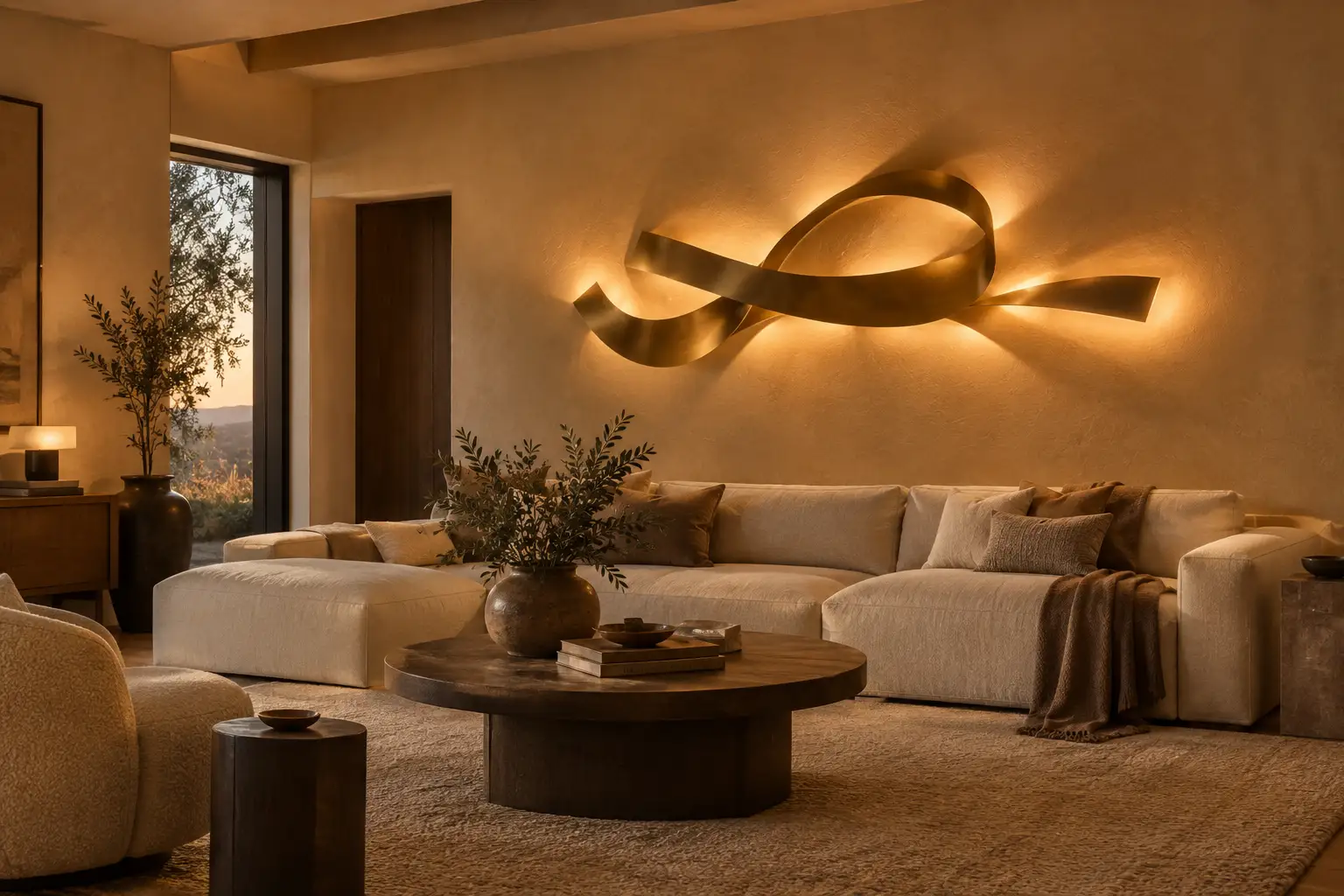
Standard lighting fixtures often prioritize basic utility over aesthetic impact, leaving expansive walls feeling empty and flat. Conventional overhead lighting floods spaces with uniform brightness, washing out architectural details and interior textures. Relying strictly on functional illumination limits the potential of vertical real estate, forcing homeowners to fill the void with traditional canvas art or framed prints that remain hidden when the sun sets.
Swapping standard wall lamps for statement-making fixtures bridges the gap between interior design and practical illumination. Modern sculptural lighting ideas introduce dramatic geometry, three-dimensional depth, and rich materiality directly onto your walls. These hybrid installations serve a distinct dual purpose: operating as captivating artistic objects during daylight hours and emitting high-end ambient warmth at night.
Strategic placement of wall-mounted luminous art eliminates dark corners while curating a sophisticated, layered atmosphere. Whether applying patinated brass elements, organic hand-blown glass, or sleek architectural LEDs, integrating luminous sculptures dictates the mood and flow of a room. This approach redefines the structural boundaries of residential interiors, merging raw materials with precise optical engineering.
Embrace Geometric Wall Sconces for Architectural Depth
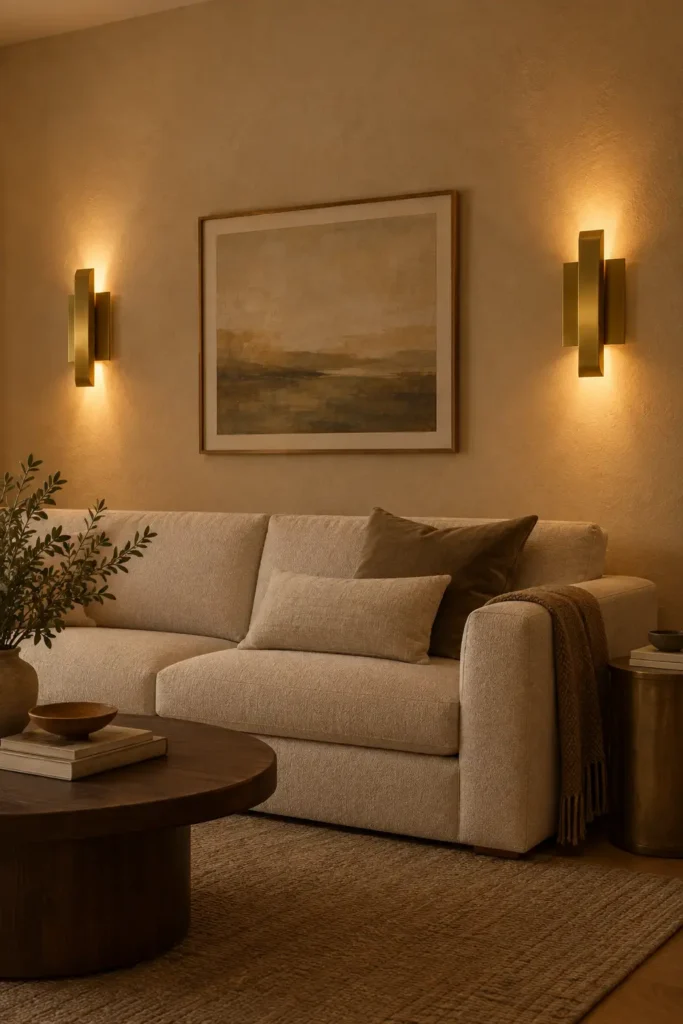
Symmetrical metal frames and sharp angular structures break up the monotony of flat drywall. Hexagonal clusters, minimalist cubes, and extending linear rods draw the eye across the room, establishing a strong visual anchor without requiring heavy furniture. These geometric structures bounce light off adjacent surfaces to create defined, overlapping shadows that change as you move through the space.
Match matte black or brushed nickel finishes with monochromatic room palettes for an industrial edge. Geometric wall lighting demands precision during mounting; an off-center installation disrupts the intentional symmetry. Plan your wiring paths early to keep the surrounding wall space free from visible cords, maintaining the gallery-like presentation.
Install Organic and Biophilic Shapes to Soften Rigid Lines
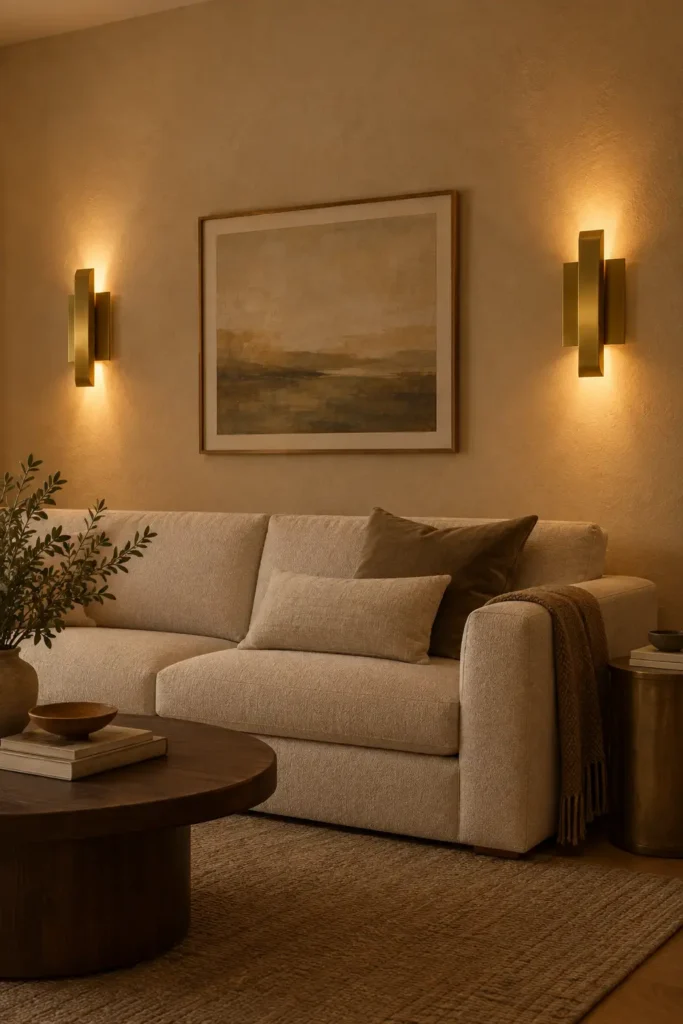
Interiors dominated by sharp corners and straight architectural lines benefit heavily from nature-inspired design elements. Biophilic lighting structures mimic the intricate forms of tree branches, cascading water ripples, and blooming petals. Incorporating these natural motifs directly onto walls offsets the rigid geometry of modern furniture.
- Flowing Ribbons: Extruded aluminum bent into continuous, looping waves creates rhythmic movement.
- Botanical Sconces: Cast-bronze leaves or petal-shaped alabaster shades introduce earthy textures.
- Mineral Formations: Asymmetrical crystal clusters replicate natural quartz deposits, catching ambient daylight.
Positioning organic sculptural lighting ideas in transitional areas like hallways or staircases creates a sense of continuous motion. The asymmetry of these fixtures catches the eye immediately, making them highly effective focal points against blank, neutral-toned walls.
Layer Ambient Illumination with Optical Acrylic Panels
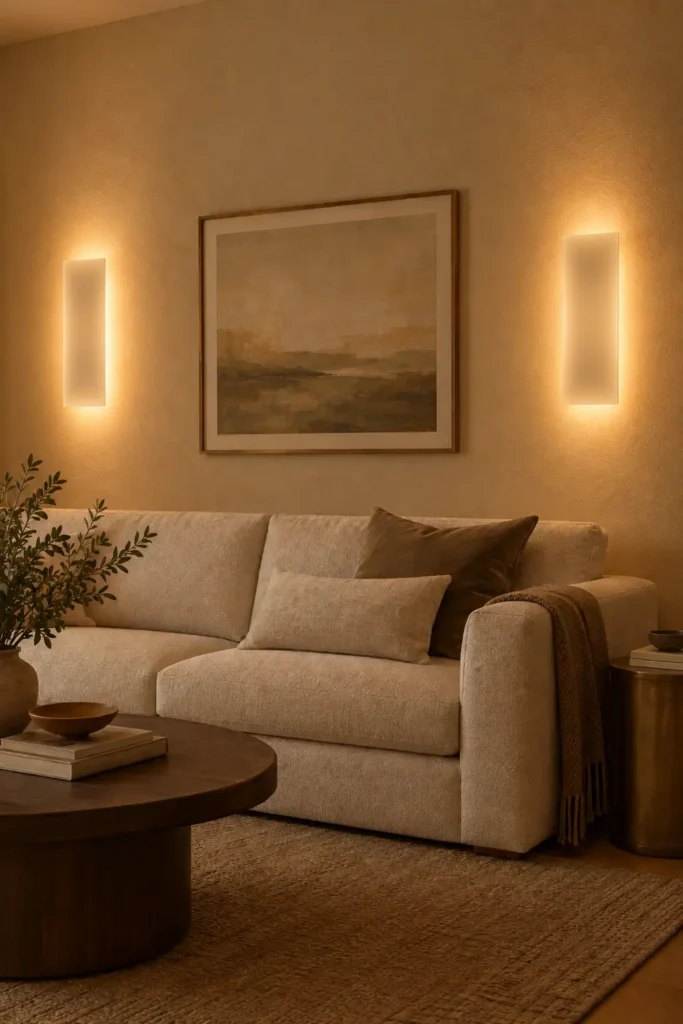
Clear and frosted acrylic materials bend and refract LED beams to produce ethereal, floating halos of light. Rather than exposing the direct diode, optical panels trap the illumination, creating a solid, glowing mass that appears weightless.
- Map the wiring: Measure and mark the junction boxes to maintain a precise 12-inch gap between each acrylic panel.
- Mount the backplates: Secure the low-profile mounting hardware flush against the drywall.
- Attach the optical panels: Slide the frosted acrylic pieces into the conductive channels.
These fixtures often sit less than a 2-inch depth from the wall, adhering to ADA compliance while maximizing tight walkway spaces. The frosted texture diffuses the output, preventing harsh hot spots and delivering a smooth, even wash of light.
Integrate Dim-to-Warm LED Sculptures for Mood Mastery
Temperature control directly influences the biological response to a room. Standard LEDs dim down by lowering the output while maintaining a static color temperature. Dim-to-warm technology replicates the behavior of traditional incandescent filaments, shifting the color spectrum from a crisp 3000K down to a deep, amber 1800K as the brightness decreases.
Applying this technology to large-scale wall art allows a single installation to serve multiple functions throughout the day. At 100% output, the piece provides clear, bright task lighting suitable for reading or working. When dimmed to 20%, the same sculptural fixture emits a fire-like glow, shifting the room’s atmosphere into a relaxed, evening setting.
Anchor the Room with Oversized Asymmetrical Fixtures
Small fixtures risk looking like cluttered afterthoughts on large, expansive walls. Massive, asymmetrical installations command attention and balance out heavy architectural features like floor-to-ceiling windows or stone fireplaces.
These oversized pieces often feature interconnected metallic arms, sprawling outward in unpredictable directions. The lack of symmetry keeps the visual presentation dynamic, encouraging guests to inspect the fixture from multiple angles.
To support the physical weight of these large-scale metal or glass configurations, reinforce the drywall with wood blocking before installation. Heavy alabaster or cast-iron components easily exceed 30 pounds, making standard drywall anchors insufficient for long-term safety.
Important Note: Weight & Structural Safety
Never mount heavy sculptures exceeding 20 lbs on hollow drywall alone. Always anchor directly into 2×4 wooden studs or use heavy-duty toggle bolts to prevent structural failure.
Position Textured Metallic Art Lights for Dynamic Shadows
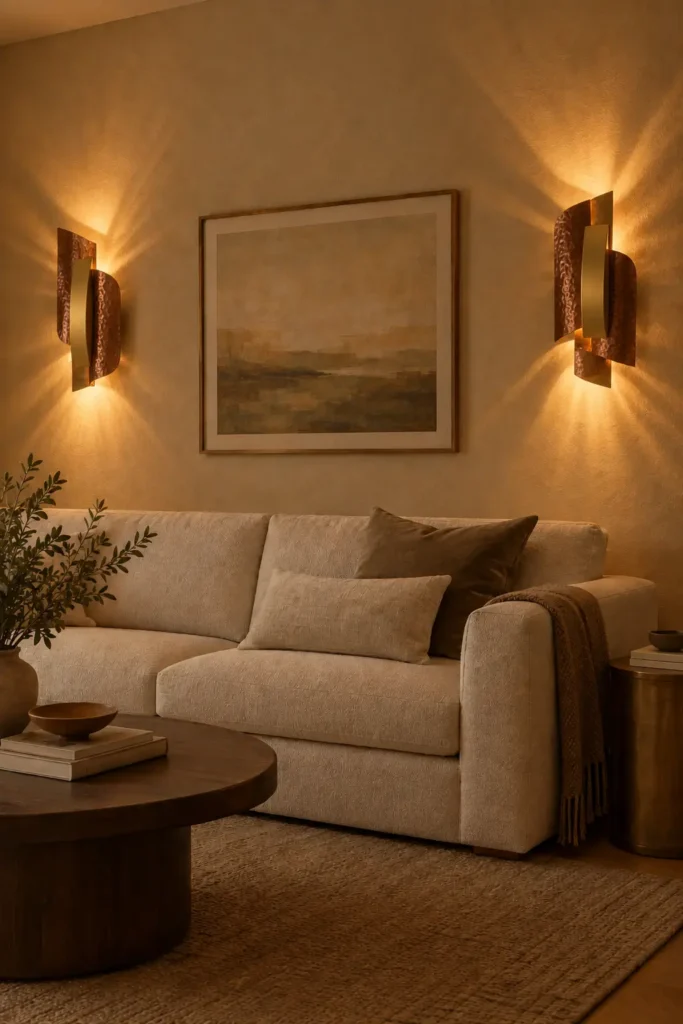
Raw, unpolished metals interact with artificial light differently than smooth, mirrored surfaces. Patinated brass, aged bronze, and hammered copper feature microscopic surface variations that scatter reflections. When integrated light sources hit these textured backplates, the resulting illumination feels deeply layered and complex.
These textured installations look distinct during the day, appearing as heavy, tactile sculptures. At night, the recessed bulbs cast long, dramatic shadows against the wall, emphasizing the hammered or ribbed metalwork. This interplay between highlight and shadow gives bare walls an immediate sense of purpose without requiring additional framed artwork.
Pro Tip: Shadow Management
Position textured metallic fixtures at least 18 inches away from wall corners. Use diffused LED drivers to soften harsh shadow edges and enhance warmth.
Align Flush-Mount Halos to Maximize Small Spaces
Narrow corridors and tight entryways cannot accommodate protruding sconces or sprawling metal branches. Flush-mount lighting features ultra-slim profiles, hugging the wall while projecting illumination outward or backward against the mounting surface.
Installing a series of interlocking, glowing rings or slim vertical bars draws the eye upward, giving the illusion of higher ceilings. These flush designs utilize the wall itself as a massive reflector, bouncing light back into the room to maximize the perceived square footage. By integrating low-profile sculptural lighting ideas, you maintain clear walking paths while delivering a high-impact aesthetic statement.
Execute Your Wall Lighting Strategy
Transitioning away from standard fixtures toward dedicated wall art requires precise execution and strategic planning. Map your electrical layouts, match your metallic finishes to the surrounding hardware, and test your dimmer compatibility before committing to an installation. Incorporating sculptural lighting ideas allows you to dictate the physical boundaries and the atmospheric temperature of your home. Finalize your measurements, select your materials, and wire your walls to support these luminous centerpieces.
Conclusion
Integrating sculptural lighting ideas bridges the gap between basic illumination and high-end wall decor. Selecting fixtures that match your room’s scale, testing dimmer compatibility, and positioning sconces at the standard 60-inch height turns empty vertical surfaces into dynamic visual focal points. Plan your installation timeline across a 48-hour window to allow ample time for proper electrical wiring and wall stud reinforcement. Upgrading to three-dimensional light art grants you 100% control over your interior atmosphere, ensuring your walls captivate visitors both day and night.
FAQ
What is the optimal color temperature for wall-mounted sculptural lighting?
For residential spaces, aim for a color temperature between 2700K and 3000K. This range provides a warm, inviting glow that accurately renders skin tones and architectural finishes without feeling overly clinical.
How do I hide the power cords for wall-mounted luminous art?
The most professional method involves hardwiring the fixture directly into a wall junction box. If hardwiring is not an option, you can route the cables behind the drywall using a 1-inch recessed cable management kit.
Can sculptural wall lighting serve as the primary light source in a room?
Generally, wall fixtures act as secondary or ambient layers. However, oversized pieces with multiple high-output LED nodes exceeding 2500 lumens can adequately illuminate smaller rooms when paired with light-reflective wall colors.
Do I need special wall anchors to mount heavy brass or stone lighting fixtures?
Yes. Standard drywall anchors will fail under the sheer weight of natural stone, solid brass, or thick glass. Always mount fixtures exceeding 15 pounds directly into a wooden wall stud, or install heavy-duty toggle bolts rated for at least 50 pounds of shear force.