
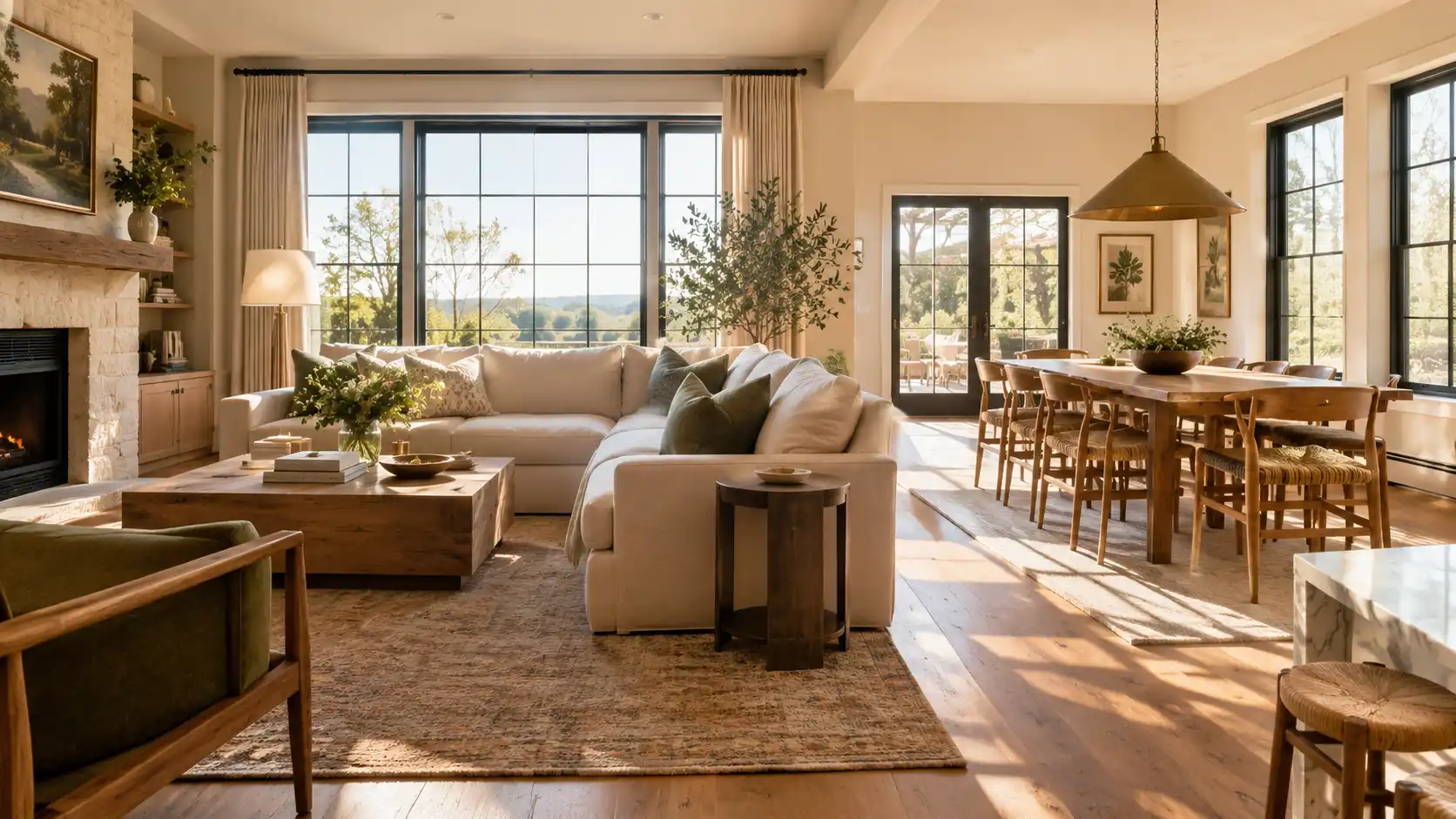
Have you ever finished decorating a room and still felt like something was missing?
Maybe the living room looks great on its own, but it feels completely different from the dining room. Or your bedroom has a beautiful color palette, yet the rest of your home doesn’t seem to connect with it.
The solution isn’t necessarily more furniture or more decor.
Learning how to pull your interior spaces together is really about creating relationships between the rooms in your home. Your spaces don’t have to look identical. They simply need enough shared elements to feel like they belong to the same home.
The easiest way to accomplish that is to focus on three things:
Create a consistent
visual thread.
Balance scale, function,
and layout.
Layer texture, lighting,
and personality.
Once you understand these three principles, decorating becomes much easier because every new choice has a purpose.
What Does a Cohesive Interior Look Like?
A cohesive home isn’t one where every room has the same furniture, colors, or accessories.
Instead, it is a home where the rooms feel connected while still having their own identities.
Think of your home like a story. Each room is a different chapter, but the colors, materials, mood, or details give the entire story a recognizable style.
For example, you might use warm neutrals throughout your home while changing the accent color in each room. Or you might repeat natural wood, black accents, and woven textures without using the same furniture pieces everywhere.
The goal is coordination without duplication.
Step 1: Create a Visual Thread
The first step to pulling your interior spaces together is deciding what elements will repeat throughout your home.
This is sometimes called visual repetition.
Your visual thread could be a color, material, shape, finish, pattern, or combination of several elements.
You don’t need to repeat everything.
In fact, choosing just two or three recurring elements can make your home feel much more intentional.
Choose a Whole-Home Color Story
Color is one of the easiest ways to connect separate rooms.
Start by identifying the colors already present in your home. Look at your flooring, cabinetry, furniture, countertops, walls, rugs, and large decorative pieces.
Then choose a flexible palette that can work from room to room.
For example, your whole-home palette could include:
- Warm white
- Soft beige
- Natural wood
- Muted green
- Charcoal or black accents
You don’t need to use all five colors in every room.
Instead, let different rooms emphasize different parts of the palette.
Your living room might feature a beige sofa and green pillows. Your dining room could use natural wood furniture with green artwork. In the bedroom, the green might appear in bedding while the walls remain warm white.
The rooms will look different, but your eye will recognize the relationship between them.
Don’t Feel Like Every Color Has to Match
A common decorating mistake is trying to make every room use exactly the same shades.
Instead, think in terms of color families.
A deep olive green, soft sage, and muted green-gray can work together without being identical.
The same idea applies to neutrals. Warm whites, creams, beiges, and soft taupes can create variation while maintaining an overall warm feeling.
Repeat Materials, Shapes, and Finishes
Color isn’t your only tool.
Materials can also create continuity.
If your kitchen has warm oak cabinets, consider repeating a similar wood tone in a dining table, console, bedroom nightstand, or picture frame.
You can also repeat finishes.
For example:
- Black cabinet hardware can echo black lighting fixtures.
- Brass hardware can connect to brass lamps.
- Woven baskets can be repeated in different rooms.
- Curved furniture can be echoed through rounded mirrors or lamps.
- Linen can appear in curtains, pillows, or bedding.
The repetition doesn’t have to be obvious.
Subtle connections are often more effective than using the same item repeatedly.
Use Repetition Without Making Everything Match
Your home should feel collected, not copied from a furniture showroom.
If you love a particular wood tone, don’t buy every piece of furniture in that exact finish.
Instead, let the material appear in different ways.
A wood console in the entryway, a wooden coffee table in the living room, and wood nightstands in the bedroom can create continuity while still allowing each space to feel unique.
The same principle works with colors and patterns.
Repeat the idea, not necessarily the exact item.
Step 2: Balance Scale, Function, and Layout
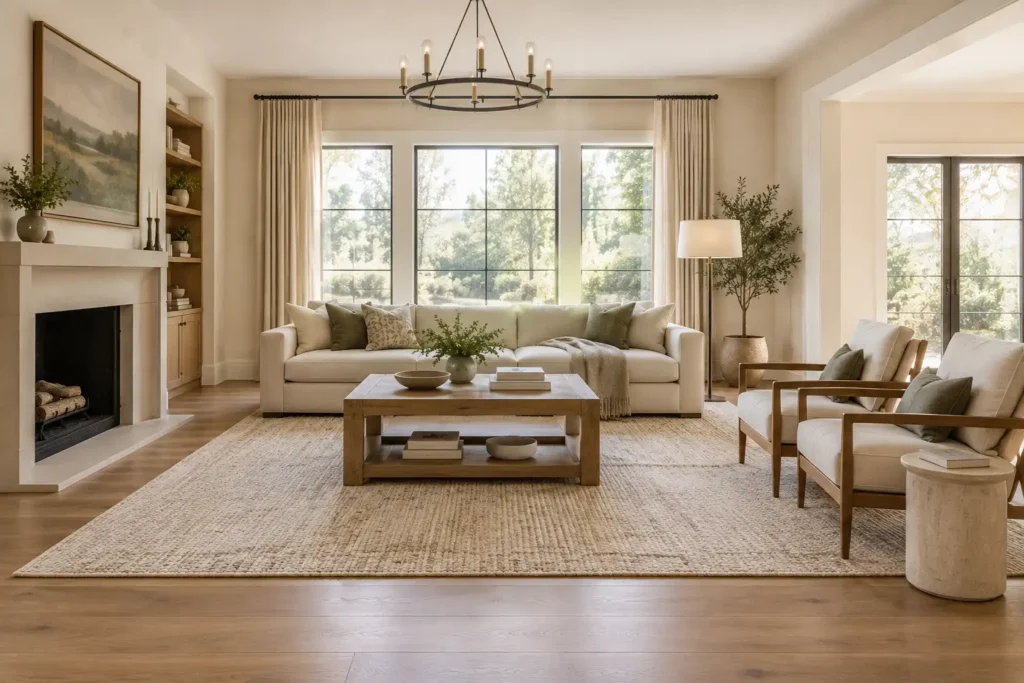
Once you have established a visual connection between your rooms, look at how the rooms actually function.
A beautifully decorated space can still feel uncomfortable if the furniture is too large, the layout blocks movement, or there are too many pieces competing for attention.
Before adding accessories, solve the basic layout.
Ask:
What does this room need to help me do?
A living room might need comfortable seating, conversation space, lighting, and storage.
A bedroom needs a comfortable bed, bedside surfaces, lighting, clothing storage, and enough open space to move around.
A dining room needs seating, a table that fits the room, lighting, and enough clearance for people to comfortably use the chairs.
Start with those needs.
Start With the Largest Pieces
The largest pieces usually have the greatest impact on how a room feels.
Depending on the space, that might be:
- Sofa
- Bed
- Dining table
- Area rug
- Sectional
- Media console
- Large storage piece
- Accent chair
Choose and position these pieces before worrying about small accessories.
Once the major furniture is in place, you can see what the room actually needs.
This also helps prevent a common decorating problem: buying lots of small items because the room feels empty, only to discover later that the real problem was the furniture arrangement.
Pay Attention to Scale
Scale is simply the relationship between the size of objects and the space around them.
A small rug can look disconnected underneath a large seating arrangement. A tiny piece of artwork can disappear above a substantial sofa. A large sectional can overwhelm a small living room.
When something feels visually wrong, don’t automatically buy another accessory to fix it.
First ask:
- Is the furniture too large?
- Is the rug too small?
- Is the artwork proportional?
- Is there enough open space?
- Are the major pieces balanced across the room?
Sometimes removing one item will improve a room more than adding three new ones.
Give Your Furniture Room to Breathe
A cohesive home doesn’t need to be packed with furniture.
Open space is part of the design.
Walkways should remain comfortable. Doors should open without hitting furniture. Seating should have enough room for people to move around it.
You should also avoid filling every empty corner simply because it looks bare.
An empty corner isn’t necessarily a problem.
Sometimes it is exactly what makes the rest of the room feel more spacious.
Step 3: Layer Texture, Lighting, and Personality
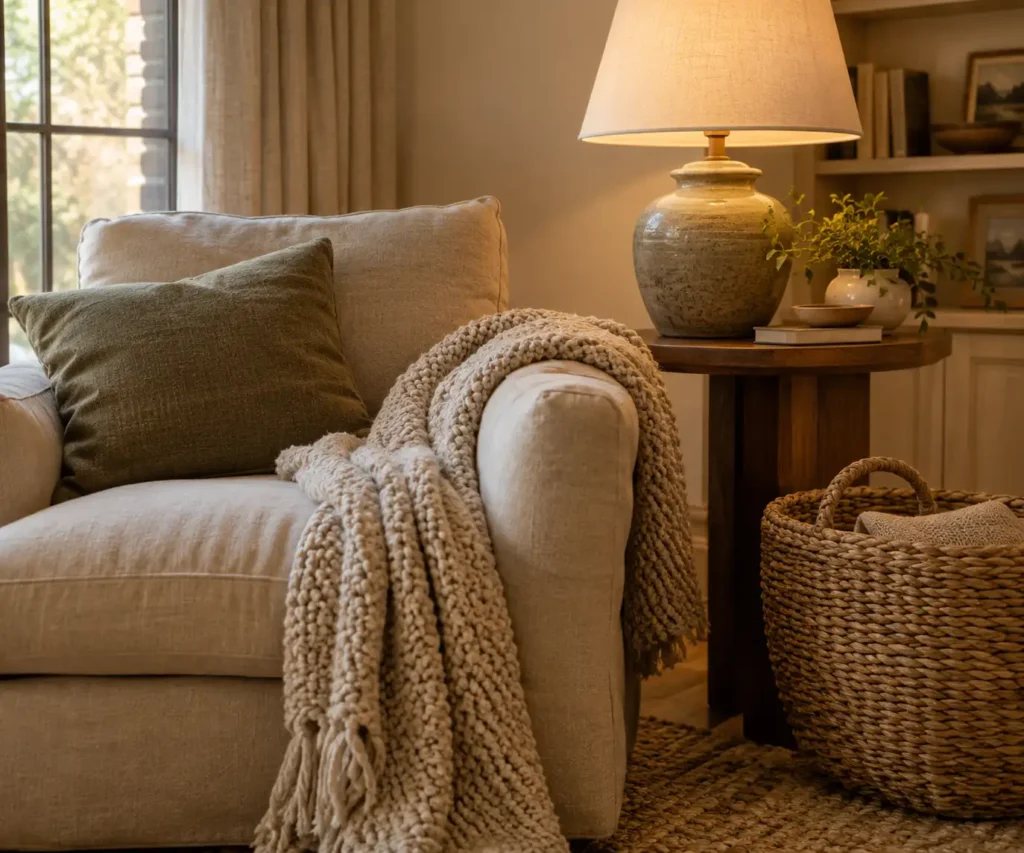
Now that the foundation is working, it’s time to make the room feel finished.
This is where texture, lighting, artwork, textiles, plants, books, and meaningful objects come into the picture.
The goal isn’t to add as much as possible.
The goal is to add the right layers.
Layer Textures for Depth
Texture is especially helpful when your home uses a neutral color palette.
Imagine a room with a cream sofa, beige walls, and a light rug.
The colors may work together, but without texture, the room could feel flat.
Now add:
- A woven rug
- Linen curtains
- A chunky throw
- A wooden coffee table
- Ceramic accessories
- A soft upholstered chair
- A basket or natural-fiber accent
The colors can remain relatively simple while the different materials make the room more interesting.
Texture also gives you another way to connect rooms.
For example, woven materials might appear in the living room, kitchen, and bedroom without looking repetitive.
Use Lighting to Connect the Mood
Lighting can influence how a room feels at different times of day.
Instead of relying on a single overhead fixture, consider layering different types of lighting.
You might use:
- A ceiling fixture for general illumination
- Table lamps for side tables or consoles
- A floor lamp beside a chair
- Accent lighting for artwork or architectural features
- Natural daylight from windows
Lighting fixtures don’t have to match throughout your home.
However, repeating a finish, shape, or general style can help maintain visual continuity.
A black pendant in the kitchen, for example, might relate nicely to a black floor lamp in the living room.
Add Personal Details Last
Once the foundation is finished, bring in the things that make your home yours.
Consider:
- Family photographs
- Artwork
- Books
- Travel souvenirs
- Plants
- Vintage finds
- Handmade pieces
- Collections
- Sentimental objects
These details prevent a cohesive home from feeling overly staged.
The best decor isn’t necessarily the most expensive decor. It is often the piece that has meaning, tells a story, or reflects the people who live in the home.
Just remember that personal doesn’t have to mean cluttered.
Choose your favorite pieces and give them enough space to be noticed.
How to Make Different Rooms Flow Together
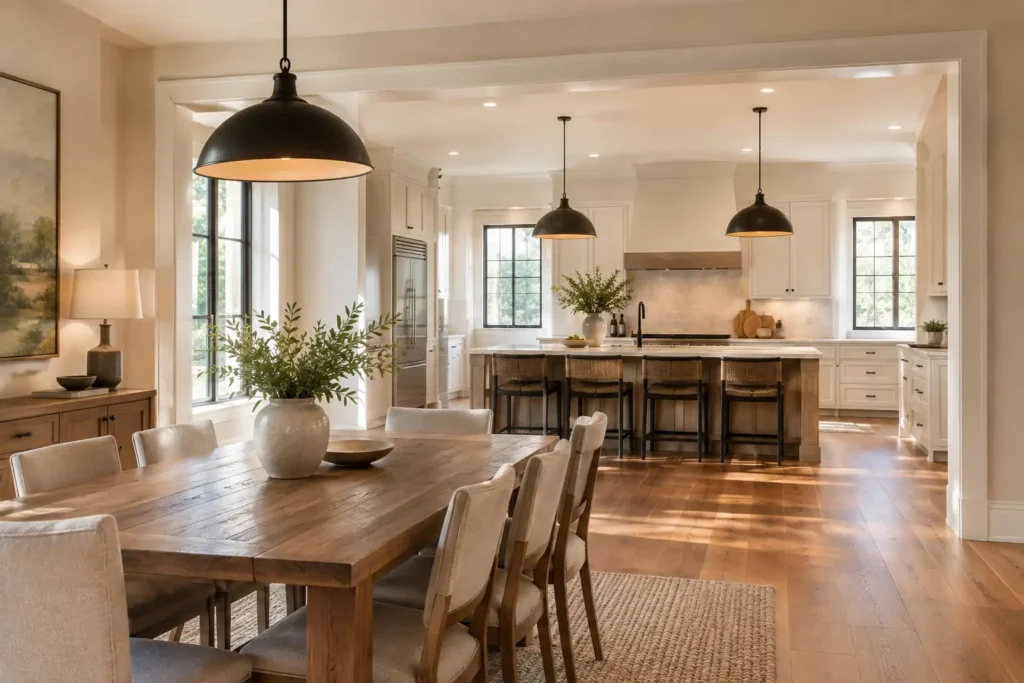
If you want your entire home to feel cohesive, pay attention to what you can see from one room into another.
This is especially important in open-concept homes.
Stand in your living room and look toward the dining room.
Then stand in the dining room and look toward the kitchen.
Ask yourself:
Do these spaces look like they belong together?
You don’t need the same furniture in every room.
Instead, look for one or two elements that can visually travel between them.
For example:
Living room: warm beige, oak, black accents
Dining room: oak table, black light fixture, beige artwork
Entryway: oak console, black mirror frame, neutral runner
Bedroom: oak nightstands, beige bedding, black lamp details
The rooms aren’t identical, but the repeated elements create a visual relationship.
This approach gives you more freedom because you can mix styles while maintaining a consistent foundation.
Common Mistakes That Make a Home Feel Disconnected

1. Making Every Room Completely Different
If one room is cool and minimalist, another is heavily traditional, and another uses a completely unrelated color palette, the transition can feel abrupt.
You can mix styles, but give the rooms something in common.
2. Matching Everything Too Closely
The opposite problem is making every room look like it came from the same furniture collection.
Cohesion needs variation.
Repeat a color, material, or shape instead of duplicating entire furniture sets.
3. Using Too Many Colors
If every room introduces several new colors, it becomes difficult for the eye to find a relationship between spaces.
A controlled palette makes decorating easier.
4. Ignoring Scale
Beautiful objects can still look wrong when their proportions don’t work with the room.
Consider furniture size, rug size, artwork, lighting, and ceiling height together.
5. Adding Decor Before Fixing the Layout
Decor cannot compensate for an uncomfortable floor plan.
Move the furniture first.
Then style the room.
6. Filling Every Surface
A room doesn’t need something on every table, shelf, wall, and corner.
Editing your decor can actually make your favorite pieces stand out more.
Quick Whole-Home Cohesion Checklist
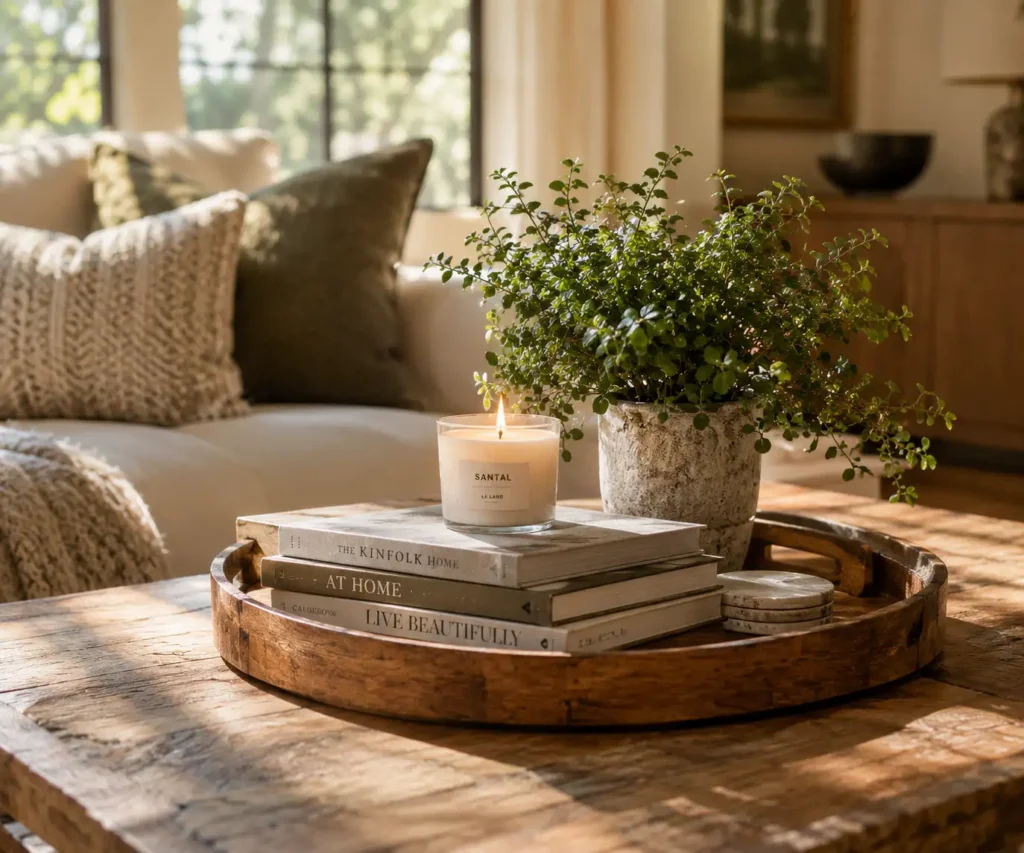
Before considering your home finished, walk through each room and ask:
Color
- Does this room share at least one color with nearby spaces?
- Are the undertones compatible?
Materials
- Is there a material or finish that connects this room to another?
- Do the different materials complement each other?
Furniture
- Is everything proportional to the room?
- Is there enough space to move comfortably?
Texture
- Does the room have enough material variation?
- Are there soft, hard, smooth, and textured surfaces where appropriate?
Lighting
- Is there more than one light source?
- Do the fixtures complement the overall style?
Personality
- Does the room feel like it belongs to the people who live there?
- Are meaningful items included without creating clutter?
If the answer is yes to most of these questions, your home is likely developing the visual consistency you’re looking for.
Conclusion
Knowing how to pull your interior spaces together doesn’t mean buying a matching furniture set or decorating every room in exactly the same way.
Instead, create a visual thread with colors, materials, shapes, and finishes. Balance your rooms by paying attention to furniture scale, function, layout, and open space. Then finish each space with layers of texture, lighting, and personal details.
The most cohesive homes aren’t necessarily the ones where everything matches.
They’re the homes where each room feels different, but every room feels like it belongs.
Start with one room, identify two or three elements you want to carry throughout your home, and build from there. Small, intentional connections can make your entire home feel more considered, comfortable, and complete.
FAQ
How do I make my whole house look cohesive?
Create a consistent visual thread using colors, materials, finishes, shapes, or textures that repeat throughout your home. The rooms don’t need to match exactly. They simply need enough shared elements to feel connected.
Should every room in my house match?
No. Different rooms can have their own colors, furniture, and personality. Repeating a few design elements is usually enough to create a relationship between spaces without making them identical.
What colors make a home feel cohesive?
Flexible neutrals such as warm white, beige, taupe, and natural wood tones can provide a strong foundation. Add one or two accent colors and repeat them in different ways throughout the home.
How can I connect rooms without repainting them?
Repeat smaller elements such as wood tones, metal finishes, artwork colors, textiles, rugs, lighting finishes, or decorative shapes. These changes can create continuity without requiring a major renovation.
How do I make an open-concept home feel cohesive?
Use a consistent palette and repeat materials or finishes across the connected areas. Rugs can define individual zones while shared colors and finishes help those zones feel like parts of one larger space.
How can I decorate without making my home look too matchy-matchy?
Repeat individual elements instead of complete furniture sets. Use the same color in different shades, repeat a material in different rooms, or echo a shape through furniture and accessories.
Why does my room still feel unfinished?
The problem may not be a lack of accessories. Check the furniture layout, scale, lighting, texture, and negative space first. A room can feel unfinished because of an unbalanced foundation rather than because it needs more decor.
What should I decorate first in a room?
Start with the room’s function and layout. Then choose the largest furniture pieces and establish the rug, lighting, textiles, artwork, and smaller accessories. This makes it easier to avoid unnecessary purchases.
How many colors should I use throughout my home?
There isn’t one universal number. A smaller group of related colors is generally easier to coordinate, while variations in shade, texture, and intensity can keep the home interesting.