
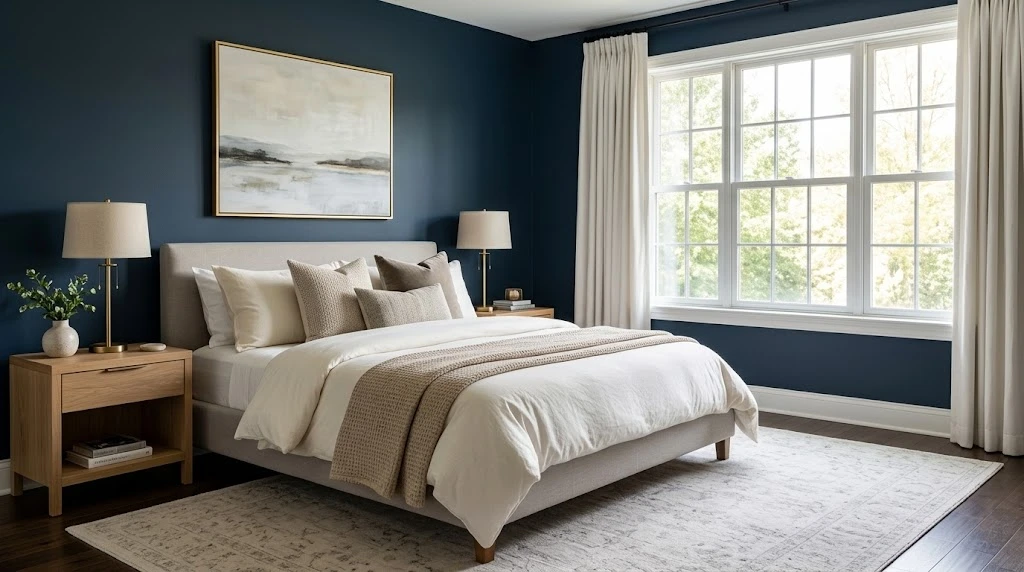
The best navy blue bedroom ideas start with deciding how much of the color you want in your space. You can paint one wall behind the bed, cover the entire room in navy, or introduce the shade through bedding and furniture. The key is balancing deep blue with suitable lighting, contrasting colors, and different textures to create a bedroom that feels comfortable rather than overwhelming.
These 10 moody bedroom ideas cover wall colors, ceilings, paneling, color combinations, bedding, furniture, and finishing touches. Whether you have a small bedroom with limited daylight or a spacious primary suite, you can adapt these ideas to suit your room, budget, and decorating style.
Quick Takeaways on Navy Blue Bedroom Ideas
- Test navy paint samples in different lighting conditions before committing to a color.
- In small bedrooms, try a navy accent wall or navy bedding instead of painting every surface.
- Combine navy with warm wood, creamy whites, and soft textiles for a balanced look.
- Use brass, blush pink, emerald green, or burnt orange as accents, choosing one main accent color.
- Layer linen, velvet, wool, wood, and other textures to add depth without introducing too many colors.
- Consider how your existing flooring, furniture, and window treatments will look alongside navy.
1. Choose Navy Blue Bedroom Walls and the Right Paint
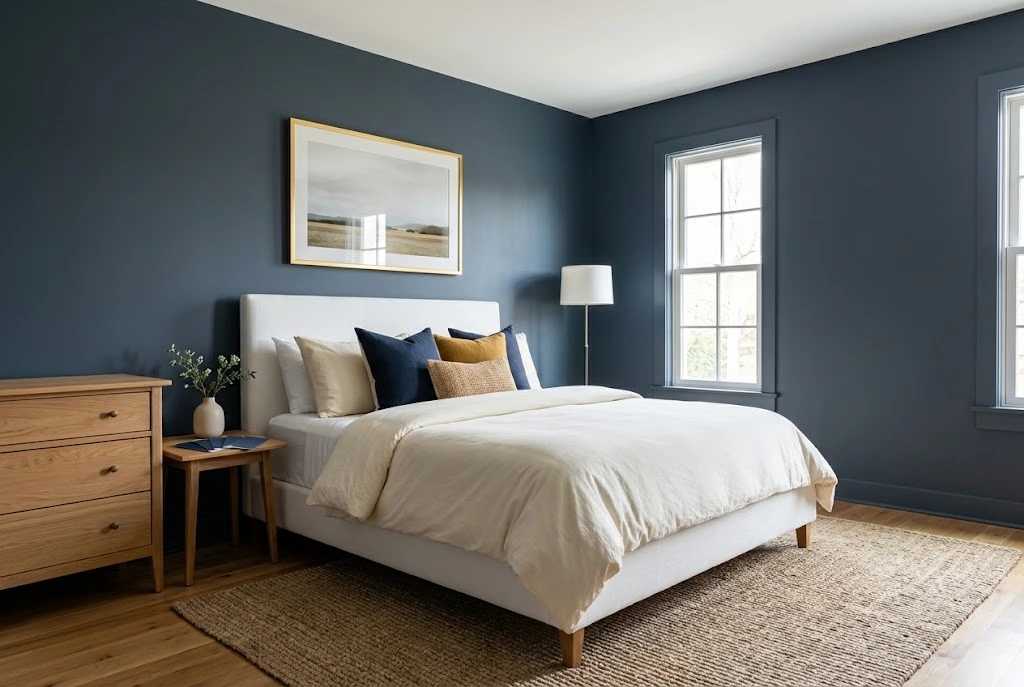
Navy blue bedroom walls create a dramatic backdrop, but the right shade depends on your room’s natural light and the atmosphere you want. A deep, nearly black navy looks bold and intimate, while a softer blue-gray navy can feel less intense. Test your preferred shades before painting the entire room.
Start by comparing three types of navy:
- Inky navy: A very deep blue that creates a dramatic, sophisticated appearance. It works particularly well with warm lighting, creamy bedding, and light wood.
- Classic navy: A recognizable deep blue that suits traditional, contemporary, coastal, and transitional bedrooms.
- Blue-gray navy: A muted shade with gray undertones that can feel softer than an almost-black blue.
Choose a finish that suits your walls
Paint sheen affects both appearance and maintenance. Flat and matte finishes generally hide minor surface imperfections better than shinier finishes, while eggshell and satin finishes are typically easier to wipe clean.
For bedroom walls, matte or eggshell can work well. If your walls have noticeable dents or uneven patches, a lower-sheen finish may be preferable. Always check the paint manufacturer’s cleaning and application recommendations before choosing.
Check the paint’s light reflectance value
Light Reflectance Value (LRV) describes how much visible light a surface reflects. The scale generally runs from 0, representing black, to 100, representing white. Dark navy paints typically have lower LRV values than lighter blue paints, so they reflect less light.
When comparing navy blue bedroom paint colors, check the LRV on the paint manufacturer’s website or color information sheet. A navy with a slightly higher LRV may feel less intense than a nearly black shade, although window placement, room lighting, and surrounding colors also affect the result.
Test the color before buying enough paint
Paint a sample at least 2 feet by 2 feet (about 60 by 60 cm) on a sample board or suitable wall area. Test it in more than one location and look at it in the morning, afternoon, and evening.
Pay attention to how the color changes beside your flooring, curtains, and existing furniture. Follow the paint label for primer and coat recommendations; two coats are common, but coverage depends on the product and the surface underneath.
Important note: If your home was built before 1978, existing paint may contain lead. Before sanding, scraping, or otherwise disturbing older paint, review the U.S. Environmental Protection Agency’s lead-safe renovation guidance. Paid renovation work that disturbs paint in covered pre-1978 homes generally requires a lead-safe certified contractor.
2. Paint a Navy Accent Wall Behind the Bed
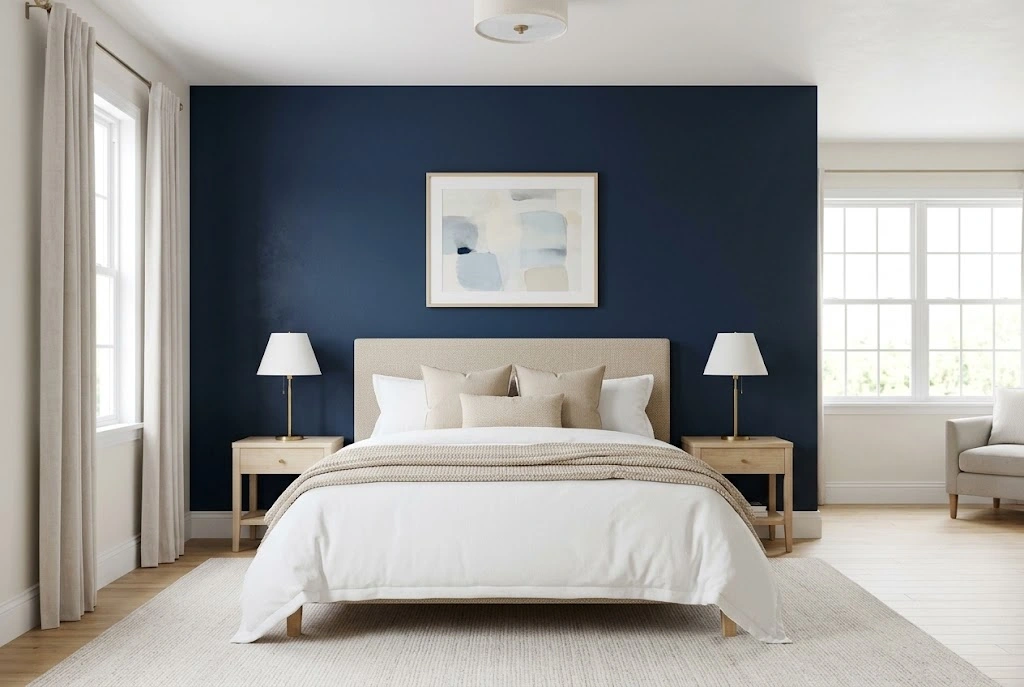
A navy accent wall behind the bed is an easy way to introduce a dark color without committing to an entirely navy bedroom. It creates a focal point, helps anchor the bed, and leaves the remaining walls available for lighter colors that can keep the room feeling open.
The wall behind the headboard is often a practical choice because it gives the bed a clear visual backdrop. Keep the other walls warm white, pale beige, or a soft neutral gray to create contrast.
Make an accent wall work in a small bedroom
For a bedroom measuring 10 by 10 feet (about 3 by 3 meters), consider painting only the headboard wall navy. Keep the remaining walls a warm white, use light bedding, and choose compact nightstands that do not crowd the walking space.
A mirror can also help reflect available light, especially when placed where it catches daylight or a lamp. It will not create additional natural light, but its reflections can make the room feel brighter.
Before painting, consider the wall’s shape. A relatively uninterrupted wall usually creates a cleaner result than one divided by several doors, windows, or built-in units.
Stop the accent color at an inside corner or a natural architectural boundary rather than ending it arbitrarily in the middle of a wall.
Create a More Connected Bedroom
3. Go All In With a Moody Navy Color Drench

Color drenching means using the same color across several surfaces, often including the walls, ceiling, trim, and doors. A navy color-drenched bedroom creates a continuous, enveloping look that suits people who prefer dark, dramatic interiors over bright, high-contrast spaces.
The approach works particularly well when you want the room to feel deliberately designed rather than treating the navy wall as a separate feature.
Create contrast with bedding and materials
When almost every painted surface is navy, use other materials to prevent the bedroom from looking visually flat.
For example, combine navy walls and trim with:
- White or cream bedding.
- A natural oak or walnut bed frame.
- Linen curtains in a warm neutral.
- Brass bedside lighting.
- A pale rug with a subtle pattern.
The light bedding creates a clear focal point against the darker surroundings. Natural wood and textured fabrics introduce variation without breaking up the color scheme.
Choose paint colors and finishes carefully
For the most consistent appearance, use the same navy color across the intended surfaces. You can use different sheens to distinguish walls from trim while maintaining the same color.
A designer-inspired combination is matte navy on the walls and ceiling, with eggshell or satin navy on the trim and doors. The difference in sheen adds subtle definition, although shinier finishes can reveal more surface imperfections.
If you are using multiple cans of the same paint color and finish, mixing them together in a clean container can help minimize slight batch-to-batch differences. Follow the manufacturer’s instructions, especially when working with different finishes.
Test Color Drenching Before Going All In
Keep in mind that a fully navy room can feel darker, particularly when natural light is limited. Lighter bedding, well-positioned lamps, and a contrasting floor covering can help balance the effect.
4. Paint the Ceiling Navy for a Cocoon Effect
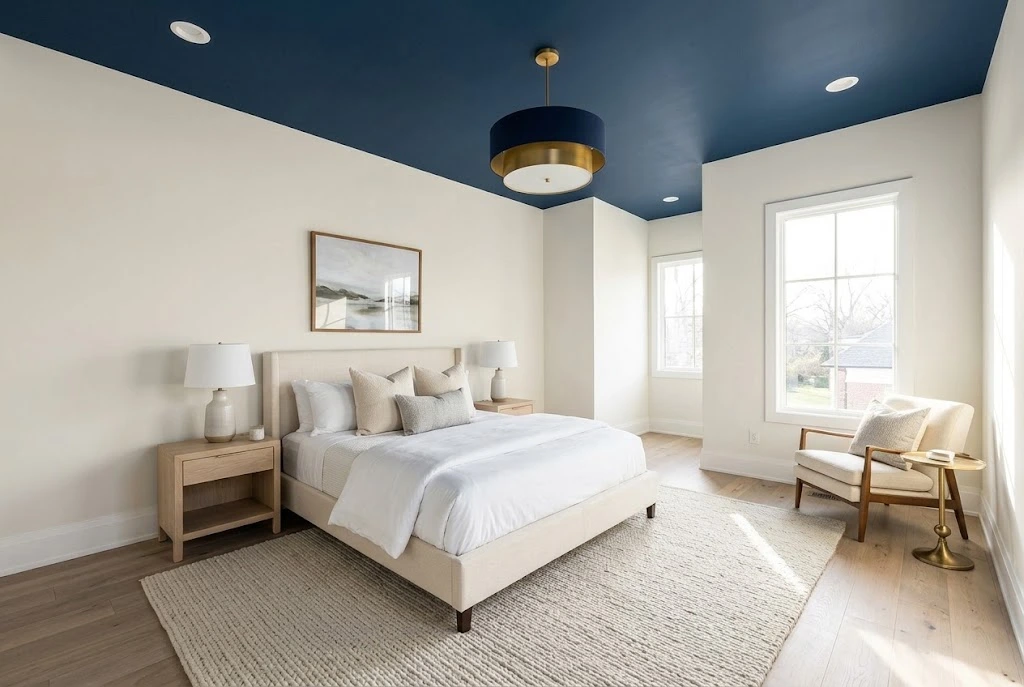
A navy bedroom ceiling adds drama without requiring every wall to be dark. You can pair it with pale walls for a noticeable contrast or extend navy across the walls and ceiling for a more enveloping effect. Your ceiling height, natural light, and preferred style should guide the choice.
In a bedroom with standard 8-foot (about 2.4-meter) ceilings, a dark ceiling may make the room feel more intimate. In a taller bedroom, navy overhead can help balance the proportions and create a more connected color scheme.
Neither effect is guaranteed in every room. Ceiling height, lighting, and wall colors all influence how the finished space feels.
Three ways to use a navy ceiling
- Navy ceiling with white walls: Creates a strong contrast and works well with white bedding, simple furniture, and navy accessories.
- Navy ceiling with navy walls: Produces a more enveloping look with fewer visible color boundaries.
- Navy ceiling with pale gray walls: Introduces a moody element while preserving a softer, lighter wall color.
For Example: A bedroom with pale gray walls, a white bed, and oak nightstands can use a navy ceiling as its main dramatic feature. Add navy through one or two accessories to connect the ceiling to the rest of the room.
Paint the ceiling with care
Use a ceiling paint finish recommended for the product and surface, commonly flat or matte. Lower-sheen finishes generally make roller marks and minor imperfections less noticeable than glossier finishes.
Cut in around the edges and work in manageable sections, maintaining a wet edge to reduce visible lap marks. Paint the ceiling before the walls so you can correct ceiling drips or spatter during the wall-painting stage.
5. Add Texture With Paneled Walls or Wallpaper
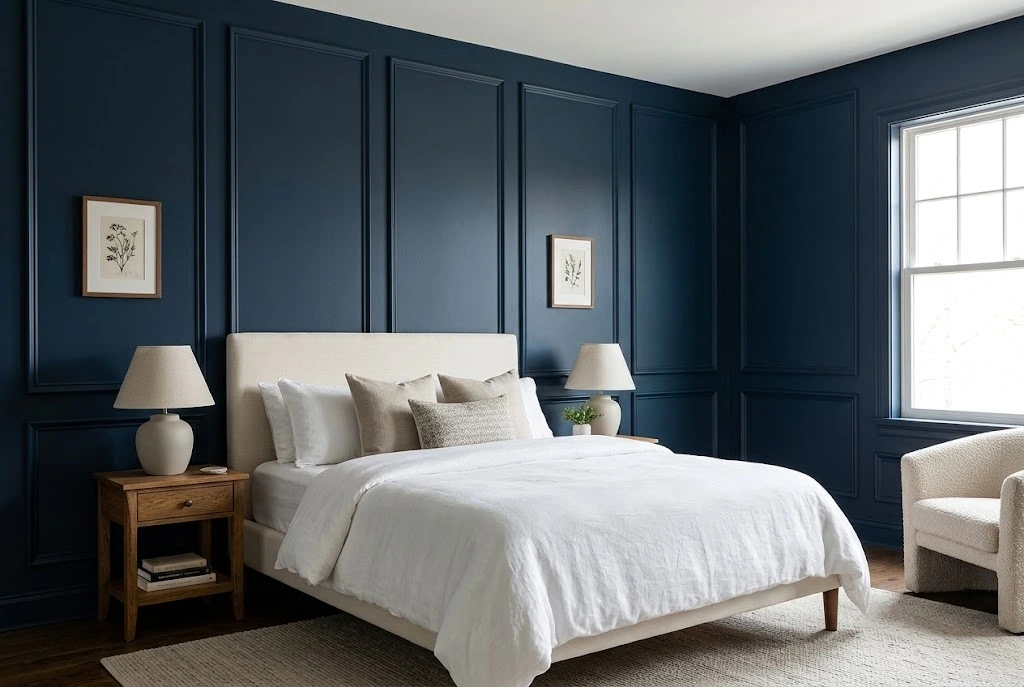
Navy paneled walls and wallpaper add depth to a bedroom without relying on extra colors. Paneling creates shadows and architectural detail, while wallpaper introduces pattern and texture. Either option can make the wall behind the bed more interesting, especially in a room with simple furniture.
The right choice depends on your budget, DIY skills, and whether you own or rent your home.
Try navy paneling for a tailored finish
Board-and-batten, shaker-style panels, and picture-frame molding are all options for adding detail behind a bed. Painting the panels and the surrounding wall the same navy creates a cohesive appearance, allowing the shadows and lines to provide the decoration.
For a simple picture-frame molding design:
- Measure the wall and the width of the bed.
- Sketch a panel layout that looks balanced around the headboard.
- Mark the proposed panels with painter’s tape.
- Check the spacing with a level before cutting or installing molding.
- Install the molding using a suitable method for your wall and material.
- Fill appropriate joints, prepare the surface, and paint everything navy.
If you are fastening molding to drywall, check the manufacturer’s installation guidance and use suitable fasteners or adhesive. Uneven spacing, poorly aligned corners, and panels crowded against the bed can make the result look untidy.
Use navy wallpaper for pattern
Navy bedroom wallpaper is a good option when you want detail without installing architectural trim. A tone-on-tone geometric print, subtle floral pattern, or understated texture can add interest while preserving the room’s moody atmosphere.
If you prefer a calmer look, choose a wallpaper pattern that combines navy with cream, gray, or a muted blue. Large, high-contrast patterns may dominate a small bedroom, so consider the scale of the design before purchasing a full roll.
In a rental, check your lease and test any removable wallpaper according to the manufacturer’s instructions. Removable products do not work equally well on every wall surface, and some can damage weak or poorly prepared paint.
6. What Colors Go With Navy Blue Bedroom Walls? Start With Soft Neutrals
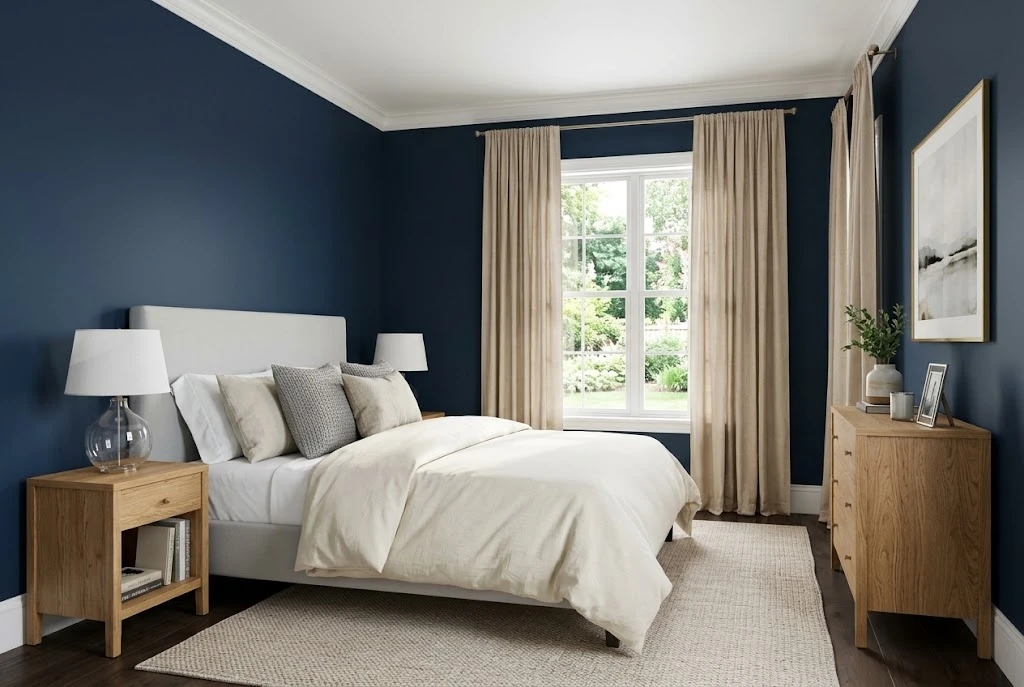
The easiest colors to pair with navy blue bedroom walls are soft whites, warm grays, beige, and natural wood tones. These lighter materials create contrast and prevent the room from becoming one large block of dark color. The best combination depends on whether you prefer a crisp, modern bedroom or a warmer, more relaxed space.
Start with one neutral for the larger surfaces, such as bedding or curtains, and bring the remaining colors in through furniture and smaller accessories.
Navy blue and white bedroom
White bedding against navy walls creates a clean, high-contrast look. For a coastal-inspired bedroom, combine navy with striped linens, pale wood, woven baskets, and a natural-fiber rug.
Choose a creamy white if you want the space to feel softer, or a cleaner white if you prefer a sharper contrast.
Navy blue and gray bedroom
Gray works well with navy, but its undertone matters. Warm gray with a subtle beige undertone can soften the combination, while a cool, blue-gray may create a more restrained, contemporary appearance.
If both the navy and gray are very cool and dark, add a lighter fabric or warm wood accent to keep the room from feeling too stark.
Navy blue and beige bedroom
Beige introduces warmth without competing with navy. Try navy walls with a sand-colored duvet cover, natural linen curtains, and oak nightstands.
This combination is useful when you want a bedroom that feels relaxed rather than formal.
Modern navy blue bedroom
For a modern look, keep the palette simple. Pair navy walls with white or pale gray bedding, clean-lined furniture, and a few black or brushed-brass accents.
Avoid buying every accessory in the same finish. A mix of wood, fabric, and metal creates more visual variety than a room filled with matching decorative pieces.
7. Warm Up Navy With Gold, Blush, Emerald, or Burnt Orange
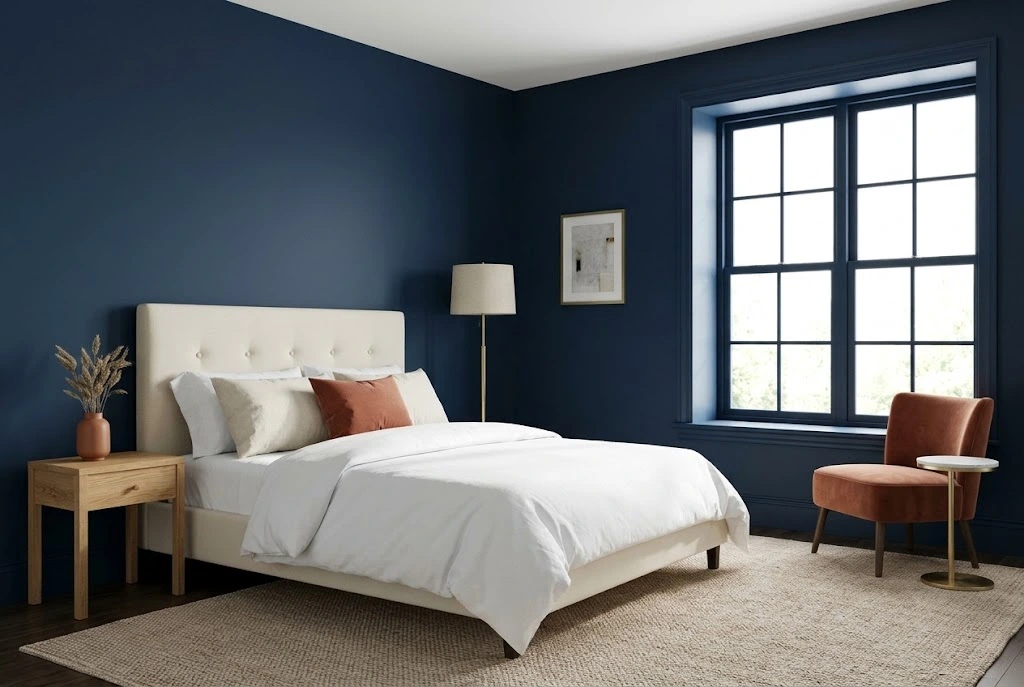
Navy works with both warm accents and rich jewel tones. Brass or gold adds warmth, blush pink creates a softer contrast, emerald green introduces depth, and burnt orange offers a more noticeable color contrast. Choose one main accent first so the bedroom has a clear visual direction.
You do not need to repaint the room to experiment. Start with removable accessories, such as cushions, throws, lampshades, artwork, or vases.
Navy blue and gold bedroom
Brass and gold finishes bring a warm highlight to deep blue walls. Try a brass bedside lamp, gold-toned drawer pulls, or a slim picture frame.
Brushed or aged finishes generally create a subtler effect than highly polished metal. Repeat the finish in two or three places rather than using it on every accessory.
Navy blue and blush pink bedroom
Blush pink softens navy without removing its depth. A dusty pink throw, upholstered cushion, or small piece of artwork can introduce the color without making it dominate the room.
For a more restrained result, combine blush with cream bedding and light wood furniture.
Navy blue and emerald green bedroom
Emerald green creates a rich, layered palette alongside navy. Use it selectively through a velvet cushion, a decorative lamp, a plant, or a small piece of artwork.
Since both colors can be visually strong, leave enough space for pale neutrals to balance them. If you prefer a quieter bedroom, use a softer, less saturated green.
Navy blue and burnt orange bedroom
Burnt orange and rust add warmth and contrast against navy. A terracotta vase, rust-colored throw, or patterned cushion can create a striking accent without requiring several different colors.
For a boho-inspired navy bedroom, combine rust textiles with rattan, jute, natural wood, and a few plants. Keep the larger surfaces relatively simple so the patterns and materials do not compete.
Use the 60-30-10 color guideline
The 60-30-10 guideline is a useful decorating rule of thumb, not a strict formula. It suggests using approximately 60% of a dominant color, 30% of a secondary color, and 10% of an accent color.
For a navy bedroom, you might use navy as the dominant color, cream as the secondary color, and brass or rust as the accent. Think about the overall visual weight of the room rather than trying to calculate the precise percentage of every surface.
8. Layer Navy Bedding and a Headboard for a Cozy Bed

Navy bedding is an easy way to introduce a moody color scheme without painting your walls. Start with a neutral sheet set, add a navy duvet cover or quilt, and finish with a textured throw and a few cushions. This approach gives you flexibility because individual pieces are easy to replace as your preferences change.
Layering also helps distinguish different shades of navy instead of making the entire bed look like one flat surface.
Combine different bedding textures
Choose a small selection of fabrics with different textures. Linen, cotton, velvet, and wool can work together, provided their colors and patterns are balanced.
For example, try:
- White or cream sheets as the base.
- A navy duvet cover or quilt.
- A cream knitted throw at the foot of the bed.
- Two or three cushions in navy, beige, or a muted accent color.
You do not need every layer. In a small bedroom, a duvet, one throw, and a couple of cushions can create the same general effect without making the bed feel crowded.
Choose a headboard that complements the walls
A navy upholstered headboard looks striking against pale walls. Velvet gives it a richer appearance, while linen creates a more understated finish.
If your walls are already navy, consider a cream upholstered headboard, natural wood, or cane to make the bed stand out. Alternatively, use a navy headboard that differs slightly in texture from the wall so the shapes remain distinguishable.
The headboard should be proportionate to the bed and the available wall space. Check its width and height against nearby windows, bedside tables, and any wall molding before purchasing.
Keep dark bedding practical
Dark navy fabric can show lint, dust, and light-colored pet hair more readily than some pale fabrics. If easy maintenance is a priority, choose washable covers and check the care label before buying.
Avoid using navy for every bedding layer. Pale pillowcases, a lighter sheet, or a contrasting throw help break up the dark surface and make the bed feel more inviting.
9. Add Navy Furniture and Nightstands Without Overdoing It
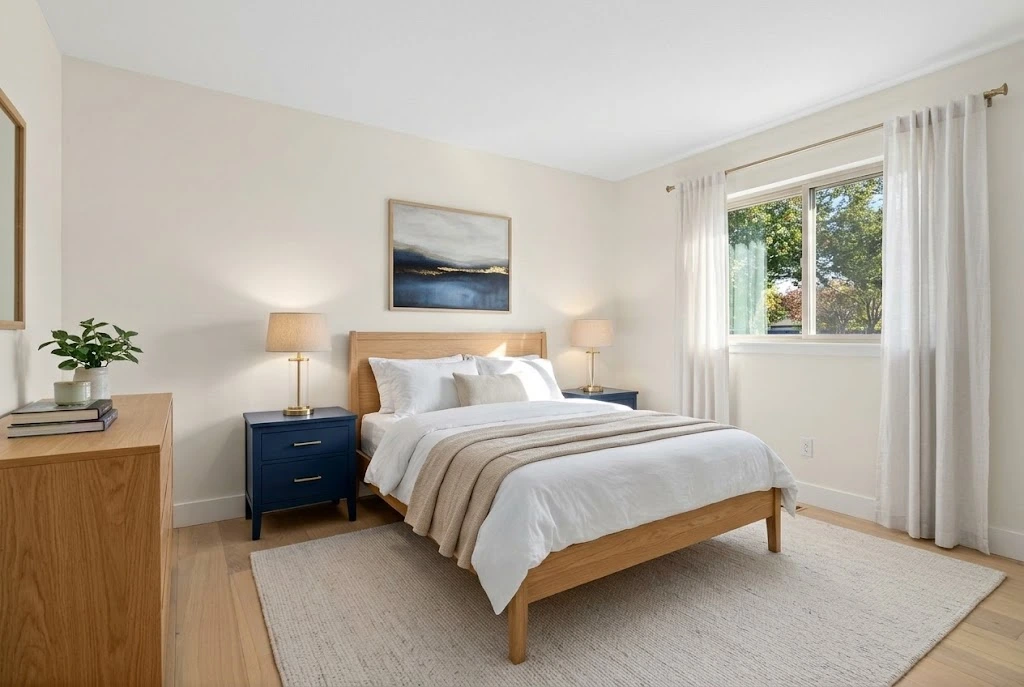
Navy bedroom furniture adds color without requiring permanent changes to the walls. A navy dresser, pair of nightstands, upholstered bench, or accent chair can become a focal point. The simplest approach is to choose one or two navy pieces and balance them with wood, light upholstery, or other neutral finishes.
This is especially useful if you rent, have already furnished the room, or want a navy color scheme that is easier to update later.
Start with navy nightstands
A pair of navy nightstands can frame the bed and create a deliberate, coordinated appearance. For comfortable everyday use, choose tables with a top close to the height of your mattress.
As a practical starting point, aim for a height within a couple of inches (about 5 cm) of the mattress top, then consider the bed frame and your own reach.
Light wood, white, or brass hardware can provide contrast against navy. If you use matching nightstands, vary the styling slightly with books, lamps, or small accessories rather than making both sides look identical in every detail.
Refresh furniture you already own
Painting an existing dresser or bedside table navy can be less expensive than replacing it. Before starting, confirm that the surface can be painted and select a suitable primer and furniture paint.
The general process is to clean the furniture, prepare the surface according to the product instructions, apply the recommended primer if needed, and finish with the specified number of coats. Laminate, glossy finishes, and previously painted surfaces may need different preparation methods.
If the furniture is old, check for potential lead paint before disturbing the finish.
Balance navy furniture with lighter surroundings
In a room with white walls and a wooden bed frame, two navy nightstands can create contrast without making the entire bedroom feel dark. Brass lamps or cream shades can connect the furniture to a warmer color palette.
A larger primary bedroom can accommodate additional navy elements, such as a dresser or upholstered bench. In a small bedroom, one substantial navy furniture piece may be enough. Consider walking space and storage needs before adding another item.
Avoid buying a full matching navy furniture set simply to make the room coordinated. Mixing navy with wood, cane, metal, and neutral fabrics usually creates a more varied result.
10. Finish Your Navy Blue Bedroom Ideas With Curtains, Rugs, and Decor
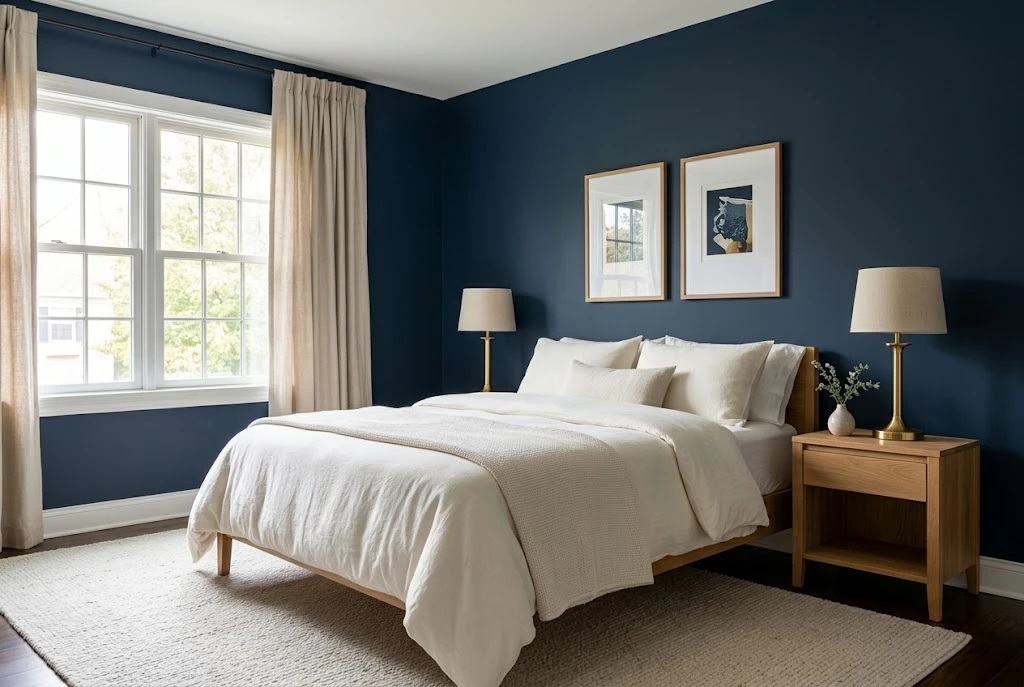
Curtains, rugs, and decorative accessories help connect navy walls, bedding, and furniture. Choose window treatments that suit your privacy and light-control needs, a rug that fits the bed and walking space, and a few decorative pieces that repeat colors already used in the room.
These finishing touches matter because the right combination can make a dark bedroom feel intentional without requiring more paint or large furniture purchases.
Choose curtains that complement navy walls
Navy curtains create a strong frame around a window on pale walls. In a room with navy walls, cream, beige, light gray, or subtly patterned curtains provide more contrast.
Lined curtains can improve privacy and block more outside light, depending on the lining and construction. If you want to reduce morning sunlight, check whether the fabric is light-filtering, room-darkening, or blackout.
For a taller-looking window, consider mounting the curtain rod above the window frame. Extending it beyond the sides can also allow the curtains to sit farther from the glass when open, helping expose more of the window.
Before buying, measure the window and check the curtain panel width, length, lining, and care instructions. Too-short curtains can interrupt the visual flow of the room, while overly full panels may crowd a narrow window.
Select the right navy bedroom rug
A rug helps define the bed area and adds texture beneath the furniture. For a rug placed under the bed, a useful starting guideline is to aim for roughly 18 to 24 inches (45 to 60 cm) of rug showing beyond the sides and foot of the bed, where the room and rug size allow.
This is not a requirement for every layout. A large rug may be impractical in a small bedroom, particularly when the bed is close to a wall or wardrobe.
Before purchasing, mark the proposed rug dimensions on the floor with painter’s tape. This helps you see whether the rug will fit around nightstands, door swings, and walking paths.
Choose a light or patterned rug against dark flooring to create contrast. If your floor is pale oak or light carpet, a navy, beige, or muted geometric rug can anchor the room without making it feel too heavy.
For a compact bedroom, consider runners beside the bed instead of a large area rug.
Finish the room with simple navy bedroom decor
Decorative accessories are most effective when they support the colors and textures already in the room. Try a combination of:
- Ceramic vases in cream or warm white.
- Framed artwork with pale mats.
- Brass or light wood picture frames.
- A mirror positioned to reflect available light.
- Books and small objects in colors already used in the bedding.
You do not need to fill every empty surface. Leave some space around the accessories, particularly on nightstands and dressers, so the room remains practical.
For example, a navy bedroom with cream bedding, pale curtains, and a light rug might need only a brass lamp, two framed prints, and a small ceramic vase to feel complete.
Pick Your First Navy Move and Test It With a Large Sample
The best navy blue bedroom ideas begin with a clear plan for where the color will appear. A single accent wall gives you a relatively simple starting point, while color drenching creates a more enveloping look. Navy bedding and furniture offer another option if you prefer a flexible scheme without repainting the room.
Before buying paint, furniture, or accessories, test the colors together and consider how they look in your actual lighting. Balance navy with lighter fabrics, suitable lighting, and a few contrasting materials.
Start by sampling two or three navy shades, then compare them beside your flooring, bedding, and curtains throughout the day. The results will help you choose a color and decorating approach that suits your bedroom rather than relying on a shade that only looks right in a photograph.
FAQ
Is navy blue a good color for a bedroom?
Yes. Navy can create a calm, dramatic bedroom and works with a broad range of decorating styles. It pairs well with neutrals, wood, and several accent colors. The best shade depends on your lighting and personal preference. If you prefer a bright, airy room, start with navy bedding or one accent wall instead of painting every surface.
Does navy blue make a bedroom look smaller?
Navy can make a bedroom feel more enclosed, particularly when the room receives little daylight and has limited artificial lighting. However, it can also create an intentional, intimate atmosphere. If you want to use navy in a small bedroom, try one accent wall, lighter bedding, pale curtains, and a contrasting rug before committing to an all-navy scheme.
What color floors go best with navy blue walls?
Warm wood floors, such as oak, complement navy by introducing a natural, warm tone. Pale wood, light carpet, and beige flooring can also brighten the overall scheme. Dark floors can work with navy walls, but adding a lighter rug or pale furniture helps create visual separation and prevents the room from looking too dark.
Is navy blue the same as dark blue?
Not exactly. Navy generally refers to a very deep blue, while dark blue describes a broader range of shades. The exact appearance of navy varies between paint manufacturers, fabrics, and lighting conditions. Compare actual samples rather than relying only on a color name when matching paint to bedding, curtains, or furniture.
Is navy blue a masculine color?
No. Color does not have a gender, and navy can suit many different bedroom styles. Soft textiles, curved furniture, and botanical artwork can create a gentle look, while leather, metal, and clean-lined furniture produce a more tailored appearance. The materials, shapes, and accessories you choose have a strong influence on the final style.
How do I clean navy walls without leaving shiny marks?
Start by checking the paint manufacturer’s cleaning instructions. Dust the wall gently with a clean microfiber cloth, then test a barely damp cloth with a small amount of mild soap in an inconspicuous area. Dab rather than scrub, since aggressive rubbing can burnish some matte finishes and leave shiny patches. Allow the test area to dry before cleaning a larger section.