
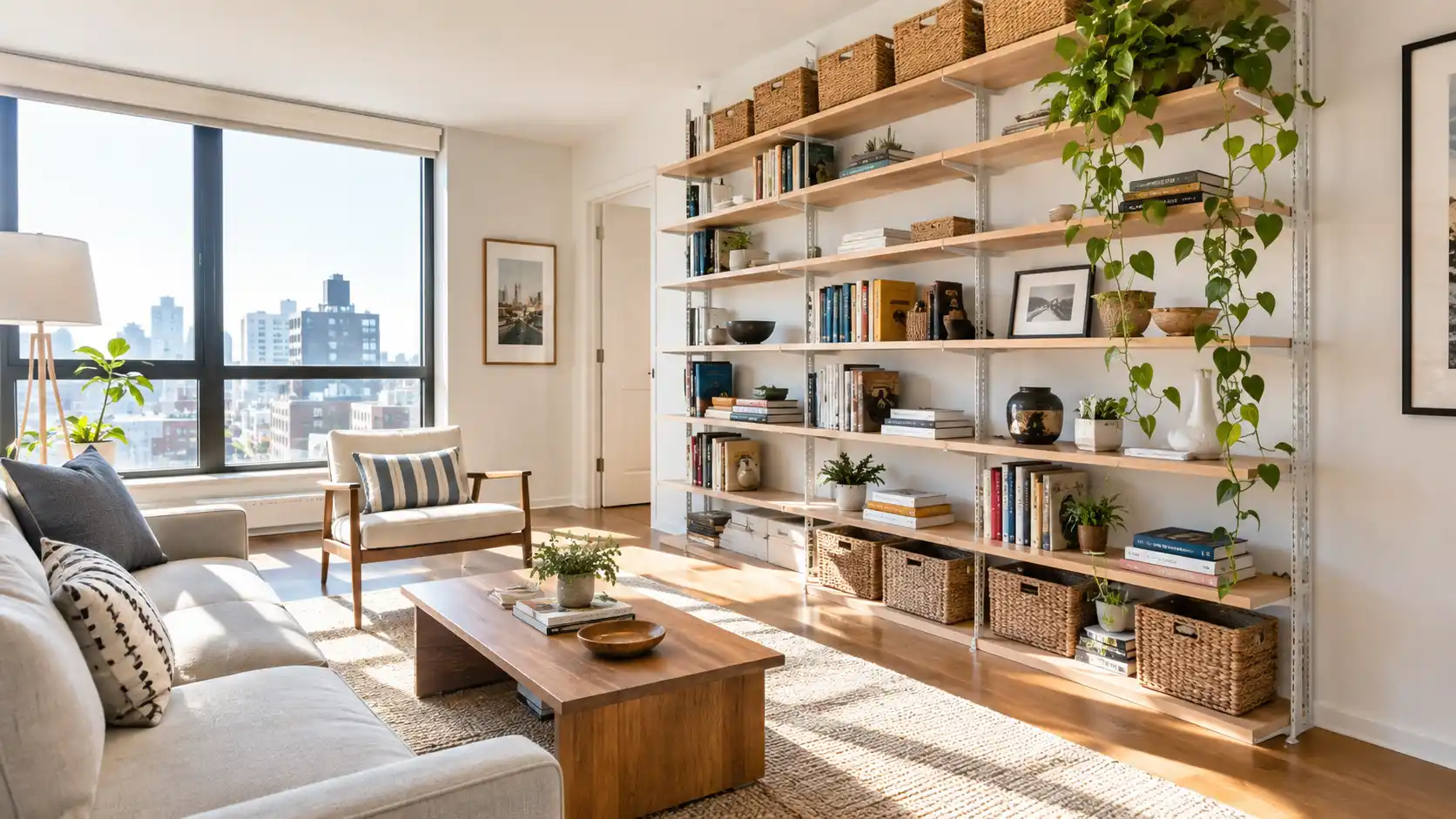
Living in a small apartment often means battling a constant state of clutter. When your square footage is limited, expanding outward is no longer a viable option. Dropping another bulky dresser or wide bookshelf into a tight 600-square-foot footprint instantly suffocates the room, making it feel claustrophobic and uninviting. The only logical, architectural solution is to look up. Implementing smart, structural vertical storage ideas allows you to reclaim your floor space while maintaining a highly organized, aesthetically pleasing home.
Most renters and homeowners in urban spaces completely ignore the top third of their rooms. That empty wall space extending from your eye level up to the ceiling is prime real estate for maximizing organization. However, executing these vertical strategies requires more than simply stacking plastic bins. It requires precise measurements, an understanding of load-bearing drywall anchors, and a keen eye for interior design to prevent your apartment from looking like a crowded warehouse.
This comprehensive guide delivers professional, step-by-step strategies to double your apartment’s storage capacity. You will learn how to identify wall studs, select renter-friendly materials, and design beautiful, functional systems. Review the architectural guidelines below before purchasing materials for your small space transformation.
Quick Summary & Key Takeaways
Open
- ✓ Anchor Safely: Always secure heavy floor-to-ceiling shelving directly into wooden wall studs, avoiding standard drywall anchors.
- ✓ Renter-Friendly Options: Utilize heavy-duty tension rods and over-the-door metal tracks to multiply storage without drilling holes.
- ✓ The High Perimeter: Reclaim the top 12 inches of your walls for out-of-season and long-term storage boxes.
- ✓ The 60/40 Rule: Keep 60% of your vertical storage hidden in identical bins and 40% open for decor to avoid visual clutter.
1. Install Floor-to-Ceiling Modular Shelving Units
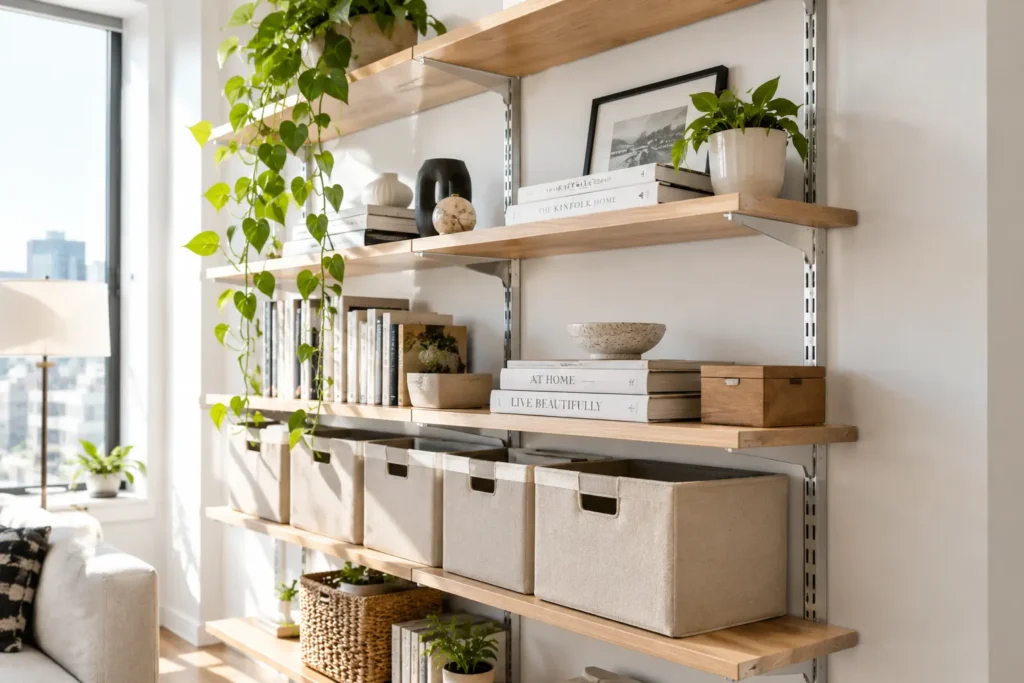
Standard bookcases typically stop around 6 feet high, leaving a massive, unusable void of 2 to 3 feet between the top shelf and an average 8-foot or 9-foot apartment ceiling. To truly maximize your square footage, you must bridge this gap. Floor-to-ceiling modular shelving acts as the ultimate anchor for vertical storage ideas, providing a customized, built-in look without the astronomical carpentry costs.
Strategic Placement and Sizing Select a primary wall in your living room or bedroom—preferably a wall without windows to avoid blocking natural light. When purchasing a modular system (such as track shelving or tall ladder shelves), ensure the vertical tracks measure at least 84 to 96 inches tall. The lowest shelf should sit exactly 18 inches off the ground, aligning with the height of a standard sofa seat, while the highest shelf should terminate roughly 12 inches below the ceiling.
Load-Bearing Safety Standards Never rely on standard plastic drywall anchors for large shelving units. A fully loaded bookcase can easily exceed 200 pounds. You must anchor the vertical tracks directly into the wooden wall studs. Use an electronic stud finder to locate the studs (which are traditionally spaced 16 inches apart on center in American residential building codes). Drive 2.5-inch steel wood screws directly through the tracks and into the studs. If a stud is entirely unavailable, you must use heavy-duty steel toggle bolts rated for a minimum of 75 pounds per bolt.
Styling to Prevent Visual Clutter A massive wall of shelving can easily become an eyesore if not styled correctly. Follow the 60/40 rule: 60% of the shelf space should be dedicated to hidden storage using structured, matching woven baskets or opaque canvas bins. The remaining 40% should feature open, breathable space for decorative items, curated books, and trailing house plants like Pothos, which draw the eye upward and emphasize the height of the room.
2. Leverage Over-the-Door Track Systems
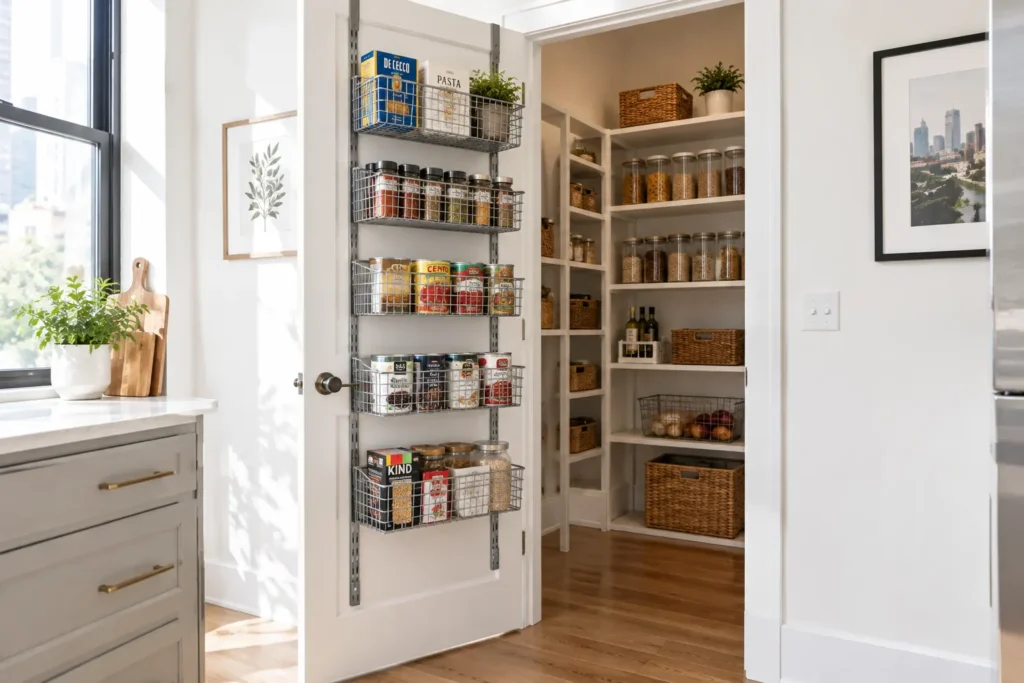
When floor space is non-existent, doors become one of the most underutilized vertical planes in a small apartment. Most people hang a flimsy, over-the-door shoe organizer and call it a day. However, professional organizers use heavy-duty, customizable metal track systems that transform the back of any standard interior door into a massive, weight-bearing pantry or utility closet.
The Metal Track Advantage Discard the cheap plastic organizers that swing violently every time you open the door. Invest in a solid steel vertical track that hooks securely over the top of the door and anchors lightly at the bottom to prevent swinging. These systems allow you to snap heavy-duty metal wire baskets into the track at customized intervals.
Room-by-Room Applications
- The Kitchen Pantry Door: Standard apartment kitchens severely lack cabinet space. Outfit your pantry or kitchen door with deep, 5-inch wire baskets. Store your heavy canned goods, bulky spice jars, and boxes of dry pasta vertically.
- The Bathroom Door: Bathroom vanity storage is notoriously tight. Use a track system with shallow, 3-inch deep baskets to hold rolled hand towels, extra toilet paper rolls, tall bottles of shampoo, and daily skincare routines.
- The Utility Closet: Create a dedicated cleaning command center. Use heavy-duty utility hooks on the track to hang your Swiffer, broom, ironing board, and dustpan, keeping them completely off the floor.
Ensure your interior doors are standard solid core or heavy hollow core before loading them with over 30 pounds of weight. Ensure there is at least a 1/8-inch clearance gap between the top of the door and the doorframe so the metal hooks do not strip the paint when the door swings shut.
3. Mount High-Perimeter Floating Shelves
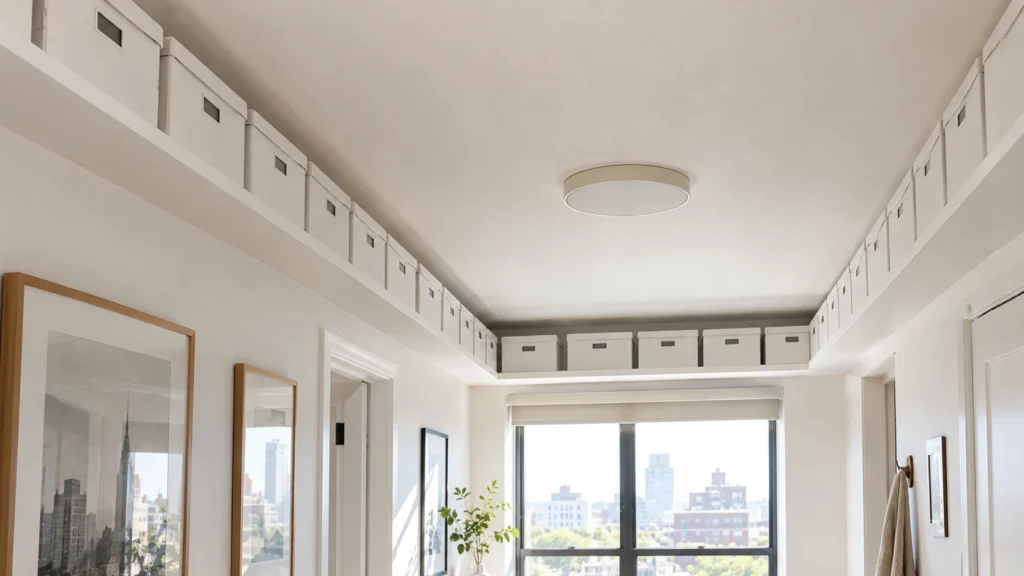
One of the most visually stunning vertical storage ideas involves utilizing the top 12 to 18 inches of your room—the perimeter space running directly below the ceiling line. This architectural strategy creates a beautiful “library” effect, adding massive storage capacity without infringing on any walkable floor space or bumping into your existing furniture.
Designing the High Perimeter This technique works exceptionally well in bedrooms, narrow hallways, or home offices. Install a continuous line of floating shelves exactly 12 inches below your ceiling. Because these shelves sit well above eye level, they draw the viewer’s gaze upward, tricking the brain into perceiving the ceilings as much higher than they actually are.
Material Selection and Hardware For a modern aesthetic, choose stark white or light oak wooden shelves that are at least 10 inches deep to accommodate large items. Because floating shelves utilize hidden internal brackets, they require incredibly precise mounting.
- Locate every single wall stud along the perimeter.
- Use a laser level to shoot a perfectly straight, horizontal reference line across the entire wall.
- Drill 5/16-inch holes into the studs and insert the heavy-duty steel floating bracket posts. Slide the wooden shelves directly onto the metal posts for a seamless, floating finish.
What to Store High Up Because accessing these shelves requires a step stool, you should strictly reserve this zone for out-of-season items or deep storage. Use identical, hard-sided storage boxes to hold winter sweaters, holiday decorations, tax documents, and heavy hardcover books. Using uniform, matching boxes ensures the high perimeter looks like a deliberate architectural feature rather than a messy attic.
4. Construct a Custom Pegboard Command Center
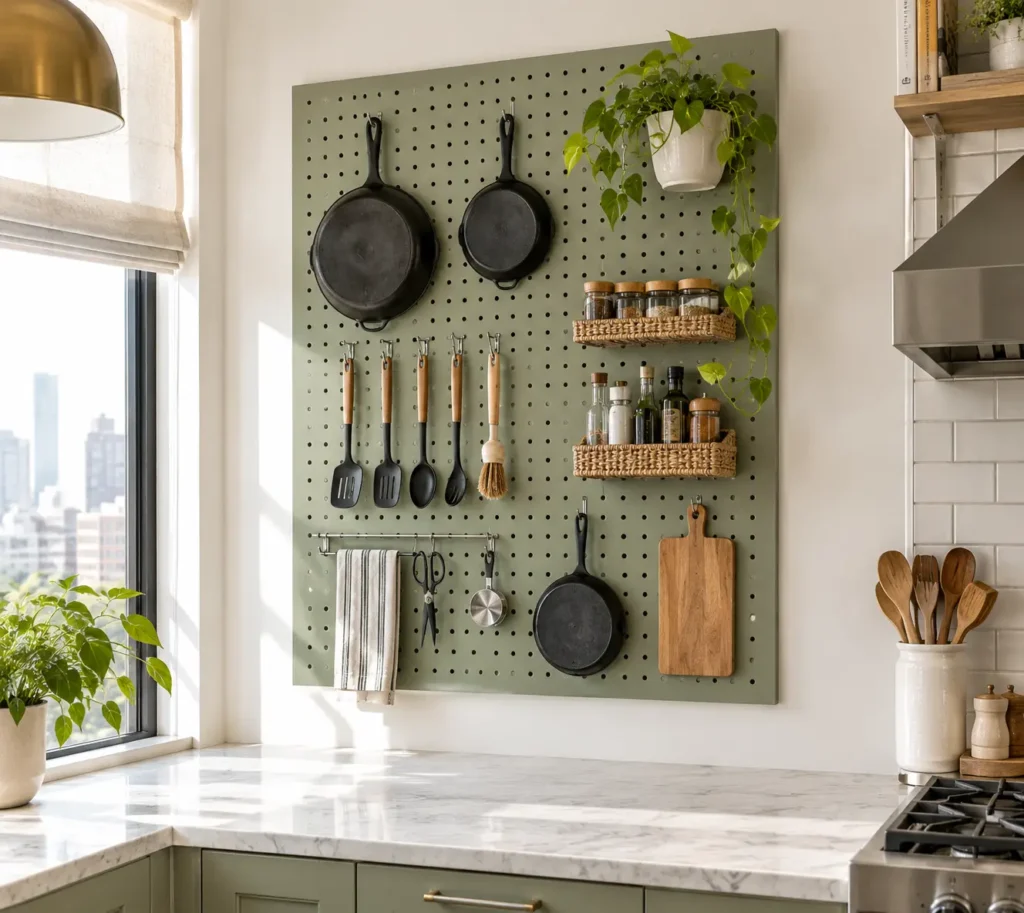
Pegboards are no longer confined to dark, dusty garages. Painted, high-quality wooden pegboards have become a staple of modern apartment design. They offer unparalleled versatility because the storage configuration can be altered daily without drilling new holes into your apartment walls.
Building an Aesthetic Pegboard Do not buy the cheap, brown composite pegboard from the hardware store. Purchase a sheet of 3/4-inch thick architectural plywood pegboard, or buy standard pegboard and paint it a rich, matte accent color like charcoal grey, navy blue, or sage green.
Frame the outer edges of the pegboard with thin 1×2-inch pine trim to give it a finished, professional look. You must mount the pegboard to the wall using 1/2-inch wooden spacers behind it. If you mount a pegboard perfectly flush against the drywall, you will not be able to slide the metal hooks through the holes.
Maximizing the Grid
- The Kitchen Configuration: Hang a massive 4×4-foot pegboard on an empty kitchen wall. Use heavy-duty steel hooks to hang all your bulky pots, pans, cast-iron skillets, measuring cups, and cooking utensils. This entirely frees up your lower kitchen cabinets.
- The Entryway Drop Zone: Install a 2×3-foot pegboard right beside your front door. Add small wooden dowels and mini floating shelves to hold your keys, sunglasses, outgoing mail, umbrellas, and dog leashes. This prevents entry table clutter and ensures you never lose your essentials.
5. Implement Tension Rod Systems for Renter-Friendly Storage
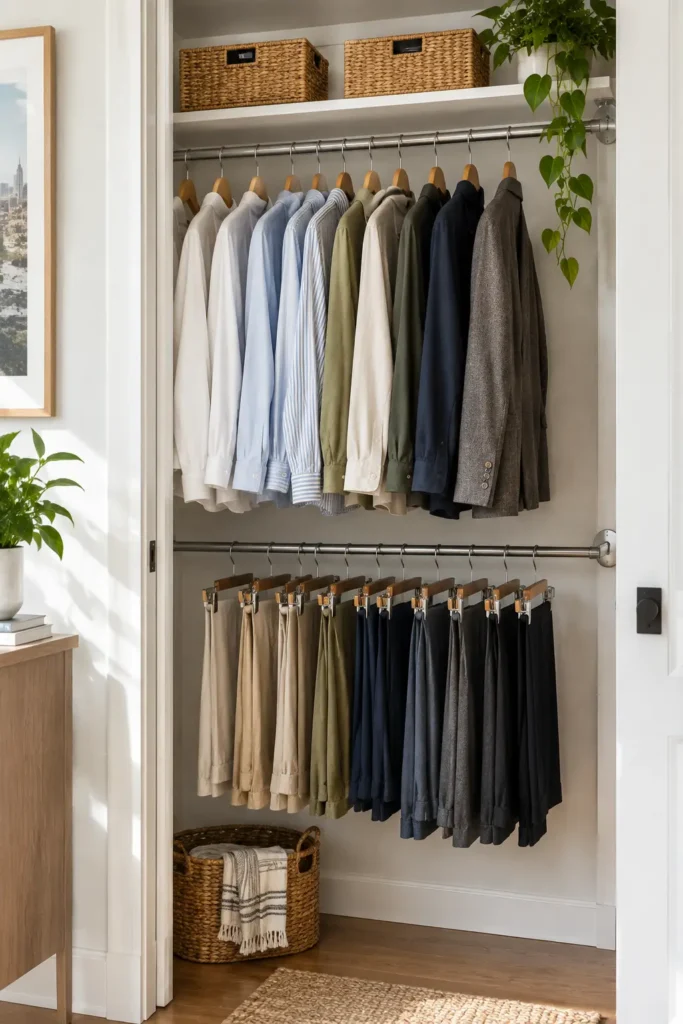
If you live in an apartment with a strict lease that prohibits drilling holes in the drywall, tension rod systems are the most effective non-destructive vertical storage ideas available. Using heavy-duty internal spring mechanisms, these poles wedge tightly between the floor and the ceiling, or between two opposing walls, providing incredible structural support without a single screw.
Multiplying Closet Space Standard apartment closets come with one single hanging rod positioned roughly 5.5 feet off the ground, leaving massive wasted space underneath. Purchase a heavy-duty commercial tension rod and install it exactly 36 inches below the existing rod. You have now instantly doubled your hanging capacity. Use the top rod for long shirts and blouses, and the bottom tension rod for folded trousers and skirts.
Floor-to-Ceiling Bathroom Caddies Shower footprints in small apartments are notoriously tight. Instead of covering the shower floor in bottles, install a rust-proof stainless steel tension pole directly in the corner of the bathtub or shower stall. These poles wedge tightly between the tub ledge and the bathroom ceiling. They feature 4 to 5 adjustable triangular wire baskets that run vertically up the pole, holding massive pump bottles of shampoo, body wash, and loofahs completely out of your standing space.
6. Utilize Wall-Mounted Drop-Leaf Tables and Desks
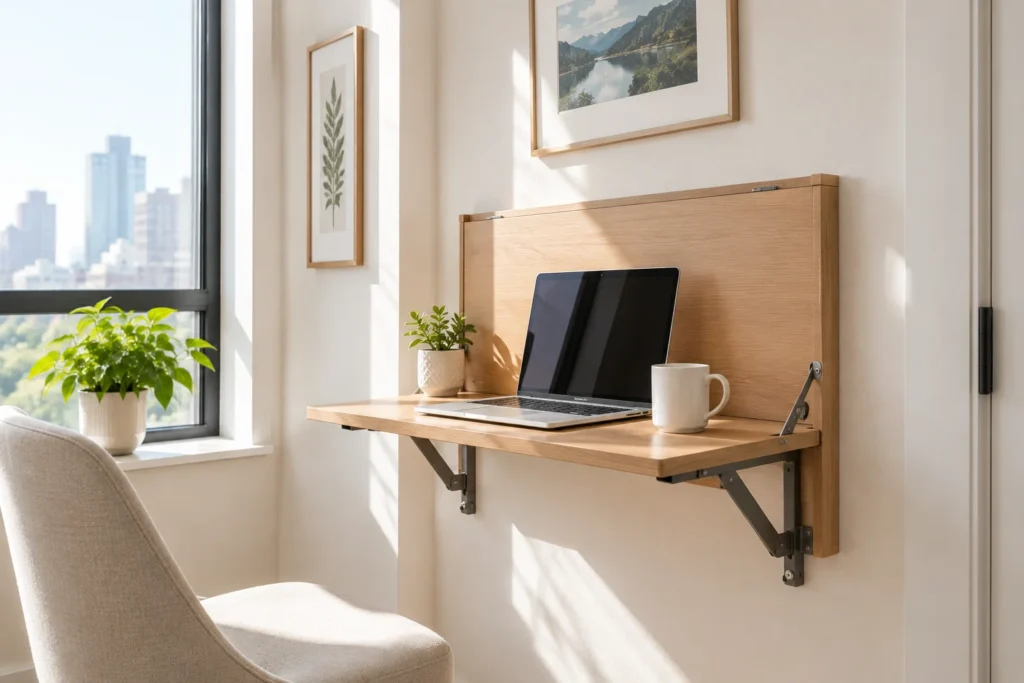
Furniture that occupies permanent floor space is the enemy of a small apartment. If you need a dining table, a folding laundry station, or a home office desk, you should utilize vertical wall-mounted solutions that fold completely flat against the wall when not in active use.
The Drop-Leaf Mechanic A drop-leaf wall desk operates on heavy-duty, locking steel hinges. When you need to work, you lift the wooden desktop until the steel hinges lock into a strict 90-degree angle. The desk protrudes 20 to 24 inches from the wall, providing ample space for a laptop, coffee mug, and notebooks. When you finish your workday, you release the latches, and the desktop drops vertically, sitting entirely flush against the drywall, protruding no more than 2 inches.
Installation and Clearances Because you will be leaning your body weight onto this desk, it must be mounted with zero margin for error.
- Determine your ideal ergonomic working height (standard desk height is exactly 29 to 30 inches from the floor to the top of the desk surface).
- The hinges must be screwed directly into at least two wall studs using 3-inch lag screws.
- Never use toggle bolts or drywall anchors for a drop-leaf desk. The repeated downward pressure of typing and leaning will eventually rip standard anchors violently out of the drywall.
7. Vertical Magnetic and Rail Systems for Kitchens
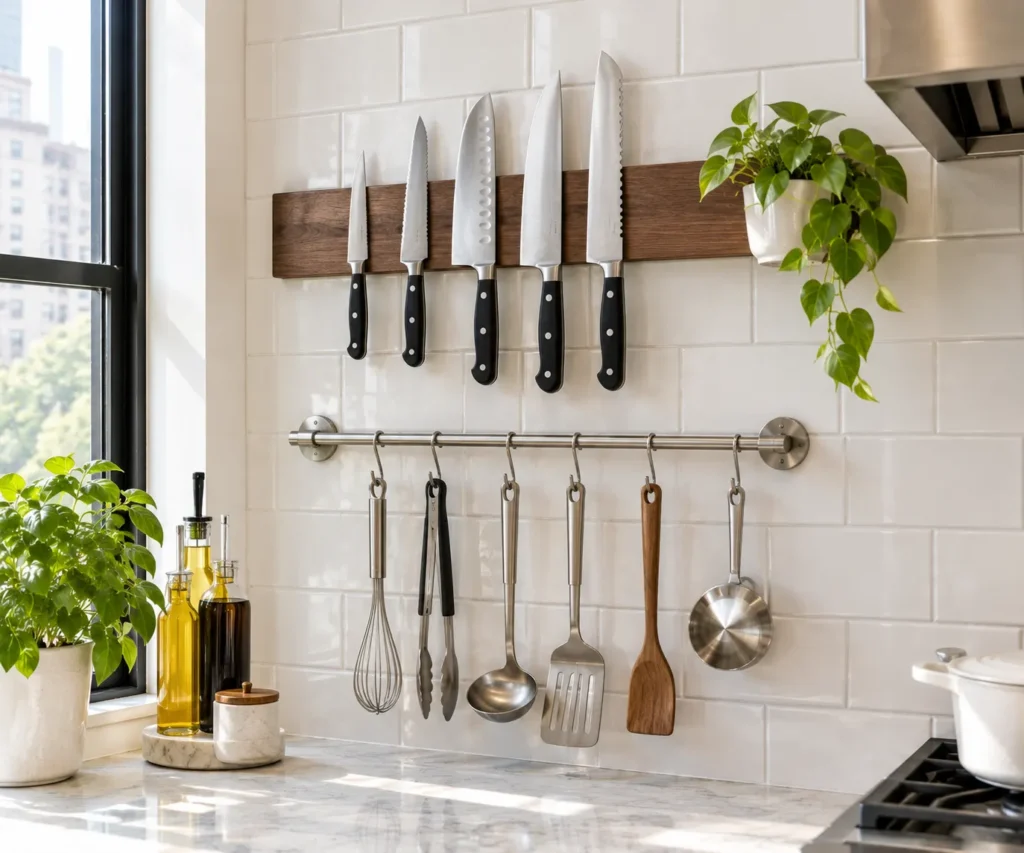
Countertop real estate is the most valuable commodity in a small apartment kitchen. Knife blocks, spice racks, and utensil crocks quickly consume your prep space, making cooking feel cramped and frustrating. Moving these items to a vertical magnetic rail system creates a highly functional, chef-inspired kitchen.
Magnetic Knife Strips Discard your bulky wooden knife block. Purchase a 16-inch or 24-inch solid walnut or stainless steel magnetic knife strip. Mount it to the wall directly above your kitchen backsplash, keeping it at least 12 inches above the countertop for safe handling. The neodymium magnets inside the strip are incredibly strong, safely holding heavy steel chef’s knives, cleavers, and kitchen shears flush against the wall.
Stainless Steel Utility Rails Install a 30-inch stainless steel rail system (similar to the famous IKEA Fintorp or Kungsfors series) just below your upper cabinets. These horizontal metal bars allow you to hang S-hooks. You can hang small wire baskets to hold fresh garlic and onions, clip up your recipe cards, or hang your most-used spatulas and whisks. By utilizing the empty vertical gap between the counter and the upper cabinets, your actual prep surface remains 100% clear and easy to wipe down.
Maintaining Your Vertical Storage Ecosystem
Executing vertical storage ideas requires ongoing discipline. When you build storage upward, your items are more visible to the naked eye than they would be hidden inside a deep drawer. If you allow vertical shelves to become cluttered, the entire apartment will feel chaotic.
Adhere to the “One In, One Out” rule. For every new book, sweater, or kitchen gadget you bring into the apartment, an old one must be donated or discarded. Furthermore, invest in matching storage containers. Buying 10 identical white canvas bins for your high-perimeter shelves will always look substantially more luxurious and organized than utilizing a mismatched collection of cardboard boxes and plastic totes.
Conclusion
Living in a compact footprint does not condemn you to a life of clutter and tripping over misplaced items. By shifting your perspective upward and utilizing the often-ignored top half of your rooms, you can drastically multiply your home’s capacity. Whether you are installing a renter-friendly over-the-door track, mounting heavy-duty floating shelves, or building an aesthetic pegboard command center, execution and safety are paramount. Implement these structured vertical storage ideas today to reclaim your floor space, organize your daily life, and make your small apartment feel exceptionally open, deliberate, and luxuriously spacious.
FAQ
How much weight can standard apartment drywall hold?
Standard American interior walls use 1/2-inch or 5/8-inch thick drywall. Without hitting a wooden stud, standard plastic drywall anchors can safely hold about 10 to 15 pounds. For heavier vertical storage ideas, you must use steel toggle bolts, which can hold up to 50 pounds each in hollow drywall.
Are tension rods safe to use on popcorn ceilings?
Floor-to-ceiling tension rods can damage heavily textured or popcorn ceilings by crushing the texture. To prevent this, place a flat piece of dense rubber pad or a small square of smooth wood between the ceiling and the top of the tension rod to distribute the pressure evenly.
How do I patch large holes when moving out of my rental?
If you used heavy-duty toggle bolts, push the metal toggle into the wall to let it fall. Fill the remaining hole with lightweight spackle using a putty knife. Let it dry for 2 hours, sand it perfectly flush with a fine-grit sanding sponge, and paint over it with the landlord’s matching touch-up paint.
How far apart are wall studs usually located?
In most American residential apartments and homes, wall studs are spaced exactly 16 inches apart on center. You can usually find the first stud by measuring 16 inches out from any structural corner in the room.