
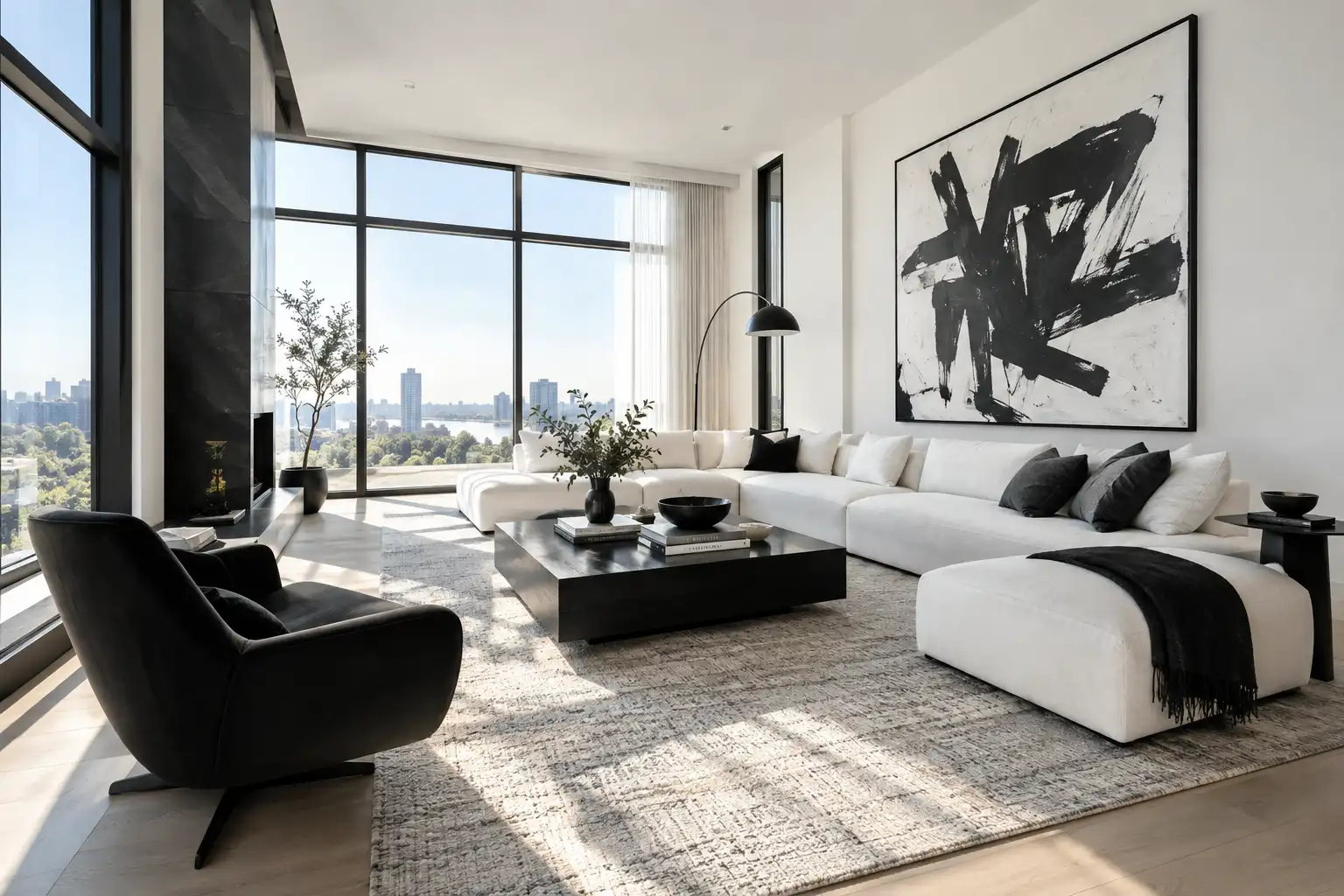
Designing a living space from scratch or planning a complete renovation can feel incredibly overwhelming. With thousands of color palettes, shifting trends, and endless furniture styles, making a final decision is tough. However, there is one design choice that has stood the test of time, refusing to go out of style: the monochromatic masterpiece.
If you are looking for timeless elegance, high contrast, and a space that feels both relaxing and sophisticated, exploring black and white living room ideas is the perfect starting point.
A two-tone approach offers unparalleled versatility. It serves as a blank canvas. Whether your personal taste leans heavily toward ultra-modern minimalism, cozy rustic farmhouse, or chic Parisian apartments, black and white adapts to fit your vision perfectly.
But here is the catch. Designing a room with only two contrasting shades isn’t as simple as painting the walls white and buying a black sofa. Without the right balance, a monochromatic room can easily end up feeling stark, cold, or resembling a sterile corporate office. The secret to a breathtaking black and white space lies in the careful curation of textures, patterns, and subtle accents.
In this comprehensive guide, we will dive deep into five foundational black and white living room ideas that will help you achieve a flawless, magazine-worthy aesthetic in your own home.
Why Choose a Black and White Palette?
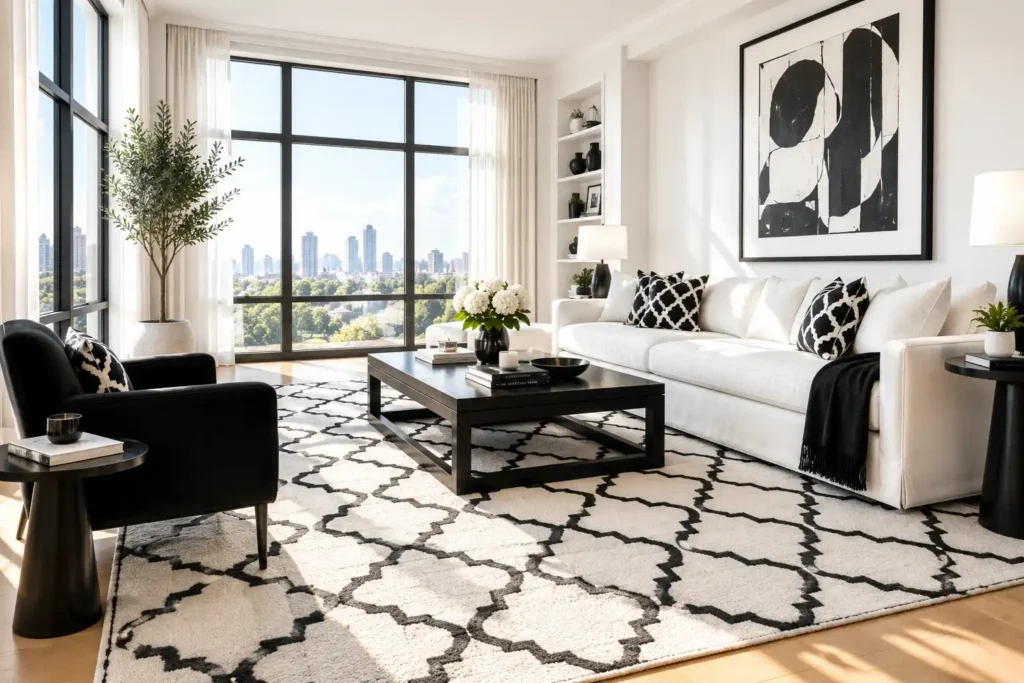
Before we jump into the specific ideas, it is important to understand why interior designers love this color combination so much.
First, it is incredibly forgiving. When you remove color matching from the equation, you can focus entirely on the silhouette and shape of your furniture. A curved black velvet chair stands out beautifully against a crisp white wall, allowing its shape to become the focal point.
Second, it is budget-friendly in the long run. Trendy colors fade. What is “in” today might look incredibly dated in three years. Black and white never ages. You won’t find yourself needing to repaint or replace expensive sofas just because the Pantone Color of the Year changed.
IMPORTANT NOTE: Monochromatic Isn’t Zero Color
A monochromatic room doesn’t literally mean zero color. It means the foundation—the walls, the primary furniture, the large rugs—are black and white. You can always introduce small, easily changeable pops of color through seasonal flowers, coffee table books, or a single piece of vibrant art.
Let’s explore the top five ways to bring this classic combination to life.
1. Master the Art of High-Contrast Textures
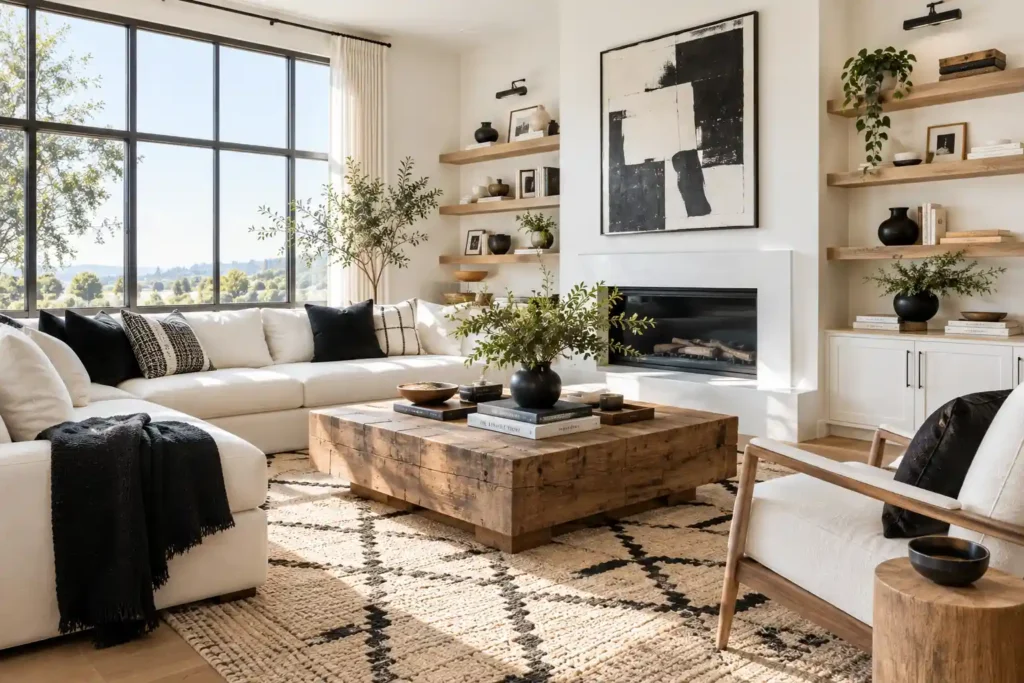
When you eliminate color from your design toolkit, you must replace it with something else to create visual depth. That replacement is texture.
If everything in a black and white room is smooth and shiny (think black leather sofas, glossy white floors, and glass tables), the room will feel icy and uninviting. To prevent this, you need to layer different fabrics and materials aggressively. The way light hits a matte, fuzzy surface versus a smooth, reflective surface creates shadows and highlights, acting as a substitute for color variations.
Start with your largest pieces of furniture. If you have a sleek, smooth leather sofa, contrast it with a highly textured rug.
Best Textures for a Monochromatic Room
Here is a breakdown of how to mix different materials to bring your black and white living room ideas to life:
- Bouclé and Sherpa: These nubby, curly fabrics are incredibly popular for accent chairs. A white bouclé chair adds instant coziness and softness.
- Velvet: Black velvet absorbs light beautifully, creating a rich, moody, and luxurious feel that flat matte fabrics can’t replicate.
- Linen: For curtains or throw pillows, crisp white or charcoal black linen adds a relaxed, organic, and slightly wrinkled texture that feels effortless.
- Chunky Knits: A heavy, oversized black and white knit throw blanket draped over a sofa immediately signals warmth and comfort to anyone entering the room.
Texture Comparison Guide
| Material Type | Vibe / Aesthetic | Best Used For |
| Leather / Vegan Leather | Sleek, Modern, Industrial | Sofas, Ottomans, Lounge Chairs |
| Bouclé / Wool | Cozy, Scandinavian, Soft | Accent Chairs, Throw Pillows |
| Silk / Satin | Glamorous, Luxurious, Chic | Cushion covers, Lamp shades |
| Matte Metal | Edgy, Contemporary, Clean | Coffee table legs, Light fixtures |
Pro Tip: Mix High and Low Textures
Don’t be afraid to mix high and low textures. Place a cheap, fluffy faux-fur pillow on an expensive, tailored leather armchair. The contrast in value and feel adds immense character to the space.
2. Ground the Room with Bold Geometric Patterns
Solid blocks of black and white can sometimes feel a bit heavy or flat, especially in larger living rooms. To break up the visual weight, you need to introduce patterns. Geometric patterns are a staple in black and white interior design because their sharp lines complement the high contrast of the color palette.
Pattern integration should be intentional. If you use too many different patterns, the room will feel chaotic and dizzying. If you use too little, the space remains flat.
The floor is usually the best place to start. A large area rug anchors the seating area and defines the living space, especially in open-concept homes.
Consider these popular pattern options for your space:
- The Classic Checkerboard: While often associated with kitchens, a large-scale black and white checkerboard rug (or even painted floorboards) can look incredibly chic and avant-garde in a living room.
- Moroccan Trellis: This is a slightly softer, more bohemian pattern. A plush white rug with a thin black diamond or trellis pattern is a safe, beautiful choice that suits almost any design style.
- Herringbone and Chevron: These zigzag patterns imply movement. Using a chevron pattern on your curtains or a herringbone pattern on a tiled fireplace surround draws the eye upward, making the ceilings feel taller.
- Stripes: Vertical black and white stripes on a single accent chair or horizontal stripes on throw pillows give a crisp, tailored, nautical-meets-modern vibe.
When mixing patterns, remember the rule of scale. If your rug has a very large, bold geometric pattern, ensure your throw pillows or curtains feature a much smaller, tighter pattern (like pinstripes or small polka dots). This prevents the patterns from competing for attention.
3. The Dramatic Impact of a Black Accent Wall
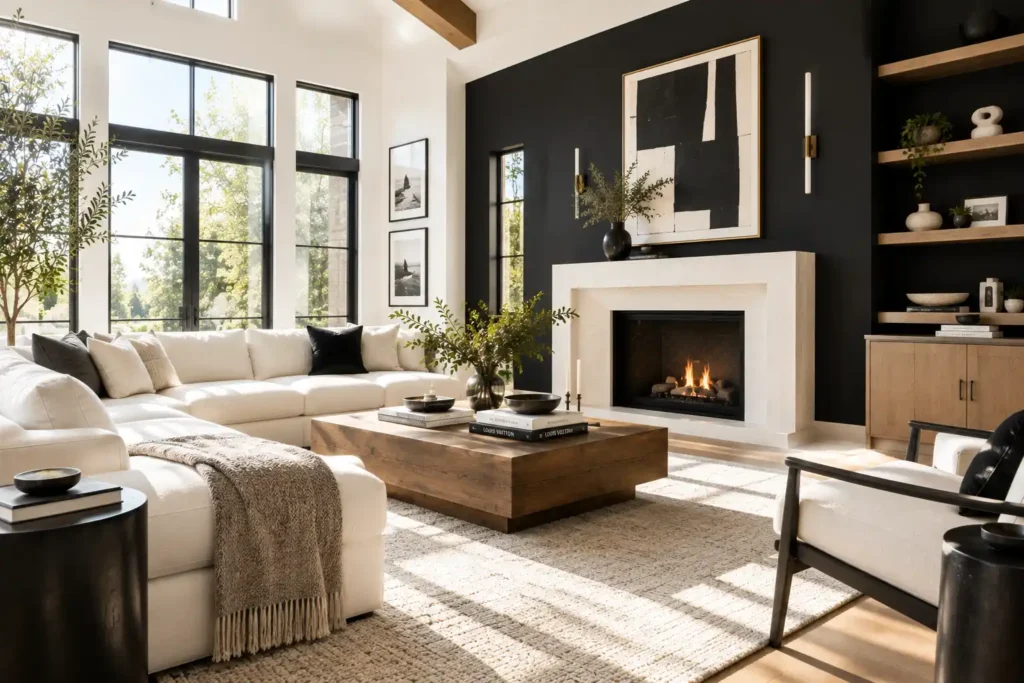
When people search for black and white living room ideas, they often envision pristine white walls with black furniture. While that is a beautiful approach, flipping the script can create something truly unforgettable.
Painting a wall black is a bold move, but it is one of the most effective ways to create instant architectural interest, drama, and depth in a room that might otherwise feel plain.
Dark walls recede. This is a visual trick where dark colors actually make a wall look like it is further away than it really is. Because of this, a black accent wall can surprisingly make a small living room feel deeper and larger, provided the other walls remain bright white.
How to Execute a Black Accent Wall
Choosing the right wall is critical. You should generally choose the wall that serves as the natural focal point of the room.
- The TV Wall: Painting the wall behind your television black is a genius design hack. When the TV is turned off, the big black rectangle practically disappears into the wall, rather than acting as an eyesore against a white background.
- The Fireplace Wall: If you have a fireplace, painting the chimney breast black while keeping the mantle crisp white creates a stunning, regal focal point.
- The Gallery Wall: A black wall serves as the ultimate dramatic backdrop for a gallery of art. White frames, gold frames, and black-and-white photography will pop off a dark wall much more vibrantly than they would against white paint.
CAUTION: Pay Attention to Paint Finishes
A glossy black wall will reflect every single imperfection, bump, and nail hole in your drywall, and it can look cheap. Always opt for a matte, eggshell, or flat finish for dark colors. They absorb light and look infinitely more velvety and expensive.
4. Soften the Starkness with Natural Wood and Greenery
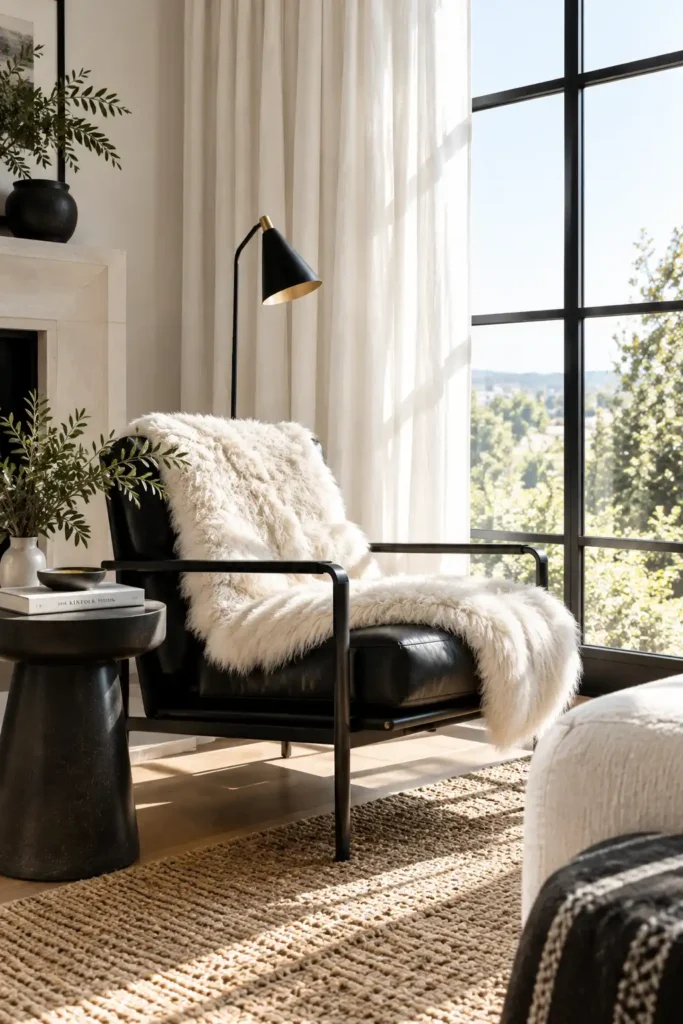
The biggest critique of monochromatic design is that it can feel lifeless. Black and white are, by definition, the absence and totality of light; they are not found in abundance in natural, living environments. Therefore, to make a black and white living room feel like a home, you must invite nature inside.
Wood tones and indoor plants are the ultimate secret weapons for softening a monochromatic space.
Bringing in the Wood
Natural wood adds an organic, earthy warmth that bridges the harsh gap between black and white. It acts as a neutral mid-tone that grounds the room.
Think about incorporating wood in various ways:
- A solid walnut mid-century modern credenza beneath your TV.
- Floating oak shelves displaying your favorite books and monochrome ceramics.
- A rustic, reclaimed wood coffee table right in the center of the room.
- Exposed wooden ceiling beams if your architecture allows for it.
Lighter woods (like ash, birch, and white oak) will lean the room toward a Scandinavian or Japandi aesthetic. Darker woods (like walnut, mahogany, or espresso-stained oak) will push the room toward a moody, masculine, or traditional library feel.
The Power of Greenery
Never underestimate the power of a houseplant. In a room devoid of color, the vibrant, rich green of a living plant acts as a massive breath of fresh air.
Place a large, structural plant like a Fiddle Leaf Fig or a Bird of Paradise in a matte black or woven wicker basket in the corner of the room. Drape a string of pearls plant over a high shelf. The organic, irregular shapes of the leaves provide the perfect contrast to the strict, structured lines typical of black and white decor.
DESIGN HACK: Use Faux Plants & Pampas Grass
If you lack a green thumb and cannot keep real plants alive, invest in high-quality faux olive trees or dried pampas grass. Pampas grass in a dark vase adds height, texture, and a beautiful sandy-beige tone that complements the room perfectly.
5. Elevate with Metallic Hardware and Reflective Surfaces
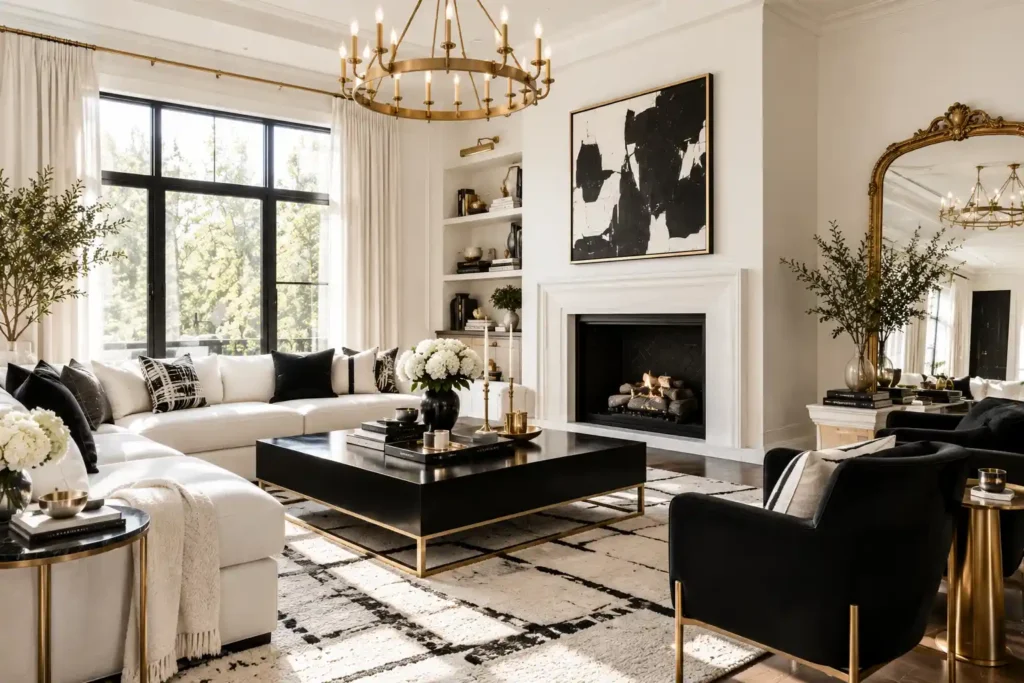
Our final tip for executing the best black and white living room ideas involves adding a touch of shine. When you rely solely on flat colors, adding a third, reflective element brings glamour and sophistication. Metallics act as the “jewelry” of the room.
The type of metal you choose will dictate the final mood of the space.
Choosing Your Metals
- Warm Metals (Brass, Gold, Bronze): These are highly recommended for black and white rooms. Gold and brass instantly warm up the space. Imagine a matte black side table with a brushed brass reading lamp on top—the combination is undeniably elegant. Warm metals bring a touch of vintage charm and luxury.
- Cool Metals (Chrome, Silver, Stainless Steel): If you want your living room to feel ultra-modern, industrial, or futuristic, opt for cool metals. A glass coffee table with thick chrome legs on a black and white rug creates a stark, clean, gallery-like aesthetic.
- Matte Black Hardware: While not reflective, swapping out standard silver doorknobs, cabinet pulls, and curtain rods for matte black hardware creates a seamless, highly custom look against white trim.
Mirrors and Light
Mirrors are essential in this color scheme. Because black absorbs light, you need to ensure the room doesn’t feel too dark. Hanging a large, oversized floor mirror with a thin black or gold frame opposite your main window will bounce natural daylight back into the room, instantly doubling the visual space and brightness.
Mastering the 60-30-10 Rule
To successfully pull off any of these black and white living room ideas, you should follow the golden rule of interior design: the 60-30-10 rule. This rule ensures that your space feels balanced and purposeful, rather than haphazard.
Here is how to apply it to a monochromatic living room:
- 60% – The Dominant Color (White): Usually, white should make up the majority of the room to keep it feeling bright and airy. This includes your walls, the ceiling, and perhaps large pieces like the main sofa or the primary background of your rug.
- 30% – The Secondary Color (Black): This provides the contrast and depth. Your accent chairs, side tables, window frames, curtain rods, picture frames, and perhaps an accent wall will make up this portion.
- 10% – The Accent Tone (Wood, Gold, or a Pop of Color): This is the crucial layer that brings the room to life. Your wooden coffee table, brass light fixtures, green house plants, or a singular cognac leather pillow fall into this category.
By sticking to this ratio, you ensure that the black doesn’t overpower the white, and the room doesn’t feel utterly devoid of warmth.
Maintenance and Care for B&W Decor
One practical consideration before committing to a black and white living room is maintenance. Both colors present unique cleaning challenges.
White fabrics, naturally, show dirt, spills, and pet hair (especially from dark-colored pets) very quickly. If you have children or pets, opt for performance fabrics. Slipcovered sofas are a lifesaver in a white room because you can remove them and bleach them as needed.
Conversely, black furniture—especially glass or glossy wood—shows dust much faster than lighter colors. Matte black surfaces can also show oily fingerprints. Keep microfiber cloths handy and invest in a good anti-static dusting spray to keep your dark surfaces looking sharp and clean.
Conclusion
Creating a striking space using these black and white living room ideas is one of the most rewarding interior design projects you can undertake. It is a palette that commands attention while offering a peaceful, organized atmosphere.
By grounding the space with geometric patterns, layering rich textures like bouclé and velvet, utilizing the dramatic effect of dark accent walls, and softening the look with natural woods and warm metallics, you can create a room that feels both curated and comfortable. Remember, the goal isn’t just to match colors, but to balance light, shadow, and tactile materials. Take your time, experiment with the 60-30-10 rule, and watch your living room transform into a modern, sophisticated sanctuary.
FAQ
Does a black and white living room make a small space look smaller?
Not if done correctly. If you use white as your dominant 60% base color (especially on walls and ceilings), it will reflect natural light and make the room feel spacious. Use black for accents, thin-framed furniture, and decor rather than bulky, heavy pieces to maintain an airy feel.
Can I add a pop of color to a black and white room?
Absolutely! The beauty of a black and white foundation is that literally any color will pop beautifully against it. Emerald green, mustard yellow, blush pink, or rust orange are excellent choices. You can introduce these through throw blankets, art, or seasonal flowers.
What color floor goes best with black and white walls?
Medium to light warm wood tones (like honey oak or natural walnut) look best as they add much-needed warmth. If you want a more modern look, light grey polished concrete or large white tiles with subtle grey veining also work perfectly.
Are black walls a bad idea for resale value?
While highly personalized, a single black accent wall is not a dealbreaker for most buyers, as it is easy to paint over. However, painting an entire room black might make a space feel too dark for potential buyers. Stick to accents if you plan to sell soon.
How do I choose the right white paint?
Not all whites are the same! For a monochromatic room, avoid creamy whites with heavy yellow undertones, as they can look dingy next to pure black. Opt for crisp, clean whites with neutral or very slight cool undertones (like Sherwin-Williams Pure White or Benjamin Moore Chantilly Lace) for the sharpest contrast.