

A cocooning bedroom is a warm, inviting retreat designed to help you relax and feel comfortable at the end of the day. The best cozy bedroom ideas combine soft bedding, calming colors, layered lighting, natural textures, and personal touches to create a peaceful atmosphere without requiring an expensive makeover.
In 2026, bedroom design is increasingly focused on comfort, individuality, and spaces that feel welcoming rather than overly styled. From earthy color palettes and upholstered headboards to soft curtains and beautifully layered bedding, small changes can transform an ordinary bedroom into a soothing sanctuary.
The secret is to balance visual warmth with practical comfort. Your bedroom should look beautiful, feel inviting, and support your everyday routines. Whether you have a spacious master bedroom or a small apartment bedroom, you can create a cozy atmosphere that reflects your personal style.
What Is a Cocooning Bedroom?
A cocooning bedroom is a space that feels intimate, sheltered, and comfortable. Instead of focusing on perfectly arranged furniture or expensive decorations, this design approach emphasizes the materials, colors, lighting, and details that make a bedroom feel relaxing.
Imagine stepping into a room with soft linen bedding, warm wooden furniture, gentle bedside lighting, and curtains that filter the daylight. Everything feels coordinated, but nothing looks overly formal. That is the essence of a cocooning bedroom.
Unlike minimalist bedrooms that may rely heavily on clean lines and uncluttered surfaces, cocooning interiors can incorporate multiple textures, layered fabrics, and richer colors. However, they should never feel crowded or difficult to maintain.
The main elements of a cocooning bedroom include:
- Soft bedding: Comfortable sheets, a duvet, a quilt, and a textured throw.
- Warm lighting: Bedside lamps, wall sconces, or dimmable fixtures.
- Comforting colors: Cream, warm beige, muted green, chocolate brown, and other harmonious shades.
- Tactile materials: Cotton, linen, wool, velvet, and natural wood.
- Personal accessories: Books, artwork, framed photographs, and meaningful decorative objects.
- A practical layout: Furniture arranged to create comfortable movement and reduce visual distractions.
You do not need to incorporate every element at once. Start with the parts of your bedroom that feel least comfortable, then make gradual improvements.
How to Make Your Bedroom Cozy, Step by Step
Learning how to make your bedroom cozy starts with identifying what your current space is missing. Perhaps the bedding looks flat, the lighting feels harsh, or the room has too many unrelated colors.
Rather than replacing everything, focus on a few practical changes that make the biggest difference.
1. Make Your Bed the Centerpiece
The bed is usually the largest feature in a bedroom, so it deserves the most attention. Comfortable, well-coordinated bedding can instantly make the room feel more inviting.
Start with sheets that feel pleasant against your skin. Add a suitable duvet or comforter, then introduce a quilt or lightweight blanket for another layer. A textured throw placed at the foot of the bed can complete the arrangement.
You can also introduce two or three decorative pillows in complementary shades. For example, cream bedding paired with caramel cushions and a soft brown throw creates an understated, warm appearance.
Avoid adding so many cushions that making the bed becomes inconvenient. A cozy bedroom should make everyday life easier, not create extra work.
2. Create a Softer Lighting Arrangement
Lighting can dramatically change the atmosphere of a bedroom. A single bright ceiling fixture is useful for getting dressed or cleaning, but it may not provide the relaxed atmosphere you want in the evening.
Introduce smaller sources of light around the room. Bedside lamps are a simple starting point, while wall sconces can provide reading light without occupying valuable nightstand space.
Choose warm-toned bulbs for a softer evening appearance, and consider dimmable lighting where practical. You can keep brighter lighting for daytime tasks and lower the brightness when you begin winding down.
3. Reduce Visual Clutter
A room filled with unrelated objects can feel distracting, even when the furniture and decor are attractive.
Clear unnecessary items from your bedside table, organize visible cables, and put away belongings that do not need to remain on display. Keep a few items that you genuinely enjoy, such as a favorite book, a small vase, or a framed photograph.
Storage baskets and bedside drawers can help keep frequently used belongings accessible without leaving every item visible.

Secret Tip
Before purchasing new decorations, restyle your bed, move a lamp into a more useful position, and clear your bedside surfaces. These free changes may reveal that your room needs less new decor than you expected.
Choose Cozy Bedroom Colors That Feel Warm and Calming
Color helps establish the mood of your bedroom. The right palette can make a space feel warm and intimate while allowing different fabrics and furniture finishes to work together.
When selecting cozy bedroom colors, consider your natural light, existing furniture, and preferred atmosphere. A bright bedroom may suit deeper accent colors, while a darker room may benefit from lighter walls and reflective surfaces.
Here are four color combinations worth considering.
Warm Neutrals: Cream, Beige, and Oatmeal

Warm neutrals are ideal if you prefer a timeless bedroom that feels soft without appearing plain.
Use cream or warm white on the walls, beige bedding on the bed, and oatmeal-colored curtains to create a layered effect. Introduce natural wood furniture and a darker brown accessory to add contrast.
The key is to use several related shades instead of matching everything exactly. Small differences in tone and texture make a neutral bedroom feel more interesting.
Sage Green and Olive

Muted green shades bring an earthy quality to a bedroom. Sage green works particularly well with cream bedding, pale timber, and natural linen.
For a subtle effect, paint one wall sage green or introduce the color through cushions and curtains. If you prefer a richer appearance, consider olive green bedding paired with warm wood and creamy accessories.
This combination suits nature-inspired interiors without requiring many decorative items.
Chocolate Brown and Caramel

Deep brown and caramel shades can make a bedroom feel intimate and sophisticated. They are particularly effective when balanced with lighter fabrics.
Try a chocolate-brown headboard, cream duvet cover, caramel throw, and walnut bedside tables. Warm lighting can help bring the individual materials together.
If you are worried about making the room appear too dark, introduce brown through bedding, curtains, or accessories rather than applying it to every wall.
Dusty Blue and Warm Gray

If you prefer cooler shades, dusty blue and warm gray can create a quiet, understated bedroom.
Combine muted blue bedding with warm white walls, gray-beige curtains, and pale wooden furniture. Add a textured blanket for warmth so the room does not feel too cool or flat.
The most important principle is balance. Even a cooler palette can feel cozy when it includes soft materials, layered lighting, and comfortable bedding.
Layer Your Bedding for a Soft, Inviting Bed

Beautiful bedding is one of the most effective ways to make a bedroom feel welcoming. The goal is to combine comfortable materials with enough visual texture to make the bed look inviting.
Start with a fitted sheet and choose a duvet or comforter that suits your preferred sleeping temperature. Add a quilt or coverlet if you enjoy the layered appearance, then finish with a lightweight or knitted throw.
A simple bedding arrangement might include:
- A comfortable base: Cotton or linen sheets in a color that complements the room.
- A duvet or comforter: Choose suitable warmth for your climate and sleeping habits.
- A textured coverlet: Introduce another layer without adding excessive weight.
- A decorative throw: Place it loosely across the foot of the bed.
- A few accent pillows: Use complementary shades and contrasting fabrics.
You can mix textures while keeping the color palette simple. For example, smooth cotton sheets, a quilted cream coverlet, and a knitted taupe throw add visual depth without introducing too many competing colors.
Linen provides a relaxed, slightly textured appearance, while cotton is a versatile everyday choice. Brushed cotton may feel especially inviting during colder weather. Velvet can be used for accent cushions or an upholstered headboard.
Remember that comfort matters more than appearance. If a heavy blanket makes you too warm or decorative pillows become inconvenient, remove them. The best bedding arrangement is one that looks attractive and works for your daily routine.
Use Lighting to Create a Relaxing Atmosphere

A welcoming bedroom usually benefits from several types of lighting rather than one source that illuminates the entire room.
Ambient lighting provides general illumination through ceiling fixtures, pendants, or other room-wide sources.
Task lighting helps with specific activities, such as reading in bed or getting dressed. Adjustable bedside lamps and wall-mounted reading lights are practical options.
Accent lighting highlights details such as artwork, a bookshelf, or a decorative corner.
You do not need three separate fixtures to achieve these effects. A bedside lamp can provide useful reading light while creating a softer atmosphere elsewhere in the room.
Choose warm-toned bulbs for an inviting evening appearance, and consider dimmable fixtures if you want greater control over brightness. Make sure the room still has enough light for activities that require clear visibility.
Curtains are also important. Sheer curtains can soften daylight and protect privacy, while heavier curtains may help block outdoor light and provide additional insulation.
A relaxing bedroom should support both its appearance and its function. Consider unwanted light, noise, and room temperature alongside the decor when creating your sleep environment.
Add Texture Through Rugs, Curtains, and Upholstery

A bedroom can have beautiful colors and attractive furniture but still feel unfinished when every surface looks smooth and similar.
Texture introduces variation and gives the room a more layered, comfortable appearance.
Consider these additions:
- Rugs: Place a suitably sized rug beside or beneath the bed to soften the floor.
- Curtains: Choose linen, cotton, velvet, or another material that complements your decor.
- Upholstery: An upholstered headboard can soften the bed’s appearance and create a comfortable focal point.
- Knitted accessories: A textured throw or cushion cover adds depth without requiring a major change.
- Natural materials: Wood, wicker, ceramic, and woven accessories can balance smooth bedding and painted surfaces.
Try to combine materials that complement one another. Linen curtains, wooden furniture, and a wool throw can look harmonious when their colors share similar undertones.
You do not need to cover every surface in fabric. A few carefully chosen textures will usually have more impact than a room filled with unrelated accessories.
Choose Furniture That Makes the Room Feel Enclosed

Furniture placement can help create the sheltered feeling associated with a cocooning bedroom.
An upholstered headboard makes the bed a more prominent feature, while a curved headboard or wraparound design can create a softer visual boundary. A canopy bed may also suit this style, provided the room has enough space and the installation is secure.
Other useful furniture choices include compact nightstands, a storage bench at the foot of the bed, and a comfortable armchair in an unused corner.
If you have a large bedroom, a reading chair and small side table can help define a separate relaxation area. In a smaller space, floating bedside shelves or wall-mounted lamps can provide functionality without taking up much floor space.
Avoid filling every empty corner simply because it looks bare. The room should feel comfortably furnished rather than crowded.
Choose furniture that serves a purpose or adds something meaningful to the overall design.
Make the Most of Small Bedrooms

Small bedrooms can feel especially inviting when the layout is carefully planned. You do not need a large room to enjoy layered fabrics, warm lighting, or a harmonious color scheme.
The trick is to create comfort without sacrificing useful space.
Keep Bedding Layers Simple
Use a consistent palette and choose one or two noticeable textures. Too many cushions and blankets can make a small bed feel crowded and leave little room for everyday use.
Use Vertical Space
Wall-mounted lamps, floating shelves, and taller storage units can free up valuable floor space. Keep frequently used items within easy reach and store less-used belongings elsewhere.
Maintain Clear Walking Areas
If two bedside tables make the room difficult to navigate, consider using one compact table or floating shelves instead. Position furniture so you can move comfortably around the bed.
Use Mirrors Thoughtfully
A mirror positioned to reflect natural light can help brighten a darker corner. Choose a size and placement that suit the room rather than adding several mirrors without a clear purpose.
Designer Tip
SMART DESIGN · TIMELESS COMFORT
For a small bedroom, prioritize comfortable bedding, practical storage, and good lighting before purchasing extra furniture. These three improvements can transform the atmosphere without overwhelming the room.
Bring Nature and Personal Details Into the Room
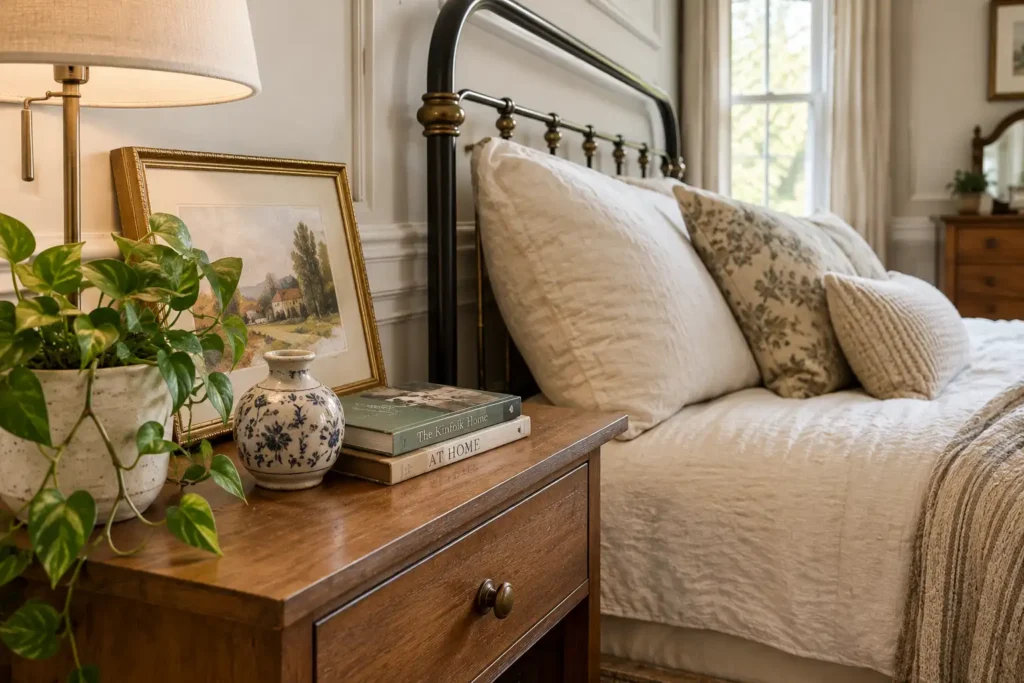
A bedroom should reflect your preferences rather than look like a copy of a showroom. Natural materials and meaningful objects help create an atmosphere that feels personal and lived in.
Wooden nightstands, woven baskets, ceramic vases, and linen fabrics work well in many interior styles. You can mix different wood finishes as long as their tones complement the overall palette.
Plants may also introduce color and visual interest. Choose varieties suited to your available daylight and maintenance preferences.
Personal details matter just as much. Display a few framed photographs, favorite books, or pieces of artwork that you enjoy seeing every day. A small collection of meaningful objects often adds more character than numerous generic decorations.
A reading corner can make the bedroom feel even more inviting. If space permits, place a comfortable chair near a window, add a reading lamp, and keep a favorite book nearby. In a compact room, a thoughtfully arranged bedside area can serve a similar purpose.
The goal is not to decorate every surface. Instead, select items that contribute to the room’s atmosphere and give it a sense of identity.
Create a Cozy Bedroom for Every Season
A comfortable bedroom should work throughout the year. Your main furniture and color scheme can remain the same while you adjust bedding, curtains, and accessories to suit seasonal changes.
Fall and Winter

When the weather becomes colder, introduce warmer layers that can be removed easily if the room becomes too warm.
- Use brushed-cotton bedding or a warmer duvet when appropriate.
- Keep an additional blanket near the bed.
- Add a soft rug beside the bed.
- Consider lined curtains if the windows allow significant heat loss.
- Use softer lighting in the evening.
These adjustments create a more sheltered atmosphere without requiring a complete redesign.
Spring and Summer

During warmer months, comfort may depend on reducing layers rather than adding them.
- Choose breathable cotton or linen sheets.
- Replace heavy throws with a lightweight coverlet.
- Use lighter curtains where privacy permits.
- Store extra blankets nearby instead of leaving them on the bed.
- Maintain appropriate ventilation and airflow.
In warmer climates, such as many parts of Australia, cooling and breathable materials may be more important than heavy textiles. In colder areas of Canada or the UK, adjustable bedding and suitable window coverings may be especially useful.
Adapt the room to your climate and sleeping preferences rather than following a seasonal decorating formula.
Cozy Bedroom Ideas on a Budget

You do not need to replace your furniture or purchase expensive accessories to create a comfortable bedroom. Many effective cozy bedroom ideas involve rearranging what you already own and making a few targeted improvements.
1. Restyle Your Existing Bedding
Rearrange your duvet, fold a blanket across the foot of the bed, and use pillow covers in complementary shades. Small changes can make familiar bedding look more thoughtfully arranged.
2. Shop Your Own Home
Look for a suitable lamp, throw, basket, or framed picture in another room. Moving an existing item into your bedroom can give the space a fresh appearance without adding to your spending.
3. Improve Your Lighting
Replace an overly cool-feeling bulb with a compatible warm-toned option, or move an existing lamp closer to the bed. Check fixture and dimmer compatibility before purchasing replacement bulbs.
4. Update Small Accessories
New cushion covers, a secondhand bedside table, or a simple ceramic vase can introduce texture and personality without requiring a large investment.
5. Rearrange Your Furniture
Move a chair toward a window, reposition a nightstand, or clear the space around the bed. A better layout can make the room feel more comfortable at no cost.
6. Use Removable Decorations
If you rent, introduce color through curtains, bedding, artwork, and removable wall treatments rather than making permanent changes.
If you are looking for a cozy bedroom on a budget, prioritize comfort first. Invest in bedding or a pillow that genuinely improves your rest before spending on purely decorative extras.
Common Decorating Mistakes to Avoid
Even attractive cosy bedroom ideas can become impractical when everyday comfort is overlooked.
Using too many colors: Too many competing shades can make the bedroom feel visually unsettled. Choose a main palette and repeat a few supporting colors across your bedding and accessories.
Depending on one bright ceiling light: Overhead lighting is useful, but smaller light sources can create a more flexible atmosphere. Add bedside or wall lighting where practical.
Choosing appearance over comfort: Heavy blankets, decorative pillows, and plush rugs should suit your climate and habits. Remove anything that makes sleeping or moving around uncomfortable.
Filling every empty space: Not every corner needs furniture or decoration. Leave room to walk, clean, open drawers, and access storage.
Ignoring maintenance: Dusty fabric surfaces, crowded bedside tables, and neglected bedding can undermine the sense of calm you want. Choose materials and storage that are easy to maintain.
Following trends too literally: A dark, dramatic bedroom may look beautiful in photographs, but it is not the only way to create a relaxing space. Adapt the design to your room size, natural light, budget, and taste.
Conclusion
Creating a cocooning bedroom is about building a space that feels comfortable, personal, and easy to unwind in. The most effective cozy bedroom ideas combine practical choices with thoughtful styling, including comfortable bedding, warm lighting, tactile fabrics, balanced colors, and a layout that suits everyday life.
You do not need a large bedroom, designer furniture, or a complete renovation to achieve the look. Start by refreshing your bedding, introducing softer lighting, and choosing a few materials that work well together. Add personal details gradually and adjust the room to suit your climate, budget, and sleeping preferences.
Ultimately, the best bedroom sanctuary is not the one that follows every trend. It is the one that feels welcoming when you walk in and comfortable when it is time to rest.
FAQ
What is the easiest way to make a bedroom feel cozy?
Start with comfortable bedding, warm bedside lighting, and a few soft textures. Clear unnecessary clutter and introduce a consistent color palette. These simple changes can make a bedroom feel more inviting without new furniture or major renovations.
What are the best cozy bedroom colors?
Warm white, cream, beige, sage green, muted olive, caramel, and chocolate brown are versatile choices. Select shades that complement your existing furniture and natural light, then introduce depth through bedding, curtains, rugs, and accessories.
Can I create a cocooning bedroom in a small room?
Yes. Use coordinated bedding, layered lighting, soft textures, and a few carefully selected accessories. Wall-mounted lighting and compact bedside storage can preserve floor space while helping the room feel intimate.
How can I create a cozy bedroom on a budget?
Restyle your existing bedding, rearrange furniture, improve your lighting, and reuse accessories from other rooms. Prioritize practical improvements before purchasing decorative items.
Does a cozy bedroom have to be dark?
No. Cream, warm white, soft beige, and muted green can all create an inviting atmosphere. Darker colors are optional because texture, lighting, and thoughtful furniture placement are equally important.
Which fabrics are best for a cozy bedroom?
Cotton, linen, brushed cotton, wool, and velvet can all contribute to a comfortable appearance. Choose materials according to the season, your preferred feel, maintenance requirements, and how warm you tend to sleep.
How can I make my bedroom cozy without buying anything?
Make the bed using the layers you already own, rearrange existing furniture, clear visual clutter, and move a lamp into a more useful position. Display a few favorite objects and create a comfortable area for reading or relaxing.
What is the difference between a cozy bedroom and a cocooning bedroom?
A cozy bedroom focuses broadly on comfort and warmth. A cocooning bedroom emphasizes an even more enveloping atmosphere through layered fabrics, harmonious colors, soft lighting, and furniture that creates a sense of shelter.