
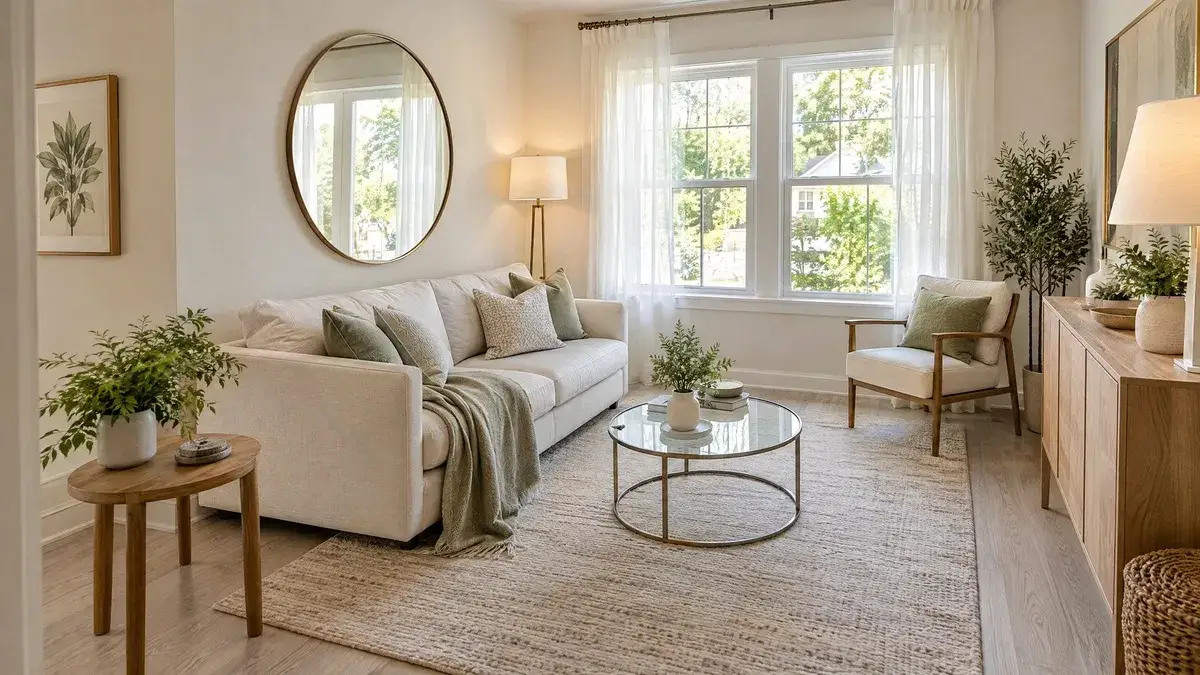
A small living room can feel open, comfortable, and stylish when you make the right decorating choices. You do not need a major renovation, expensive furniture, or completely white walls to transform a compact space. Sometimes, changing your furniture arrangement, improving the lighting, or removing unnecessary clutter makes the biggest difference.
The best small living room ideas focus on three things: how much usable space you have, how naturally light moves through the room, and how comfortably you can move around your furniture. A well-placed mirror, a streamlined sofa, or a carefully chosen area rug can help create a more spacious appearance without sacrificing comfort.
Whether you live in a small apartment in New York, a suburban home in Texas, or a compact condo in California, these practical ideas can help you make your living room feel brighter and more inviting. The goal is not simply to make the room look bigger. It is to make every square foot work better for your lifestyle.
What Makes a Small Living Room Feel Bigger?
A living room often feels cramped when furniture blocks walking paths, bulky objects dominate the floor, or too many decorative accessories compete for attention. Dark corners and heavy window treatments can also make the room feel less open.
You can address these problems without removing everything you love. Start with the layout, choose furniture that fits your space, and use lighting and color to create a more connected appearance.
Here is a quick overview of the most effective small living room decorating ideas.
| Decorating Idea | How It Helps | Best Application |
|---|---|---|
| Streamlined Furniture | Reduces visual bulk. | Small apartments and condos. |
| Large Mirrors | Reflects light and adds visual depth. | Rooms with windows or natural light. |
| Coordinated Colors | Creates a cohesive appearance. | Narrow or visually busy rooms. |
| Raised Furniture Legs | Keeps more flooring visible. | Modern and Scandinavian interiors. |
| Properly Sized Rugs | Connects the seating arrangement. | Open-plan living areas. |
| Wall-Mounted Storage | Frees up floor space. | Compact family rooms. |
| Layered Lighting | Brightens dark corners. | Rooms with limited daylight. |
| Multifunctional Furniture | Provides more than one use. | Studio apartments and small homes. |
You do not need to use every technique. Choose the ones that solve the problems in your particular room.
15 Small Living Room Ideas That Make the Space Feel Bigger
1. Arrange Furniture to Improve the Flow
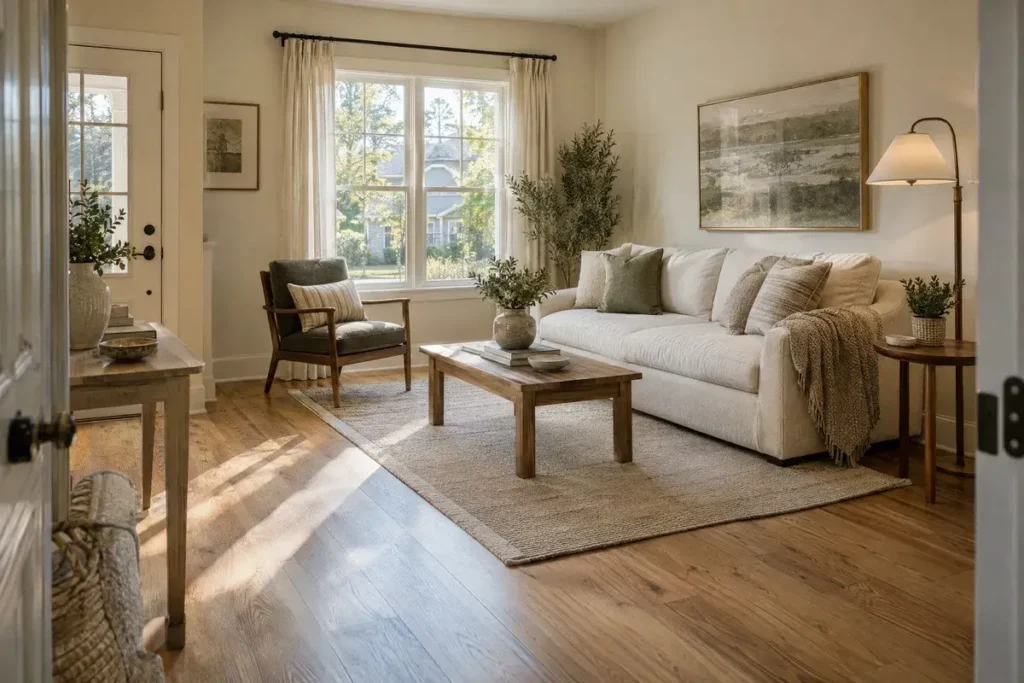
Before buying anything new, look at how people move through your living room. Can you walk from the entrance to the sofa without stepping around a table? Is the path to the kitchen or hallway clear? Can someone sit down without moving several pieces of furniture?
These questions matter more than following a decorating trend.
In many American homes, the living room connects to an entryway, kitchen, or dining area. Arranging furniture without considering these connections can make an otherwise attractive room feel awkward.
Try placing the sofa along the longest suitable wall, then position the coffee table within easy reach. Move occasional chairs away from busy walkways and avoid blocking doors.
Styling Tip
A thoughtful layout can make your existing furniture feel more appropriate for the room, saving money and reducing unnecessary purchases.
2. Choose a Sofa With the Right Proportions
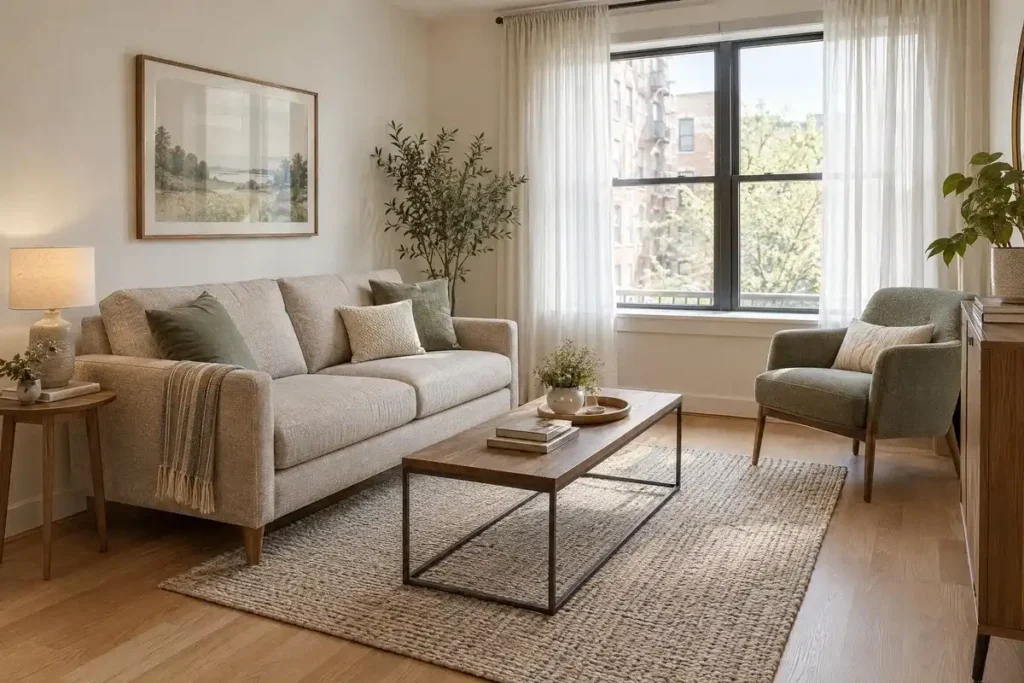
One of the most important small living room furniture ideas is choosing a sofa that fits your room without overwhelming it.
A deep sofa with oversized arms and a bulky base may consume more visual space than a simpler design. On the other hand, choosing several tiny furniture pieces simply because the room is small can create a cluttered, disconnected appearance.
Look for a sofa with clean lines, comfortable seating depth, and arms that do not take up unnecessary space. A loveseat can work well in a narrow apartment, while a properly measured sectional may be practical for a family that needs additional seating.
Low-back sofas can preserve sightlines, particularly when they do not obstruct a window or divide the room visually.
Before ordering furniture, measure the full dimensions and check whether it will fit through your front door, hallway, or staircase.
Design note: Comfort comes first. The ideal sofa is not the smallest available option; it is the one that provides the seating you need while allowing the rest of the room to function properly.
3. Keep More of the Floor Visible
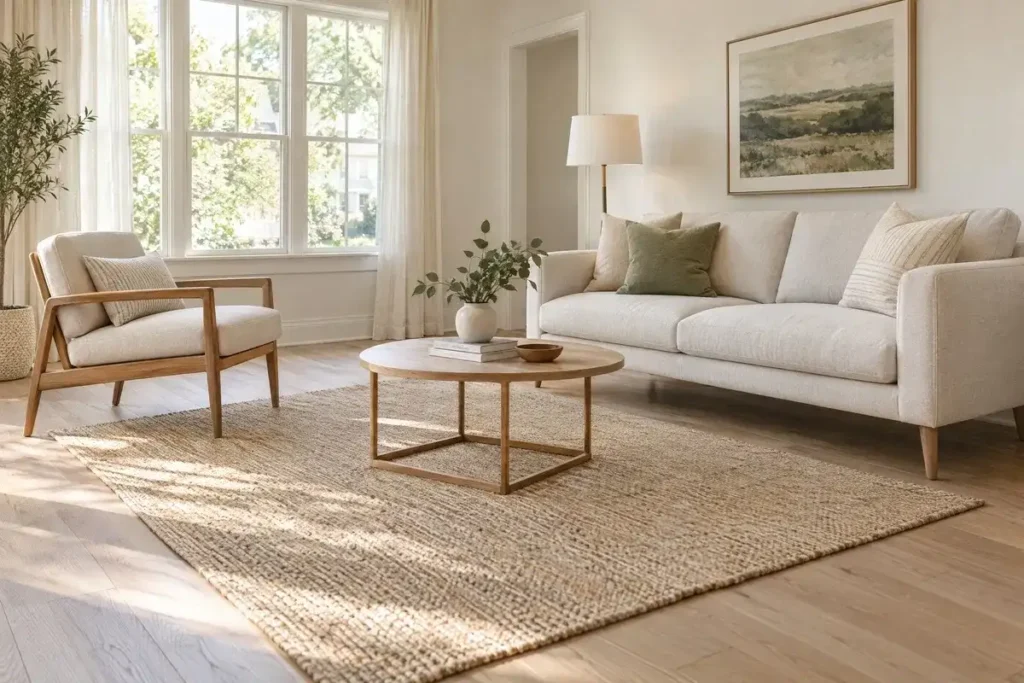
Furniture with exposed legs creates a sense of openness because you can see more of the flooring beneath it. This can make a room feel less visually crowded without reducing the amount of seating or storage.
Consider a sofa with raised wooden legs, an open-frame accent chair, or a console table with a slim base. These styles work particularly well in modern American, mid-century modern, and Scandinavian-inspired living rooms.
You can balance these lighter pieces with one grounded element, such as a substantial sofa or closed storage cabinet. The goal is not to make every piece look delicate but to avoid having every part of the room feel heavy.
For example, a cream sofa with oak legs, a compact wood coffee table, and a light neutral rug can create a balanced arrangement while keeping the floor visible around the furniture.
This is a useful trick when updating a rental apartment because you can achieve the effect simply by replacing one or two pieces rather than renovating the room.
4. Use a Cohesive Color Palette
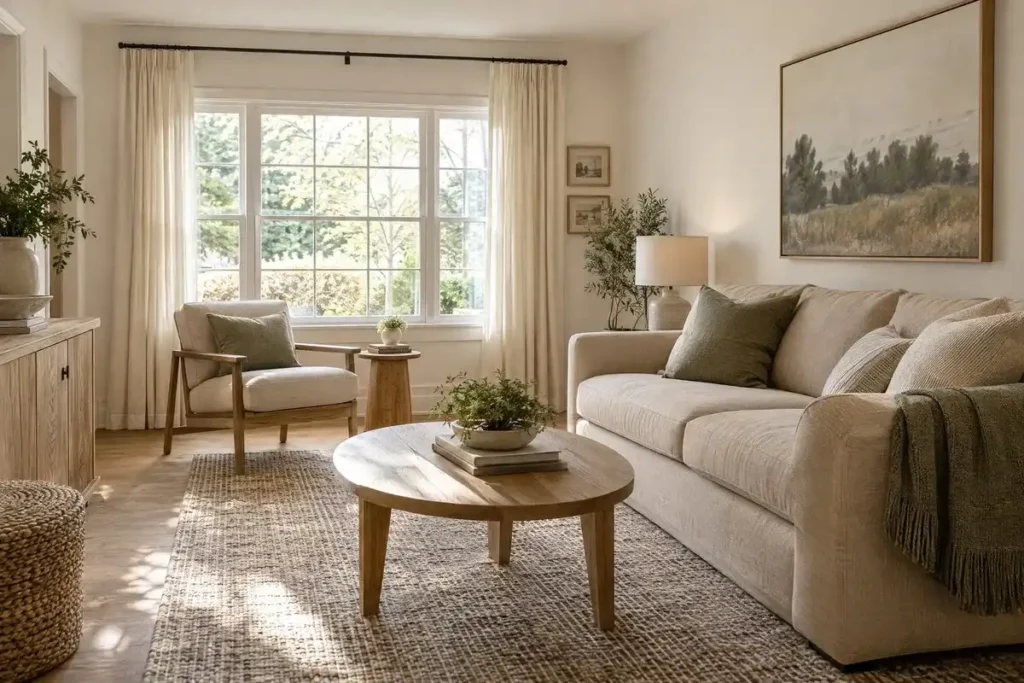
Color can influence how spacious a living room feels. Light, coordinated shades often make a compact room appear brighter, but that does not mean you must paint everything white.
For an inviting American living room, consider warm white walls, beige upholstery, natural oak furniture, and muted sage or soft blue accents. These combinations work well with common home finishes such as wood flooring, neutral carpeting, and white trim.
Choose one main color, one complementary neutral, and one or two accent shades. Repeat them in the pillows, curtains, artwork, and decorative accessories.
Here are a few combinations to consider:
- Warm and natural: Cream, beige, light oak, and muted olive.
- Modern and clean: Soft white, light gray, natural wood, and charcoal accents.
- Coastal-inspired: Warm white, sandy beige, pale blue, and light wood.
- Earthy and comfortable: Greige, caramel, muted sage, and warm brown.
The best small living room color ideas depend on the amount of daylight your room receives. Test paint samples on different walls and observe them during the day and evening before choosing a final shade.
5. Place a Mirror Where It Reflects Light
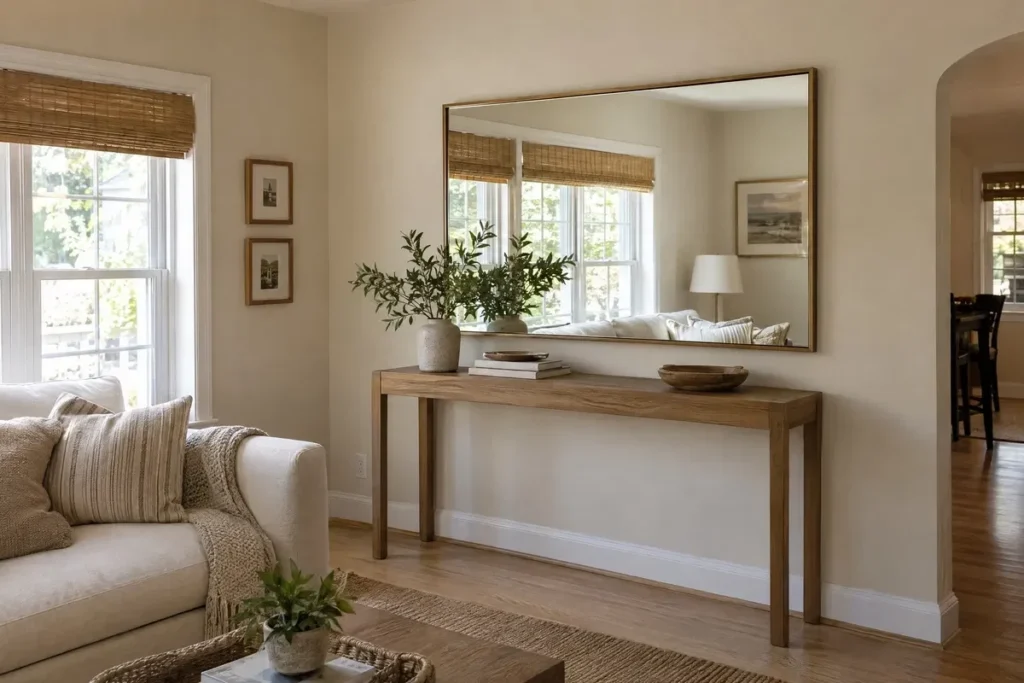
Mirrors are a classic decorating tool because they reflect parts of the room and can create an impression of added depth.
A large mirror positioned near or opposite a window can reflect daylight and make a room feel brighter. A tall mirror above a narrow console can also add visual interest without requiring additional floor space.
Choose a frame that complements your existing decor. A simple black frame suits contemporary interiors, while natural wood works well with farmhouse or Scandinavian styles. An arched mirror can introduce softer shapes into a room dominated by rectangular furniture.
However, mirror placement matters. Reflecting a cluttered shelf or a dark corner may not produce the effect you want.
Practical Tip
Use secure mounting appropriate for the wall and mirror weight, especially in homes with children or pets.
6. Hang Curtains Higher to Emphasize Height
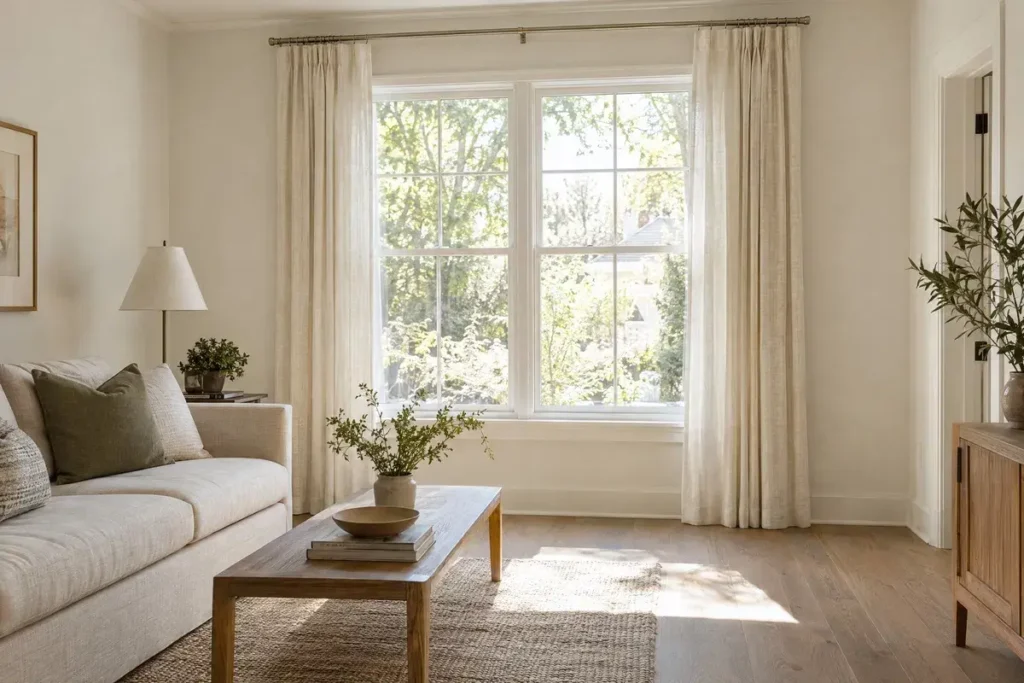
Window treatments can change the perceived proportions of a room. Hanging a curtain rod closer to the ceiling can draw the eye upward, making the walls feel taller.
Where the window arrangement allows, extend the rod beyond the window frame. This lets the curtains sit farther to the sides when open, exposing more glass and allowing daylight into the room.
Full-length curtains in a color similar to the walls can create a connected appearance. Soft white, warm beige, and linen-look fabrics suit many American interiors, from suburban homes to city apartments.
If your living room receives strong afternoon sunlight, select suitable window coverings that balance brightness, glare control, and privacy.
For a more contemporary look, use simple curtain panels rather than thick, heavily layered treatments that dominate a small window.
Remember to account for window trim, furniture placement, and nearby doors when measuring for curtains. The finished result should look intentional and remain easy to operate.
7. Layer Lighting Instead of Relying on One Fixture
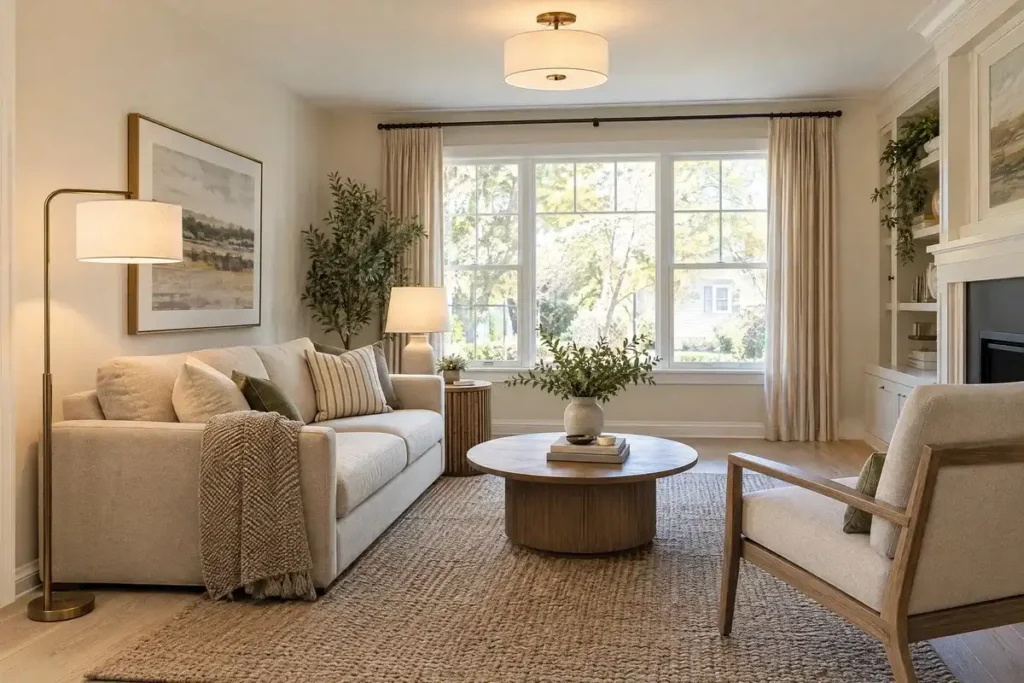
A single overhead fixture may leave the corners of your living room looking dark. Adding several appropriately placed light sources creates a more balanced atmosphere and allows you to adjust the room for different activities.
Begin with the lighting already installed, then consider adding a floor lamp beside the sofa, a table lamp on a console, or wall-mounted sconces if suitable wiring and installation are available.
Each light should serve a purpose. A reading lamp provides focused illumination, while softer ambient lighting makes the room more comfortable in the evening.
In a small American apartment, a slim floor lamp can illuminate a corner without taking up the space needed for a side table. Wall-mounted lighting can be useful when tabletop space is limited.
The U.S. Department of Energy explains that daylighting can reduce reliance on artificial lighting, although window orientation, glare, and solar heat gain also influence how natural light should be managed. You can explore its guidance on natural light and daylighting.
Tip
8. Select an Area Rug That Connects the Furniture
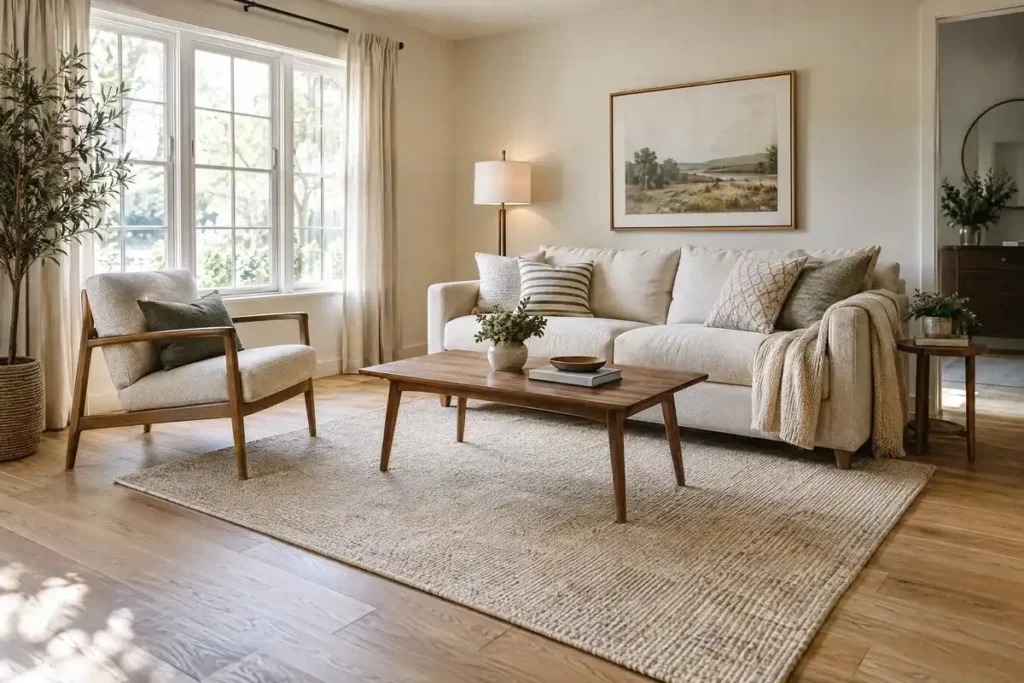
The right area rug can make a small living room feel organized rather than crowded. It visually connects the sofa, chairs, and coffee table, helping the seating arrangement feel like one intentional space.
A rug that is too small can make the furniture appear disconnected. Instead, measure the seating area and choose a rug that accommodates the front legs of the main seating pieces where the layout allows.
Light beige, cream, and subtle patterns can work well in compact rooms, but you do not have to avoid darker rugs. A deeper color can provide contrast and make the overall design feel grounded.
For an open-plan American home, a rug can also define the living area without requiring a physical divider between the seating and dining spaces.
Consider practical needs when choosing the material. A low-pile rug can be easier to clean and may allow furniture to move more smoothly. If you have children or pets, look for a suitable durable material and use an appropriate rug pad.
Leave enough space around doors so the rug does not interfere with their movement.
9. Choose Round or Transparent Coffee Tables
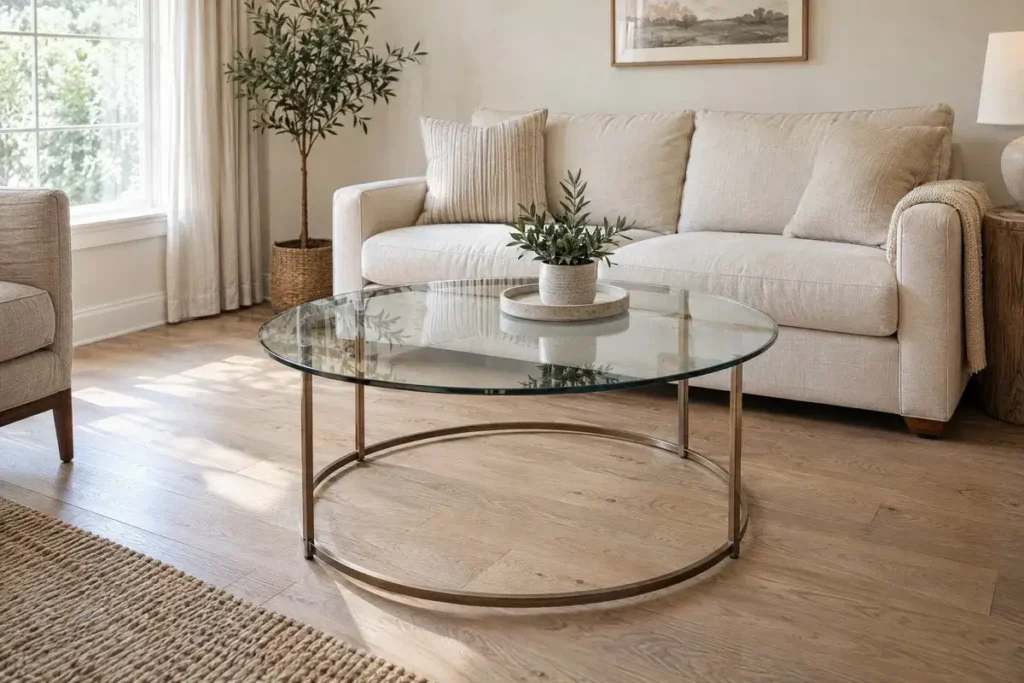
The coffee table sits near the center of many living rooms, so its shape can influence how easy the room is to navigate.
A round or oval table softens the straight lines of sofas, media cabinets, and rectangular rugs. It can also make walking around the table more comfortable in a tight seating arrangement.
Glass or transparent acrylic tables preserve sightlines because the flooring remains visible through the surface. This can make the furniture grouping feel lighter without removing the table entirely.
If you need flexible space for entertaining, consider nesting tables that can be separated when guests visit and tucked together afterward. A storage ottoman can serve as a footrest, extra seat, and surface for a tray.
Choose a table that fits the scale of your sofa and leaves enough room for people to sit down and get up comfortably.
A beautiful coffee table is not helpful if everyone has to squeeze around it. Measure before buying and prioritize movement as well as appearance.
10. Use Wall Space for Storage
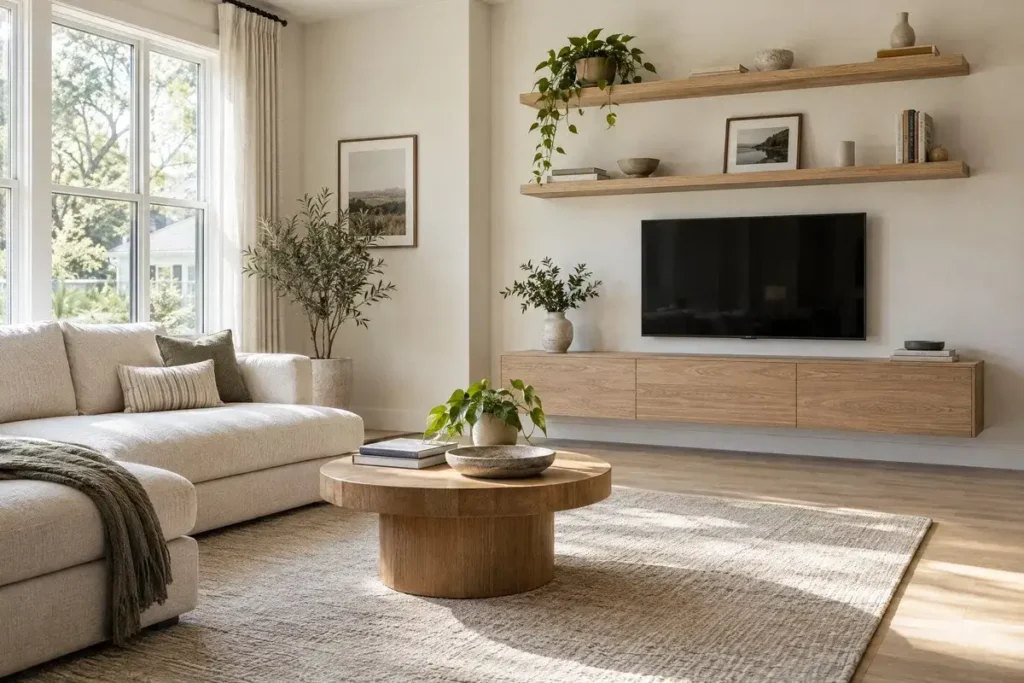
When floor space is limited, vertical storage can help keep the room organized.
Wall-mounted shelves, floating cabinets, and tall bookcases provide places for books, framed photos, plants, and everyday belongings without adding another wide piece of furniture to the floor.
In American homes, a wall-mounted media console can be especially useful in a living room where the television and entertainment equipment already occupy a large portion of the layout. Choose a design that accommodates the equipment and allows appropriate ventilation and cable access.
Keep frequently used items within easy reach. Reserve higher shelves for lightweight accessories or items you do not need every day.
Avoid filling every wall with shelves and cabinets. Too much storage can create a heavy appearance, even when it is neatly arranged.
Important Note
11. Add Multifunctional Furniture
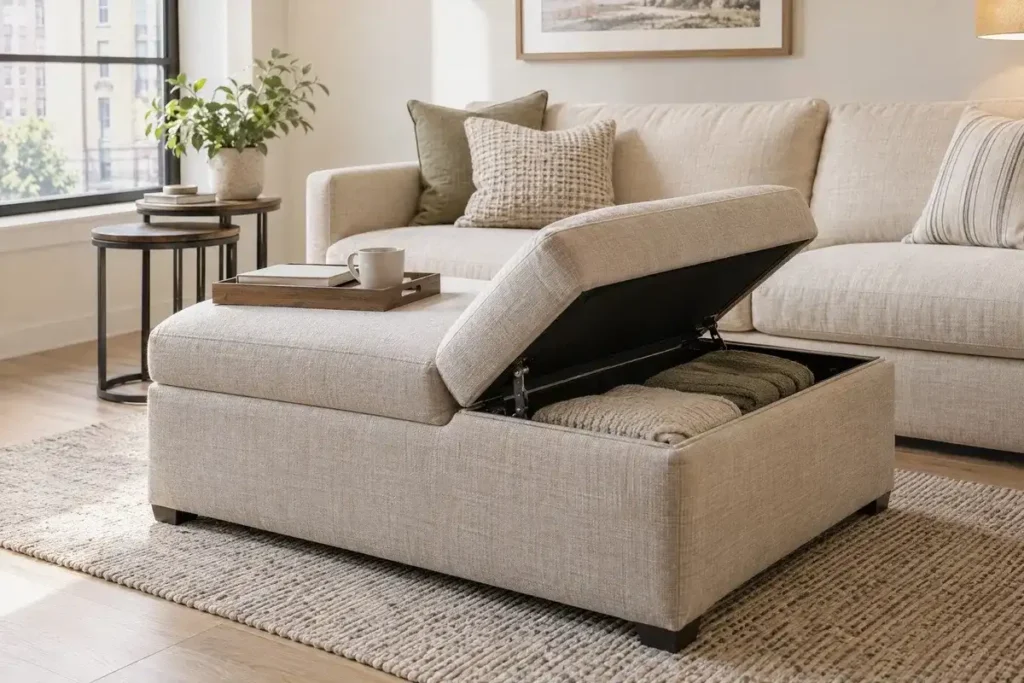
Multifunctional furniture is among the most practical space-saving living room ideas because it allows one item to serve several purposes.
A storage ottoman can hold spare blankets while acting as a footrest. A lift-top coffee table may provide a surface for occasional laptop use, while a narrow console can function as a display surface or a compact workstation.
For a studio apartment, a small dining table that doubles as a desk may be more useful than separate pieces for each activity.
Choose multipurpose furniture based on how you actually live. A large sleeper sofa may be valuable if you regularly host overnight guests, but it may not be worthwhile if you never use the sleeping function.
Here are some useful options:
- Storage ottoman for seating, relaxation, and hidden storage.
- Nesting tables for flexible entertaining.
- Wall-mounted desk for occasional work.
- Storage bench for extra seating and concealed belongings.
- Compact console table for display and light everyday use.
The key is to avoid buying furniture simply because it offers multiple functions. Each piece should solve a genuine problem in your room.
12. Keep Decorative Accessories Under Control
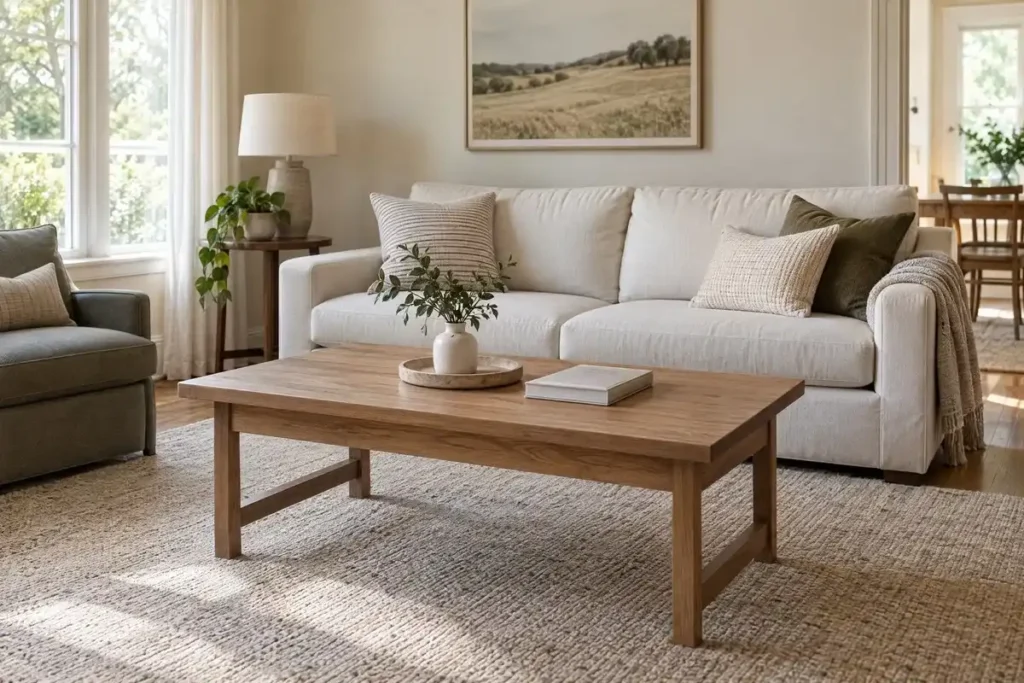
Decorating a small living room does not mean removing all personal touches. Books, plants, photographs, pillows, and artwork can make the space feel welcoming.
Problems arise when every shelf and tabletop becomes a display area. Too many small accessories can compete for attention and make the room feel visually busy.
Instead, group related objects together. A tray can organize remotes and a small decorative item, while a shelf can display a few books beside a plant or framed photo.
Leave some open space around these arrangements. Empty space is not wasted space; it gives the eye a place to rest and makes the objects you keep more noticeable.
Choose accessories that complement the room’s color palette rather than introducing many unrelated colors and patterns.
Quick Tip
13. Draw Attention Upward With Artwork
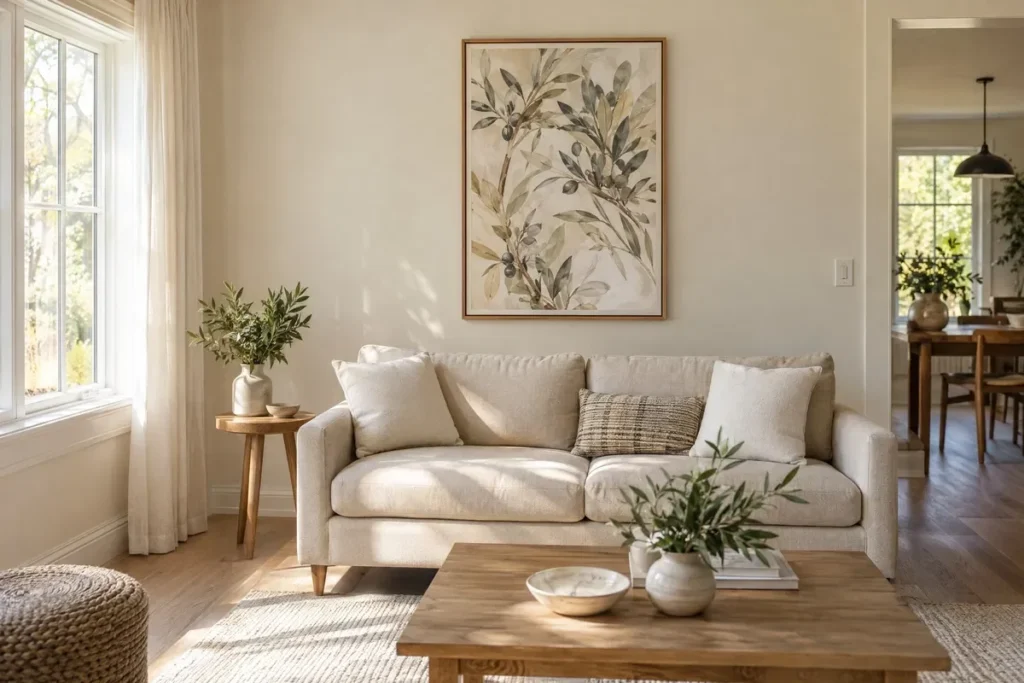
Artwork gives your living room personality and can help establish a focal point. In a compact space, the goal is to make the arrangement feel intentional.
One larger piece above the sofa may create a more cohesive effect than many tiny pictures scattered across the wall. A carefully arranged gallery wall can also work, provided the spacing and frame styles relate to each other.
Vertical artwork or a tall framed print can emphasize height, especially when it is positioned appropriately in relation to the furniture.
Keep the artwork connected to the overall color scheme. A landscape with muted greens and warm neutrals can complement a beige sofa, while abstract art may suit a more contemporary living room.
You do not need to spend a fortune. Affordable prints, personal photographs, and secondhand frames can look stylish when displayed thoughtfully.
Check the scale before hanging anything. Artwork that is too small may appear disconnected from a large sofa, while a piece that is excessively large can dominate a narrow wall.
14. Let Natural Light Reach the Room
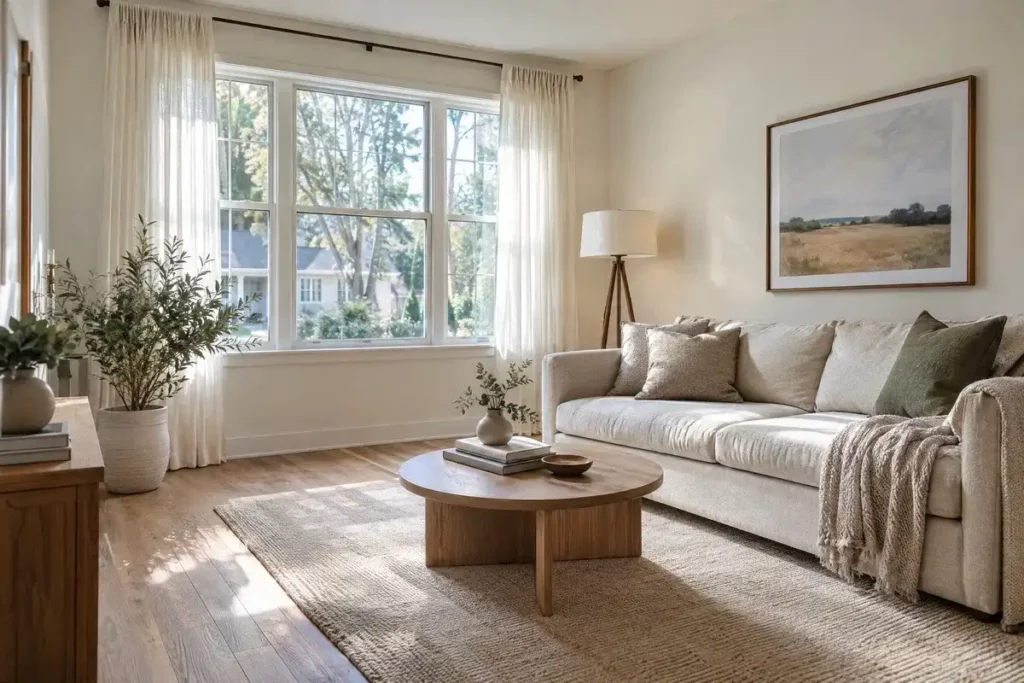
Natural daylight can make a living room feel more open and pleasant. Start by checking whether furniture, curtains, plants, or decorative objects are unnecessarily blocking the windows.
Open the curtains during the day where privacy and weather conditions permit. Keep window glass clean and arrange taller pieces of furniture so they do not obstruct valuable light.
For rooms that face a neighboring building or have limited windows, use pale wall colors, mirrors, and layered lighting to create a brighter appearance.
However, more direct sunlight is not always better. Strong sun can cause glare, fading, and unwanted heat. Appropriate shades or curtains can help balance daylight with comfort, particularly in sunny parts of the United States.
If your room has a pleasant outdoor view, avoid blocking it with unnecessary objects. A clear view can extend the visual experience beyond the room’s walls.
The goal is to make the most of the light available rather than trying to recreate the look of a completely different house.
15. Create Flexible Zones in a Small Living Room
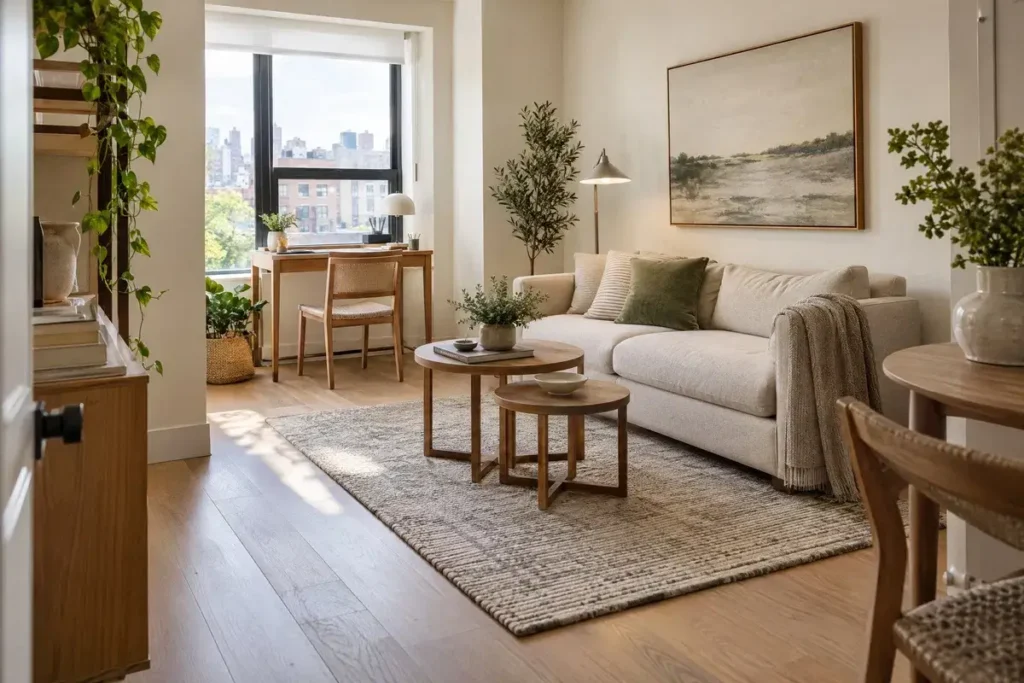
Many living rooms serve several purposes, especially in apartments and open-plan homes. You might watch television, read, work from home, entertain visitors, and store children’s toys in the same area.
Instead of assigning a large furniture piece to every activity, create flexible zones using movable furniture and thoughtful placement.
A sofa and rug can define the main seating area. A compact desk near a window may provide a work surface, while a storage basket can keep extra blankets or toys close at hand.
In open-plan homes, furniture can establish a gentle boundary between the living and dining areas without closing off the room. Keep the main routes between the entrance, kitchen, and seating area clear.
Prioritize the activities you use most. If you rarely work from the living room, a permanent desk may occupy space better used for seating. If you host guests often, extra nesting tables may be more valuable.
The best layout is the one that supports your daily routine without making the room feel overloaded.
Small Living Room Layout Ideas for Different Homes
The right furniture arrangement depends on the room’s shape, the location of its windows, and the way people use the space.
| Room Type | Recommended Layout | Helpful Design Detail |
|---|---|---|
| Narrow Living Room | Position the main sofa along a suitable long wall. | Keep a clear route through the room. |
| Square Living Room | Arrange seating around a central rug. | Use one main focal point. |
| Small Apartment | Combine seating, storage, and flexible furniture. | Avoid unnecessary duplicate pieces. |
| Open-Plan Living Area | Define the seating zone with a rug and furniture placement. | Preserve the connection to the kitchen. |
| Dark Living Room | Keep windows unobstructed where possible. | Combine daylight, mirrors, and layered lighting. |
| Small Family Room | Choose practical seating and concealed storage. | Keep frequently used items easy to put away. |
For a narrow room, avoid automatically placing a bulky sofa at each end. A more streamlined seating arrangement can make the room easier to navigate.
In a square room, a balanced grouping often works well. The sofa, accent chair, and coffee table can create a clear central area without requiring furniture along every wall.
For a small apartment, think carefully about which items are essential. A flexible table and a storage ottoman may provide more everyday value than several decorative pieces with only one use.
Common Mistakes That Make a Small Living Room Feel Smaller
Even an attractive room can feel cramped when the furniture placement or decorative choices do not suit its proportions.
Avoid these common mistakes:
- Buying furniture without measuring: Check room dimensions, doorways, and delivery access before ordering.
- Using too many small pieces: Several tiny tables and chairs can create more visual clutter than a few well-chosen pieces.
- Blocking natural light: Heavy curtains and tall furniture can make a room feel darker than necessary.
- Choosing a rug that is too small: A disconnected seating arrangement can make the whole space feel less cohesive.
- Filling every surface: Too many accessories make shelves, tables, and windowsills appear crowded.
- Ignoring storage: Everyday clutter can overwhelm even a carefully decorated room.
- Following trends without considering function: Furniture should suit your home and daily routine, not simply look good in photographs.
Before spending money on new furniture, try changing one part of your existing arrangement. Moving a chair, clearing a pathway, or removing an unnecessary table may improve the room more than buying additional decor.
Conclusion
The best small living room ideas combine practical planning with thoughtful decorating. A well-proportioned sofa, clear walking paths, coordinated colors, suitable lighting, and organized storage can help a compact room feel more spacious without sacrificing comfort.
You do not need to change everything at once. Start by measuring your room, improving the furniture layout, and making better use of natural light. Then introduce mirrors, textiles, artwork, or multifunctional furniture where they solve a genuine need.
Whether you are decorating a city apartment or a small family home, the most successful design is one that supports your lifestyle, reflects your personality, and makes the space comfortable to use every day.
FAQ
What colors make a small living room look bigger?
Warm white, cream, beige, and pale gray can help a living room feel brighter, particularly when natural light is limited. Muted greens and blues also work well when coordinated with the flooring and furniture. Choose colors based on the room’s lighting and the mood you want to create.
How can I make a small living room look bigger on a budget?
Rearrange existing furniture, clear unnecessary clutter, open window treatments during the day, and improve your lighting where possible. You can also use existing baskets for storage and reposition a mirror to reflect a pleasant view or light source. Start with free changes before buying anything new.
Should I use a sectional sofa in a small living room?
A sectional can work if it fits the room and leaves enough space for movement. Measure its full dimensions and consider how the chaise section will affect doorways and walking paths. In some rooms, a standard sofa with an accent chair provides a more flexible arrangement.
Do small living rooms need white walls?
No. Light colors can make a room feel brighter, but deeper colors can create an attractive and comfortable interior when used thoughtfully. Choose shades that work with the natural light and the room’s furnishings rather than following a strict rule about white paint.
What is the best coffee table for a small living room?
A compact round, oval, glass, or nesting coffee table may work well, depending on the layout. Look for a design that leaves comfortable room around the seating and provides enough surface area for everyday use. Storage ottomans can be useful when additional seating or concealed storage is important.
How can I decorate a small living room without clutter?
Choose a consistent color palette, limit the number of accessories on each surface, and use storage to keep everyday items organized. Display a few meaningful objects rather than trying to decorate every shelf and corner. Leave open space around the furniture so the room remains visually balanced.
How do I make a small apartment living room more functional?
Prioritize multifunctional furniture, clear walking paths, and storage that suits your daily routine. A storage ottoman, nesting tables, wall shelves, and a compact console can provide useful functions without requiring many separate furniture pieces.
1 thought on “15 Small Living Room Ideas That Make the Space Feel Bigger”