

A TV wall can be much more than a place to mount your screen. With the right design, it can become a stylish focal point that adds warmth, storage, texture, and personality to your living room. From wood slat panels and built-in media units to elegant fireplaces, floating consoles, and hidden TV solutions, there are plenty of ways to make your entertainment area look intentional and beautifully integrated.
Whether you live in a spacious family home, a modern apartment, or a compact rental, the best TV wall ideas balance style with everyday function. The key is to choose a design that works with your room size, furniture layout, lighting, storage needs, and overall interior style.
Quick TV Wall Cost Comparison
The price of a TV wall depends on whether you choose a simple DIY feature, ready-made furniture, or a fully custom installation. The table below uses realistic 2026 U.S. planning prices and includes the kind of real materials or products you would typically use.
| TV Wall Idea | Real Thing You Can Use | Typical Total Cost | Cost Level |
|---|---|---|---|
| Wood Slat TV Wall | Acoustic wood slat panels, plywood/MDF backing, LED strip and TV mount | $1,000–$4,500 | Budget to Mid-Range |
| Built-In Media Wall | Custom MDF/plywood cabinets, shelving, LED lighting and cable management | $5,000–$15,000+ | High-End |
| TV + Fireplace Wall | Electric fireplace insert, framed media wall, finish panels and TV mount | $4,500–$9,000 | High-End |
| Stone or Porcelain Wall | Porcelain slab, natural stone or large-format stone-look panels | $3,500–$8,000+ | Mid-Range to High-End |
| Dark Painted Accent Wall | Premium interior paint, primer, wall preparation and finish | $500–$1,850 | Budget-Friendly |
| Floating Console + Shelves | Wall-mounted BESTÅ-style console, floating shelves, brackets and cable storage | $300–$2,500 | Budget to Mid-Range |
| Gallery or Hidden TV Wall | Framed artwork, decorative panels or custom sliding TV cabinet | $250–$5,000+ | Budget to High-End |
Why the TV Wall Matters in a Living Room
The television is often one of the largest objects on a living room wall. When it is simply mounted on a blank surface, it can sometimes feel visually disconnected from the rest of the room.
A thoughtfully designed TV wall solves that problem by creating a relationship between the television, media console, furniture, lighting, artwork, and architectural features.
A good TV wall should answer three basic questions:
- Does the TV sit comfortably within the room?
- Is there enough storage for media equipment and everyday items?
- Does the wall complement the style of the surrounding space?
You do not necessarily need a costly renovation to achieve the right look. Sometimes a darker paint color, a better-sized console, or a few carefully selected shelves can make a major difference.
How to Choose the Right TV Wall Design
Before choosing materials or colors, look at the practical side of the installation.
Consider the Room Size
Large rooms can handle floor-to-ceiling cabinetry, stone feature walls, and large built-in media units. In smaller rooms, a floating console or simple accent wall may be more appropriate because it keeps the design visually lighter.
Think About Storage
If your living room contains gaming consoles, sound systems, remotes, books, toys, or other accessories, choose a design with useful storage. Closed cabinets can hide clutter while open shelving can display decorative pieces.
Think About Viewing Position
Your television should work with the seating arrangement. Place it where you can watch comfortably from the main seating area rather than simply choosing the highest or most central point on the wall.
Consider Lighting
Natural light and lamps can create distracting reflections on a TV screen. Before finalizing the wall, observe how sunlight enters the room throughout the day and where your main light sources are positioned.
Plan Cables and Ventilation
Cable management should be considered before the TV is mounted or cabinetry is installed. Make sure there is enough space around the television for proper ventilation and access to essential connections.
With these practical factors covered, you can choose a style that looks good and works well.
1. Create a Warm Wood Slat TV Wall
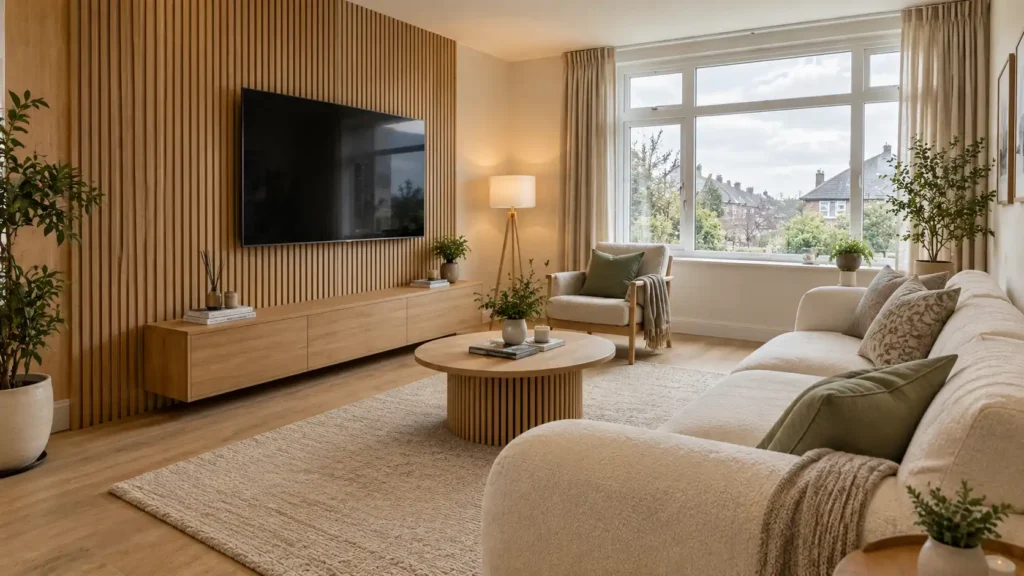
A wood slat TV wall is one of the most popular modern approaches because it instantly adds texture and warmth.
Vertical slats create a clean architectural pattern while breaking up a large, empty wall. Light oak can create a bright Scandinavian or Japandi look, while walnut and darker finishes can give the space a richer, more dramatic appearance.
For a simple design, install acoustic wood slat panels across the main TV section and add a long, low media console underneath. Real wood slat acoustic panels are available in ready-to-install sections, making this idea possible even without building an entire custom wall.
For a more premium result, the slats can run from floor to ceiling with concealed LED lighting behind the feature.
Typical price: $1,000–$4,500
Best for: Modern, minimalist, Scandinavian, Japandi, and contemporary living rooms.
Design tip: Let the wood be the main feature. Too many competing patterns, colors, and decorative objects can make the wall feel crowded.
2. Build a Full Media Wall With Storage
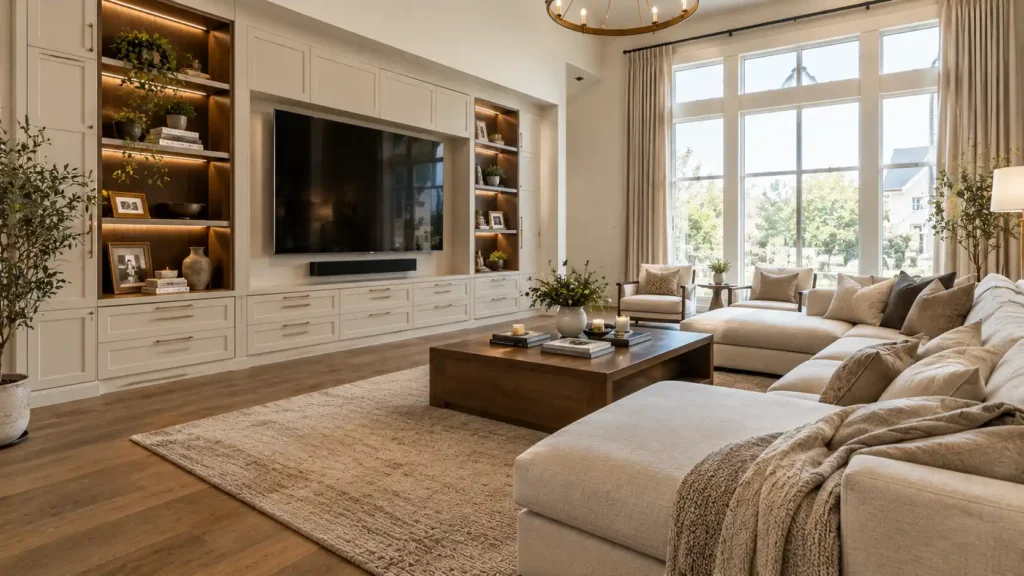
If you need both style and storage, a built-in media wall can be one of the most practical solutions.
Instead of treating the TV as a separate object, the entire wall becomes a coordinated furniture system. You can include lower cabinets, open shelves, drawers, niches, and tall storage units around the screen.
A common layout places the television in the center with a long cabinet underneath and shelving on both sides. You can also use an asymmetrical layout, such as closed cabinets on one side and open shelves on the other.
A custom media wall can be made from MDF, plywood, or other cabinetry materials, with painted doors, wood veneer, integrated lighting, and a dedicated cable route.
The advantage is that everyday clutter can be hidden while books, photographs, plants, and decorative pieces remain visible.
Typical price: $5,000–$15,000+
Best for: Families, large living rooms, media-heavy spaces, and homeowners who want maximum organization.
Design tip: Use simple cabinet fronts and a consistent finish so the television and storage feel like one cohesive feature.
3. Combine the TV With a Fireplace
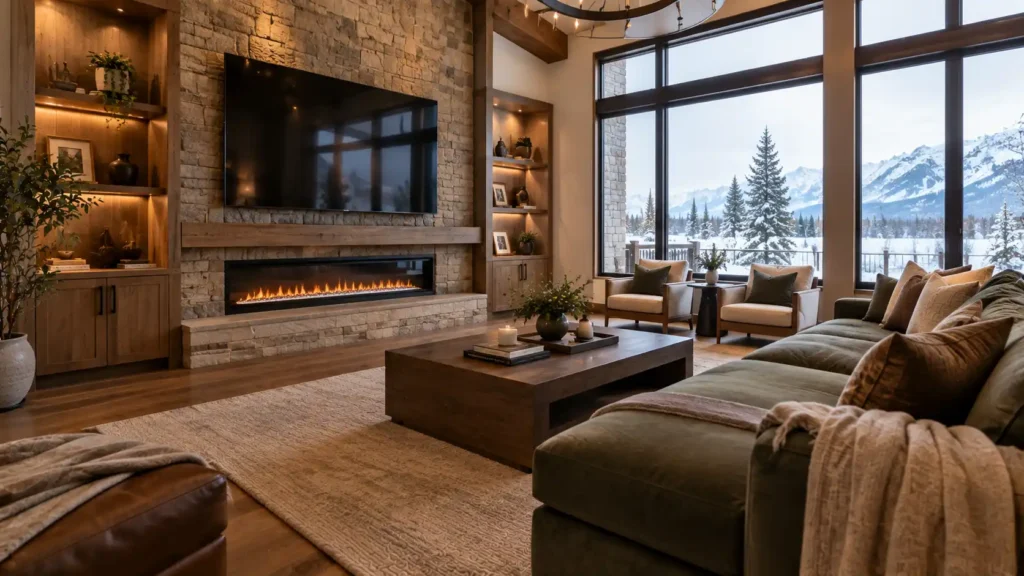
A fireplace and television can form a striking focal point when designed as one composition.
A linear electric fireplace below the TV creates a strong horizontal arrangement, while stone, wood, plaster, or cabinetry can bring the whole wall together.
Real electric fireplace inserts can range from a few hundred dollars for basic models to well over $1,000 for larger premium units. The complete media-wall project costs considerably more once framing, electrical work, finishing, installation, and cabinetry are included.
This approach is especially effective in larger living rooms where a single focal point can anchor the furniture layout.
However, this type of installation requires careful planning. Heat, clearances, mounting conditions, and ventilation can vary between fireplace and television models, so always follow the installation requirements for the specific products you choose.
Typical price: $4,500–$9,000
Best for: Spacious living rooms, open-plan homes, modern interiors, and homes where the fireplace is already an architectural feature.
Design tip: Align the fireplace and TV carefully. Consistent proportions and clean lines help the wall look intentional.
4. Add a Stone or Porcelain Feature Wall
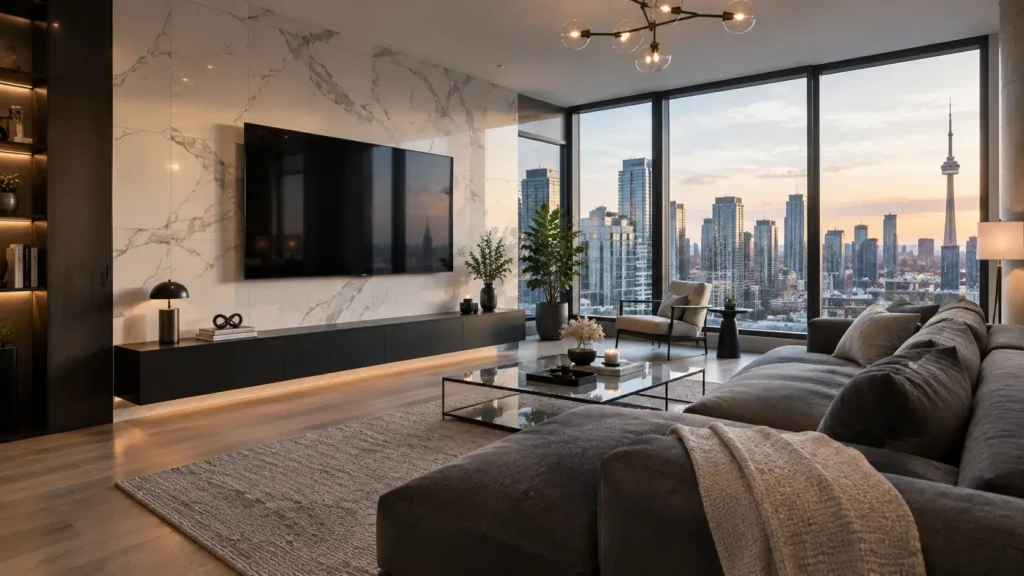
For a more luxurious appearance, consider creating a TV feature wall using stone or a stone-look material.
Marble-inspired porcelain, slate, limestone-style finishes, and large-format panels can add depth without requiring lots of decoration.
A real porcelain slab or natural stone installation costs considerably more than paint or decorative wall panels because the material, transport, cutting, substrate preparation, and installation all affect the final cost.
Mount the TV centrally and pair it with a simple console below. Since the wall itself becomes the statement, you can keep the surrounding furniture and accessories relatively understated.
This idea works especially well in contemporary and transitional interiors, but the right material can also complement classic homes.
Typical price: $3,500–$8,000+
Best for: Luxury, contemporary, transitional, minimalist, and sophisticated interiors.
Design tip: Choose a finish that connects with existing materials in your room. Your TV wall should feel like part of the home rather than an unrelated feature.
5. Paint the TV Wall a Dark Accent Color
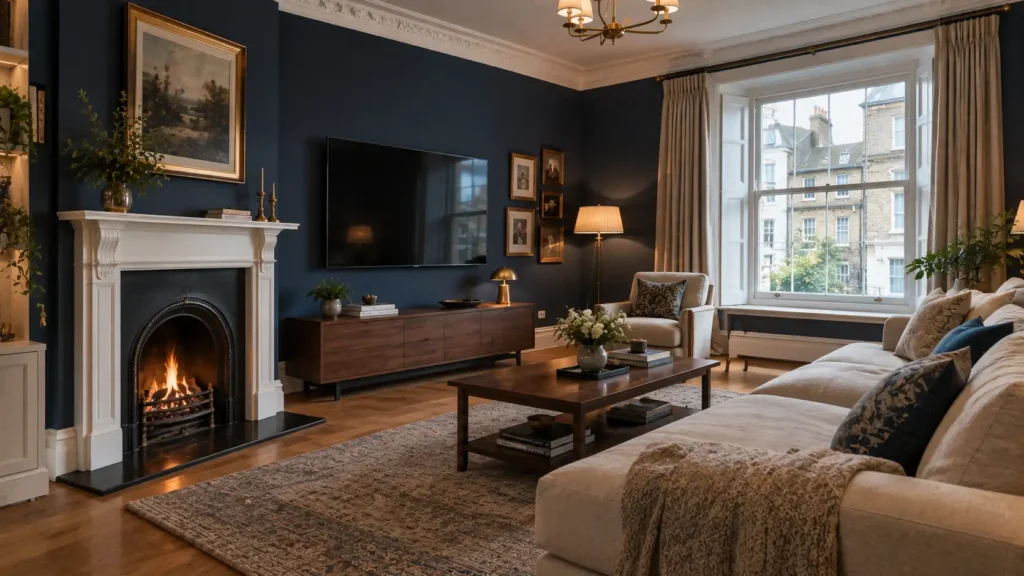
One of the easiest TV wall ideas is also one of the most budget-friendly: paint the wall a darker color.
Charcoal, deep blue, dark green, warm brown, and other rich shades can help the black screen blend into the background rather than stand out against a bright wall.
The real cost can be surprisingly low. A quality gallon of interior paint can cost roughly $30–$60, while a complete professional accent-wall project costs more when primer, preparation, labor, and multiple coats are included.
You can make the effect even stronger by painting shelves, trim, or cabinetry in a similar shade.
This approach is ideal when you already have a suitable media console and do not want to install expensive wall panels or cabinetry.
Typical price: $500–$1,850 installed
Best for: Budget makeovers, traditional interiors, modern rooms, apartments, and moody living spaces.
Design tip: Test paint samples in both daylight and artificial light. A color that looks soft during the day can appear much deeper at night.
6. Use a Floating Console and Open Shelves
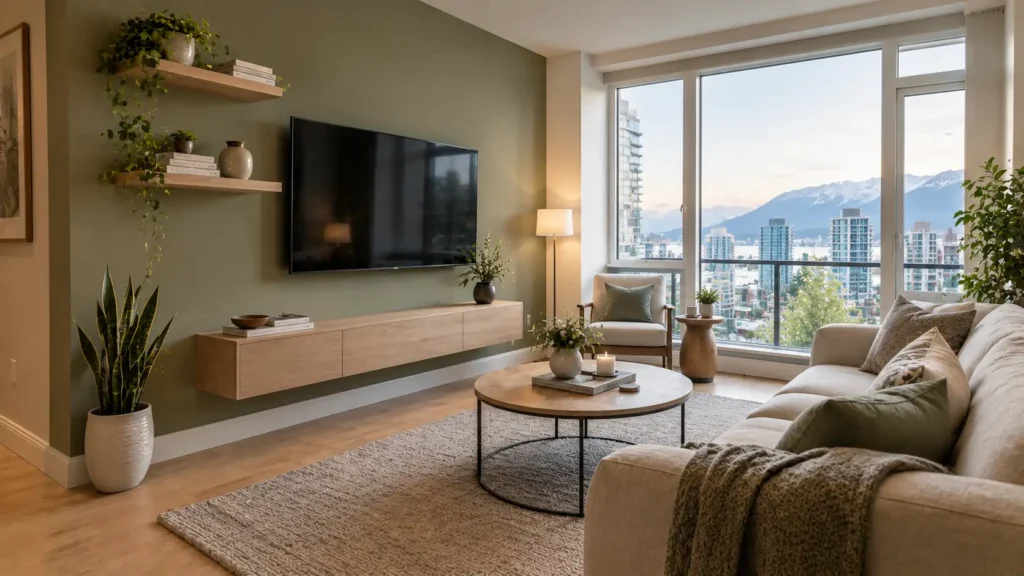
A floating console can instantly give a TV wall a cleaner and more modern appearance.
A real-world option is a modular wall-mounted TV unit such as an IKEA BESTÅ-style system. Basic BESTÅ frames can start at well under $150, while doors, shelves, drawers, interiors, legs, wall mounting hardware, and additional units increase the final price.
For a more customized appearance, you can combine a ready-made floating console with wood shelves, decorative lighting, and a cable-management system.
Because the cabinet is mounted above the floor, the wall underneath remains visible, helping the room feel more open. This can be particularly useful in smaller living rooms where bulky furniture can make the space feel crowded.
Open shelves can be installed beside or above the TV to display books, framed photographs, plants, and a few decorative accessories.
Typical price: $300–$2,500
Best for: Apartments, small and medium living rooms, modern homes, and minimalist interiors.
Design tip: Choose a console that is visually wider than the TV when possible. This creates a stronger sense of balance.
7. Turn the TV Wall Into a Gallery
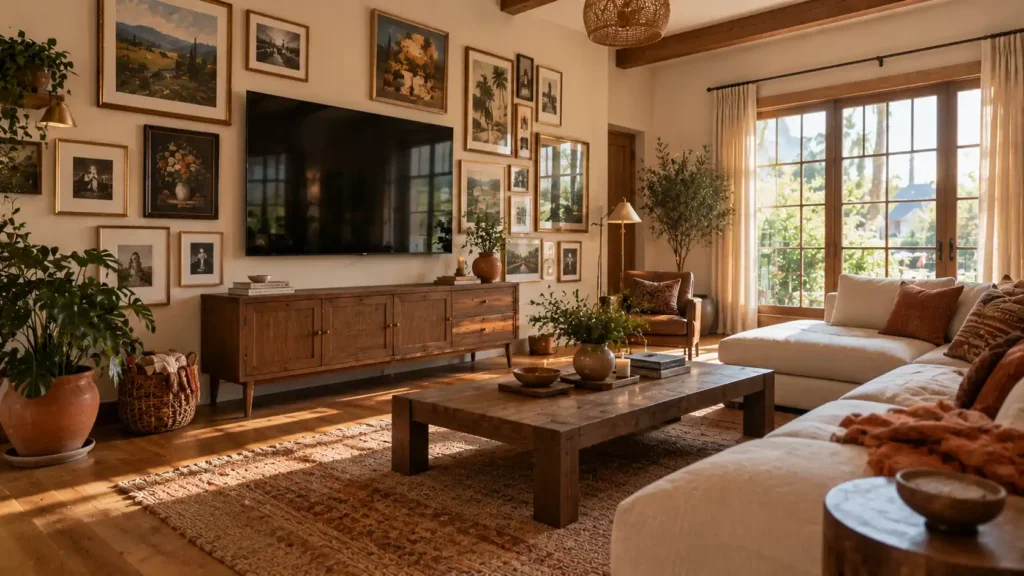
Your television does not have to dominate the room.
A gallery wall can help integrate the screen with artwork, photographs, shelves, and other decorative elements. Instead of making the TV the only focal point, the entire wall becomes a curated composition.
You can use affordable ready-made frames for a budget makeover or invest in custom framing and a hidden TV cabinet for a more sophisticated result.
Another option is a hidden TV design. Custom cabinetry, sliding artwork, or decorative panels can conceal the screen when you are not watching it.
This is particularly appealing in formal sitting rooms or multifunctional spaces where you want the atmosphere to feel more like a lounge than a dedicated entertainment area.
Typical price: $250–$5,000+
Best for: Art-focused interiors, traditional rooms, eclectic homes, and homeowners who want the TV to be less noticeable.
Design tip: Place the TV first, then build your artwork arrangement around it. Leave enough breathing room so the composition does not feel cramped.
TV Wall Styling Tips That Make a Difference
Even a simple TV wall can look polished when the proportions are right.
Choose the Right Console Size
A tiny cabinet underneath a large screen can make the wall feel unbalanced. A wider, low-profile console often creates a stronger visual foundation.
Keep Decor Intentional
You do not need to fill every available space. A few books, a plant, framed artwork, or a ceramic object can be enough to add personality.
Use Lighting Carefully
Accent lighting can highlight shelving, wood slats, or architectural details. Avoid positioning bright lights directly opposite the TV where they may create distracting reflections.
Hide Cables Where Possible
Visible wires can undermine an otherwise stylish installation. Plan cable routes before mounting the TV and choose furniture designed to support cable management.
Mix Open and Closed Storage
Closed cabinets are ideal for hiding technology and everyday clutter. Open shelving adds personality and visual interest. Combining both gives you flexibility without making the wall feel too heavy.
Common TV Wall Mistakes to Avoid
Mounting the TV Too High
A television may look impressive when placed high on a feature wall, but viewing comfort should come first. Consider your sofa height and typical viewing position before deciding where to mount the screen.
Making the Wall Too Busy
A TV wall already has a large visual element. Adding several bold materials, decorations, shelves, and lights can create unnecessary competition.
Ignoring the Room’s Existing Style
A dramatic stone wall may look beautiful in isolation but feel out of place in a soft, traditional living room. Choose finishes that complement your existing flooring, furniture, colors, and architecture.
Forgetting Storage
A beautiful TV wall becomes less useful if there is nowhere to store remotes, gaming equipment, speakers, or accessories.
Blocking TV Ventilation
Built-in designs should leave enough room for proper airflow around the television. Avoid enclosing the screen in a way that could interfere with ventilation.
TV Wall Ideas for Small Living Rooms
Small rooms require a slightly different approach.
Instead of creating a large built-in feature, consider a floating console, compact wall-mounted shelves, or a single painted accent wall.
A dark background can help the TV visually blend into the wall, while floating furniture keeps more of the floor visible. Vertical shelving can also make use of wall height without taking up much floor space.
If storage is limited, choose furniture with hidden compartments rather than adding more open shelves.
Another smart approach is to combine several functions into one piece. For example, a long media cabinet can hold entertainment equipment, books, decorative items, and everyday storage without requiring additional furniture.
The goal should be simplicity. A well-positioned TV, clean cable management, useful storage, and one strong design feature are often enough.
Conclusion
The best TV wall ideas for a living room combine beauty and practicality. A wood slat feature wall can bring warmth, a built-in media unit can provide valuable storage, and a fireplace can create a dramatic focal point. A stone or porcelain surface adds texture, while a dark accent wall offers a simpler and more affordable transformation. Floating consoles work especially well in smaller rooms, and gallery or hidden-TV designs can keep the screen from dominating the space.
Before starting your project, think about viewing height, furniture proportions, storage, cable management, lighting, and ventilation. Most importantly, set a realistic budget before choosing materials. A painted accent wall can deliver a major visual change for relatively little money, while custom cabinetry and fireplace installations require a much larger investment.
A great TV wall should not simply make the television look better. It should make the entire living room feel more organized, comfortable, and complete.
FAQ
What is the best TV wall idea for a living room?
The right idea depends on your room and needs. Built-in media walls are useful for storage, wood slat walls add warmth and texture, floating consoles suit smaller spaces, and dark accent walls offer a relatively simple transformation.
What should I put around my TV?
You can add built-in cabinets, shelves, artwork, wood panels, plants, lighting, or a feature material such as stone or porcelain. Keep the overall arrangement balanced and avoid excessive decoration.
Should the TV wall be darker than the rest of the room?
It can be. Darker colors may help a black television blend into the background and can add depth to the room. However, lighter walls can also work well, particularly in bright, minimalist interiors.
Are wood slat walls still a good idea for TVs?
Wood slat walls remain a versatile choice for contemporary interiors because they introduce texture and warmth. They work particularly well when paired with simple furniture and limited decoration.
How high should a TV be mounted?
There is no universal height. The ideal position depends on seating, sofa height, TV size, and viewing angle. The most important thing is to choose a comfortable viewing position based on how your living room is actually used.
Can you put a TV above a fireplace?
It can be possible, but the exact installation depends on the fireplace and television. Check the installation requirements for both products, particularly regarding heat, clearance, mounting, and ventilation.
How do I make my TV wall look more expensive?
Focus on proportion, consistency, and cable management. A wide console, concealed wires, quality-looking materials, subtle lighting, and a limited number of accessories can create a polished appearance without adding unnecessary clutter.
How can I hide a TV when it is not being used?
Popular solutions include custom cabinets, sliding artwork, decorative panels, and artwork arrangements that make the television less prominent. The best approach depends on your room layout, design style, and budget.