
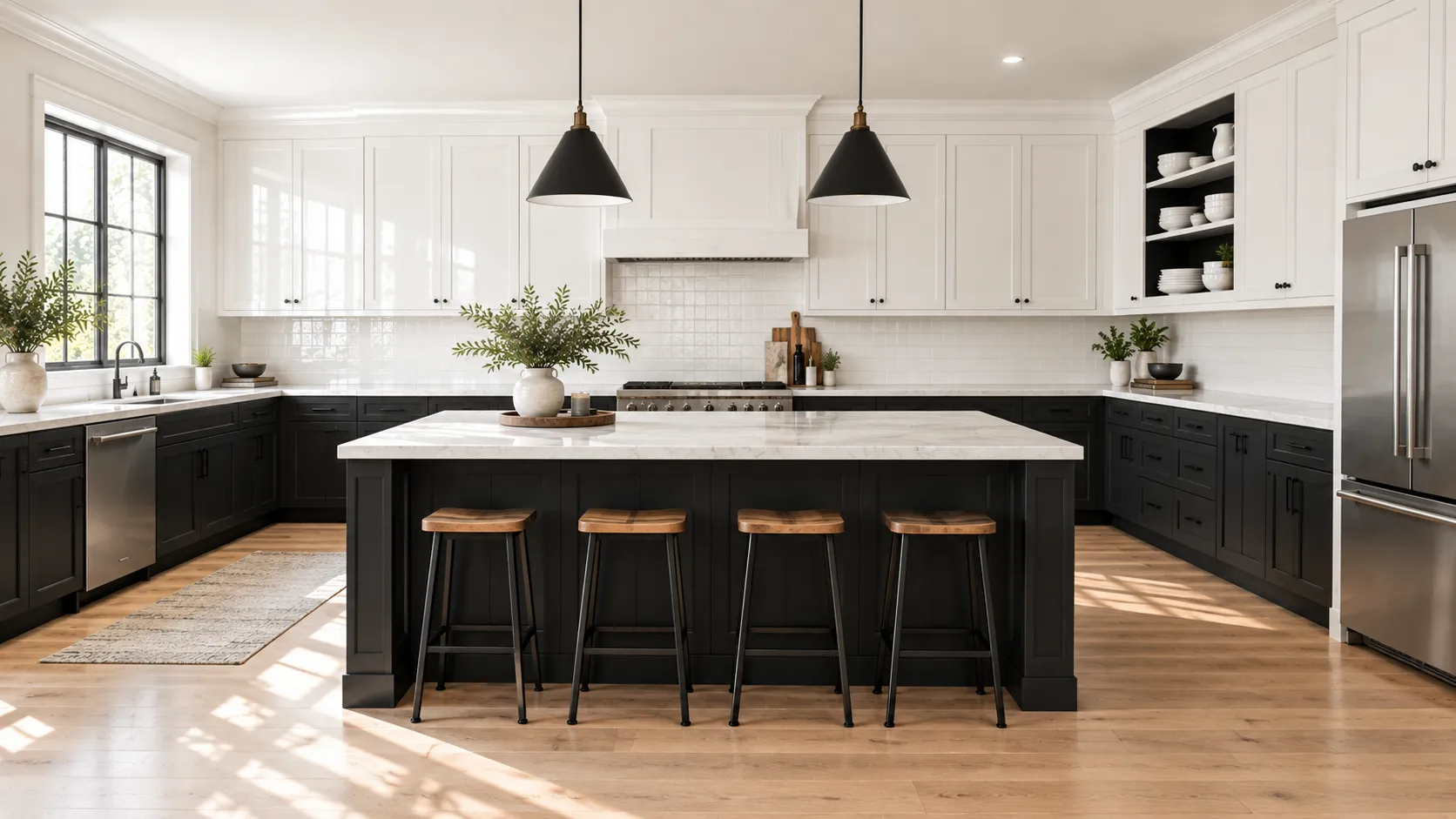
Most homeowners stare at their outdated, all-brown kitchens and assume the only safe upgrade is painting everything bright white. But a completely white room often feels cold, sterile, and impossible to keep clean. On the flip side, painting a room entirely black turns it into a gloomy cave. The secret to a modern, custom-built aesthetic is mastering high contrast.
Designing black and white kitchen cabinets gives you the best of both worlds. The dark sections hide everyday scuffs, dog hair, and shoe marks, while the white sections bounce natural light around the room to keep the ceiling feeling high. Achieving this balance is not about guessing; it requires placing the dark paint in the correct zones based on your layout.
This guide breaks down exactly how to split your colors and apply them. Executing a two-tone paint job requires patience and precise taping. Expect to spend about 4 days completing the entire process, as dark paint takes longer to cure between coats. Gather your foam rollers, clear off your countertops, and let’s map out the exact color split that works for your floor plan.
Paint the lower cabinets matte black to ground a bright room.
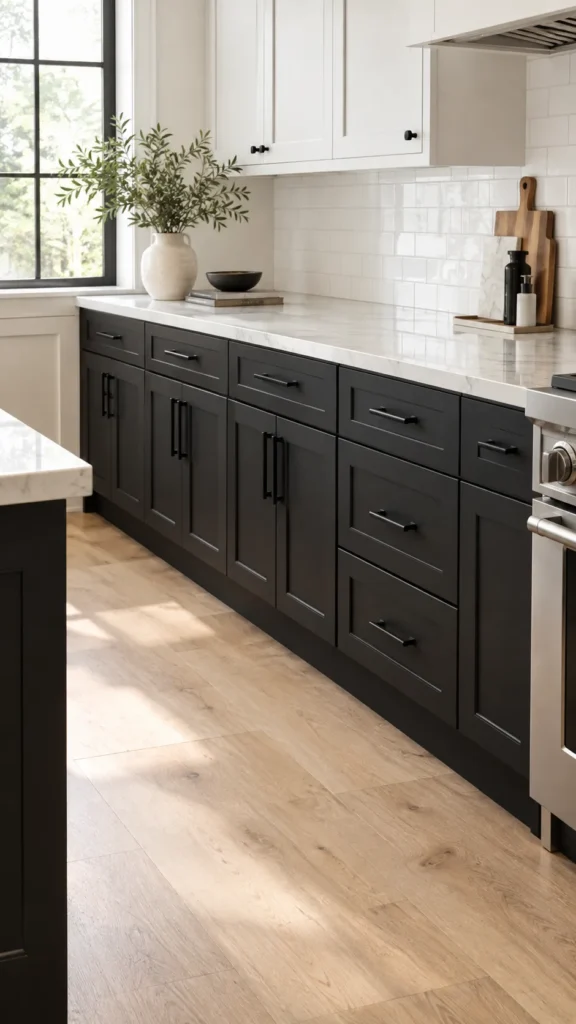
The classic tuxedo layout places heavy, dark colors below the countertop line and light colors above it. This strategy visually pushes your ceiling higher. The human eye reads dark colors as heavy anchors, so placing black on the bottom cabinets gives the room a solid foundation. Take all the lower doors off their hinges before you start. Painting them while they hang guarantees you will miss the bottom edges and create drip marks near the floor.
Wipe every lower door with a heavy-duty degreaser. Kitchen bottoms collect spills, shoe marks, and cooking grease. Paint will not stick to grease.
- Scrub the wood with your degreaser and a rough rag.
- Sand the entire surface lightly with a 220-grit sponge until it feels dull.
- Apply one coat of dark gray tinted primer.
- Wait 4 hours before applying the first coat of matte black paint.
Important Tip: Always Tint Your Primer
Never apply matte black paint over a standard white primer. The white will bleed through, making your black cabinets look dull and gray, forcing you to apply five coats of paint. Always ask the paint store for a dark gray tinted primer to ensure a rich, deep black finish in just two coats.
Coat the kitchen island in soft black against white perimeter cabinets.

If you have a large kitchen, putting dark paint on every single lower cabinet can still feel overwhelming. An alternate layout for black and white kitchen cabinets involves painting the entire perimeter of the room white, while making the center island black. This turns the island into a dramatic piece of standalone furniture.
Use your 1.5-inch painter’s tape to protect the floor where the island base meets your tile or wood. Roll your soft black paint onto the island panels using long, continuous strokes from top to bottom. Do not stop midway down a panel, or the roller mark will flash visible lines when the overhead lights hit it. Let the island cure for at least 24 hours before you install the bar stools, as kicking wet black paint requires you to sand the spot down and start over.
Apply high-gloss white to upper cabinets to reflect low ceiling light.
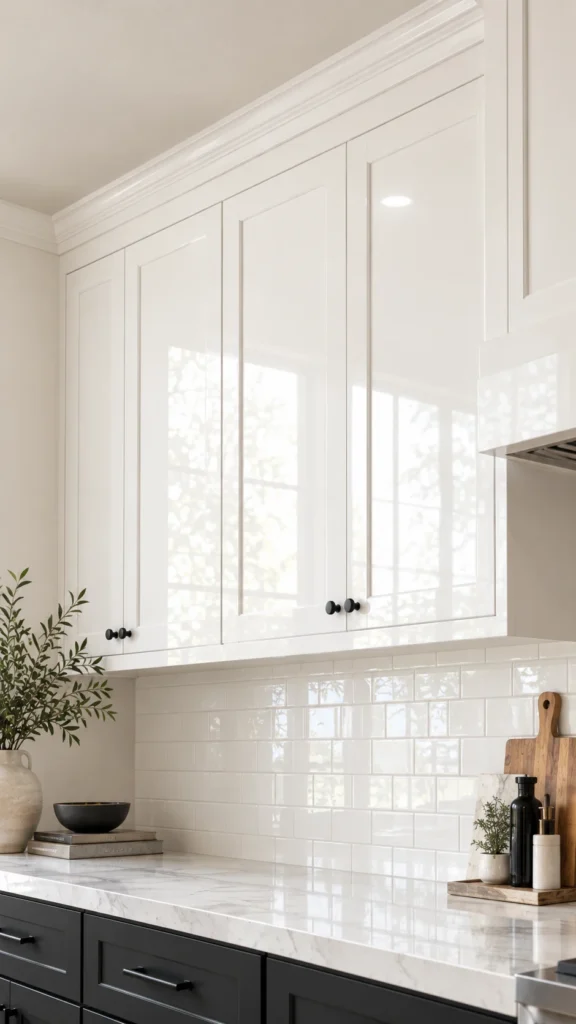
Upper cabinets sit at eye level and dominate your field of vision. When executing a two-tone design, you must ensure the white uppers bounce as much natural sunlight as possible to contrast the dark lowers. A flat or matte white finish absorbs light and looks like ceiling drywall.
Load your 4-inch high-density foam roller with high-gloss white paint. Roll the paint across the flat center panels first, then tackle the raised outer frames. High-gloss paint is notoriously runny, so keep your coats extremely thin. You need three thin coats rather than two thick ones to prevent drips from forming at the corners. Allow 6 hours of drying time between each coat. If the roller feels sticky when you start the second coat, you did not wait long enough.
Important Tip: The Countertop Rule
Wondering exactly where to split the two colors? Always make the break directly at the countertop line. If you have tall pantry cabinets that go straight from the floor to the ceiling, paint them completely white to match the upper cabinets and keep the room feeling tall.
Install black hardware on warm white doors for sharp contrast.
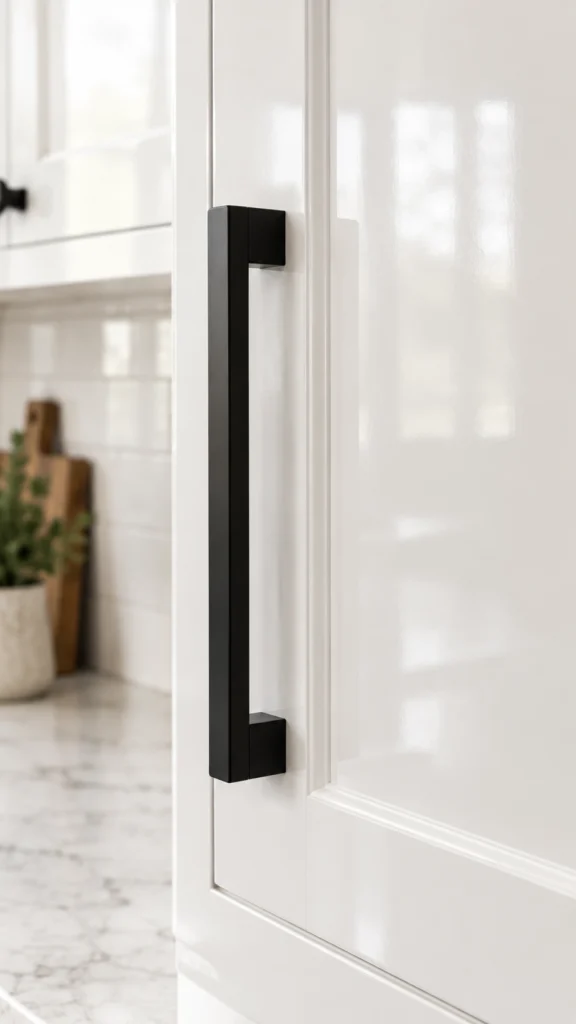
Sometimes the most effective way to design black and white kitchen cabinets does not involve massive buckets of dark paint. If your kitchen severely lacks natural window light, keep all your wooden doors painted a bright, warm white to keep the space feeling open. You will introduce the bold, dark contrast entirely through heavy, oversized matte black hardware.
Remove all existing knobs and fill the old holes with wood putty if you are changing hardware sizes. Sand the putty completely flat with a 220-grit sanding block before you apply your final coat of white paint.
- Measure the exact distance between your new handle screw posts.
- Align a plastic hardware drilling template exactly 2 inches from the bottom corner of your upper doors.
- Drill fresh holes using a 3/16-inch wood bit.
- Hand-tighten the screws to avoid cracking the fresh paint.
Installing thick, 6-inch matte black bar pulls across a sea of white doors delivers a tailored, high-end punch. The dark hardware acts like sharp punctuation marks against the bright background.
Paint the inner cabinet boxes black to frame open white shelving.

If you have upper cabinets with glass-front doors or open shelving layouts, you have a unique opportunity for inverted color placement. Instead of painting the exterior doors dark, leave the outside face frames crisp white and paint the inside back wall of the cabinet box matte black. This hidden dark zone creates incredible depth, making your white dishes, stacked bowls, and clear glassware aggressively pop off the shelf.
Take out all adjustable shelves before you begin. Run 1.5-inch painter’s tape along the inside front lip of the cabinet box. This barrier protects your white exterior face frame from the dark interior paint roller.
Roll the matte black paint onto the back wall and side panels using a small 4-inch foam roller to navigate the tight corners. Let the interior dry for a minimum of 12 hours before sliding the wooden shelves back into place. Rushing this step guarantees the hard shelf edges will scrape the uncured black paint right off the interior walls, forcing you to touch up the gouges with a tiny brush.
Conclusion
You have successfully mapped out the exact color placement for your new black and white kitchen cabinets. By keeping the dark, heavy paint below the countertop line or isolated to the center island, you guarantee your kitchen stays bright and open rather than feeling like a cramped, shadowy cave. Tape off your lower baseboards, apply your heavy-duty degreaser, and start prepping your first set of doors. Pin this guide to your kitchen renovation board so you have the specific drying times and tape techniques handy when you open the paint cans!
FAQ
Do black and white kitchen cabinets make a room look smaller?
Not if you place the colors correctly. Keeping the upper cabinets white draws the eye upward, making the ceiling feel higher and the room more spacious. Black lower cabinets firmly ground the space without closing it in.
What color hardware goes best with black and white kitchen cabinets?
Matte black, brushed brass, or polished nickel are excellent choices. Brass adds warmth to the high contrast, while matte black hardware creates a seamless, modern look on white doors.
Is it hard to keep black lower cabinets clean?
Matte black paint actually hides dark scuffs and shoe marks better than white paint. However, it will show dust and baking flour more clearly, requiring you to wipe them down with a damp microfiber cloth regularly.
What wall color works best with black and white kitchen cabinets?
Stick to neutral tones for your surrounding drywall. A soft warm white, light greige, or pale gray allows your two-tone cabinets to remain the focal point without overwhelming the eye with competing bright colors.