

Homeowners face a distinct challenge when designing monochromatic spaces. Without exact textures and precise lighting, a two-tone room feels cold, resembling a commercial clinic rather than a residential retreat. Implementing specific black and white bathroom ideas guarantees a timeless aesthetic that resists fleeting design trends.
This guide delivers exact, step-by-step instructions for a flawless remodel. You will learn precise material specifications, hardware flow rates, and lighting temperatures to build a balanced space. Execute these architectural strategies to prevent your design from falling flat. Review the project requirements below before beginning demolition.
Anchor the Floor with Geometric Tiles
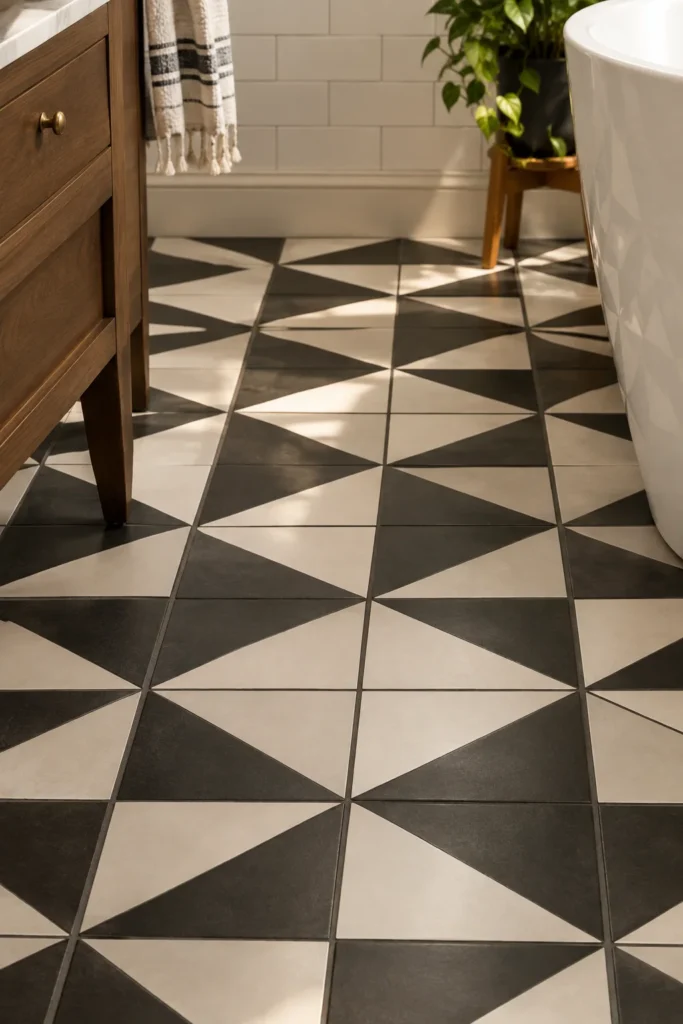
The floor dictates the spatial perception of the entire room. Select 12×12-inch porcelain tiles with high-contrast geometric patterns to establish a strong visual foundation. Porcelain provides a water absorption rate of less than 0.5%, making it the superior choice for wet environments over standard ceramic.
Install these tiles using a strict 1/8-inch grout line to maintain a continuous, seamless visual plane across the floor. A bold pattern draws the eye downward, masking daily dust while creating an optical illusion that makes the ceiling feel taller.
Laying the tiles at a 45-degree angle draws the eye outward, making narrow powder rooms appear wider. Ensure your starting tile line runs perfectly parallel to the main door threshold for immediate visual impact upon entry.
Grid patterns also work well for modern, rigid aesthetics that emphasize straight lines. Border framing using solid black 4×4-inch tiles outlines the perimeter of the room, framing the patterned center like a custom rug.
Execute Modern Black and White Bathroom Ideas Using Matte Fixtures
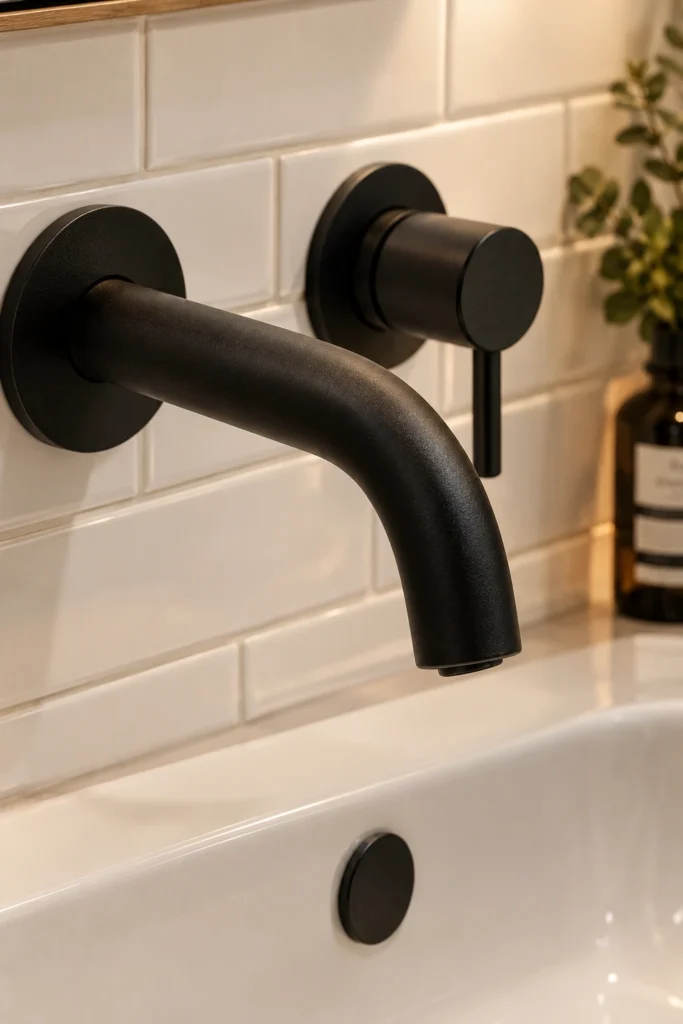
Polished chrome reflects excessive light and disrupts the stark contrast required for this specific design profile. Install matte black showerheads, faucets, and cabinet pulls to absorb light rather than bounce it around the room. This finish creates definitive focal points against bright white subway tiles or marble backsplashes.
Ensure your vanity faucet features a minimum 1.2 GPM flow rate to meet modern efficiency standards without sacrificing water pressure. Hardware consistency unifies the space instantly and prevents visual clutter. When implementing these black and white bathroom ideas, coordinate finishes across all operational hardware in the room. Match the sink faucet, cabinet door pulls, and the vanity mirror frame in your primary zone.
Maintaining matte black fixtures requires a specific cleaning protocol to prevent hard water damage. Wipe down these surfaces with a dry microfiber cloth daily to remove standing moisture. Apply a liquid carnauba wax every 3 months to create a hydrophobic barrier.
Frame the Wet Area with Dark Grout and Subway Tile
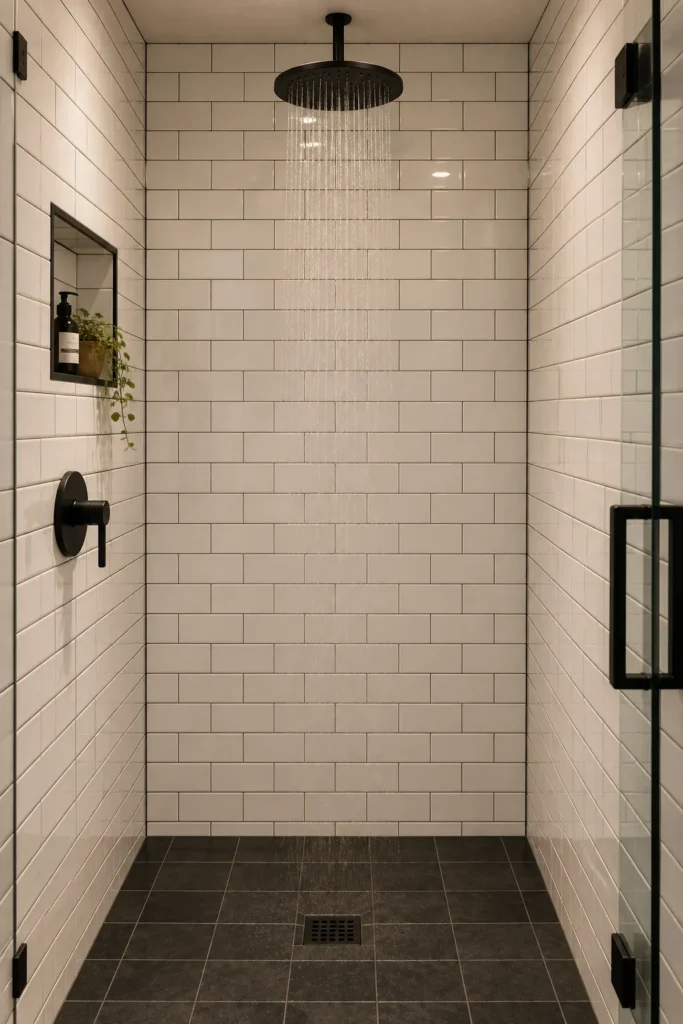
Standard white 3×6-inch subway tile provides a cost-effective, classic backdrop for the shower enclosure. Apply a dark charcoal grout in a 1/16-inch joint to outline each individual tile aggressively. This technique highlights the architectural grid of the wall and adds necessary graphic weight to balance the dark geometric floors.
Curing the grout for a full 72 hours before sealing prevents moisture penetration and discoloration. Proper installation prevents catastrophic water damage behind the walls. Heavy moisture areas require strict adherence to modern waterproofing standards before a single tile attaches to the studs.
Follow this exact sequence for the wet area preparation:
- Apply 2 coats of liquid waterproofing membrane over the cement backer board.
- Wait 24 hours for the membrane to cure completely into a seamless rubberized barrier.
- Set the subway tiles using a polymer-modified thin-set mortar rated for heavy moisture.
- Allow the mortar to dry for 48 hours before applying the charcoal grout.
Mount a Floating Vanity to Maximize Small Black and White Bathroom Ideas
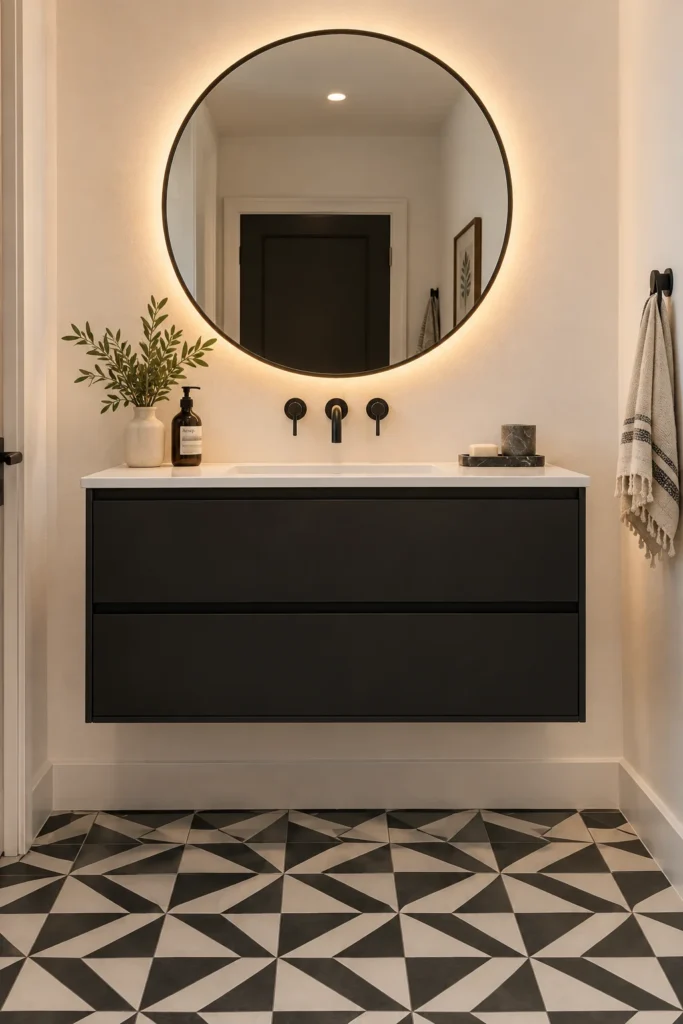
Floor space represents a premium commodity in secondary bathrooms and tight powder rooms. Mount a 48-inch or 60-inch floating vanity directly to the wall studs to maximize the visible footprint. Leave a 10-inch to 12-inch clearance beneath the cabinet base to expose the geometric tile underneath. This structural choice creates an immediate optical illusion of expanded square footage.
This layout strategy proves highly effective when utilizing small black and white bathroom ideas in compact quarters. A floating unit carries the heavy weight of the cabinet, the stone counter, and the ceramic sink basin. Expose the wall studs during the initial demolition phase to prepare for the heavy installation. Install horizontal 2×6-inch wood blocking securely between the vertical studs at the exact height of the vanity brackets. Secure the cabinet unit using 3-inch lag screws driven directly into this new blocking.
Pro Tip: Ideal Vanity Height
Mount your floating vanity so the top edge of the marble countertop rests exactly 34 to 36 inches off the finished floor. This measurement ensures optimal daily ergonomics and prevents unnecessary back strain.
Apply Bold Monochrome Wallpaper for Maximum Impact
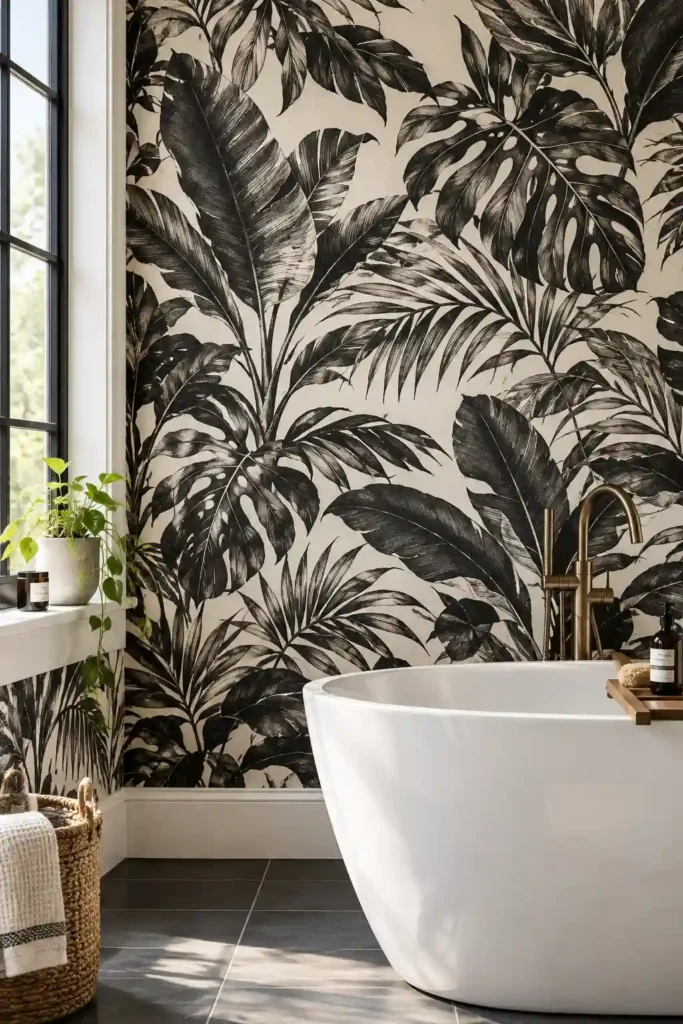
Standard interior paint often falls flat in high-contrast spaces, lacking the visual depth required to engage the eye. Install a moisture-resistant vinyl wallpaper on a single accent wall to introduce complex patterns. Select large-scale botanical or abstract monochromatic prints to break up the rigid straight lines of the tile work.
Apply this treatment behind the vanity or the freestanding tub to establish a dominant focal point. Vinyl material repels ambient humidity effectively. This prevents the peeling, bubbling, and molding common with traditional paper backings installed in wet rooms.
Apply a high-quality, mold-inhibiting primer to the fresh drywall before starting the installation. Wait a full 48 hours for the primer to cure completely to ensure maximum adhesive grab. Order 20% more wallpaper than your calculated square footage requires. This overage accounts for strict pattern matching across seams and unexpected trimming errors around plumbing fixtures.
Smooth all seams using a hard plastic smoothing tool to eliminate trapped air pockets. Secure the edges with a specialized seam adhesive to prevent moisture from penetrating the backing.
Pro Tip: Wallpaper Adhesion in Wet Zones
Seal the fresh drywall with an acrylic mold-killing primer and wait a full 72 hours before hanging vinyl wallpaper. Skipping this curing window guarantees the paper will peel and blister from shower humidity.
Layer Physical Textures with White Marble and Dark Accents
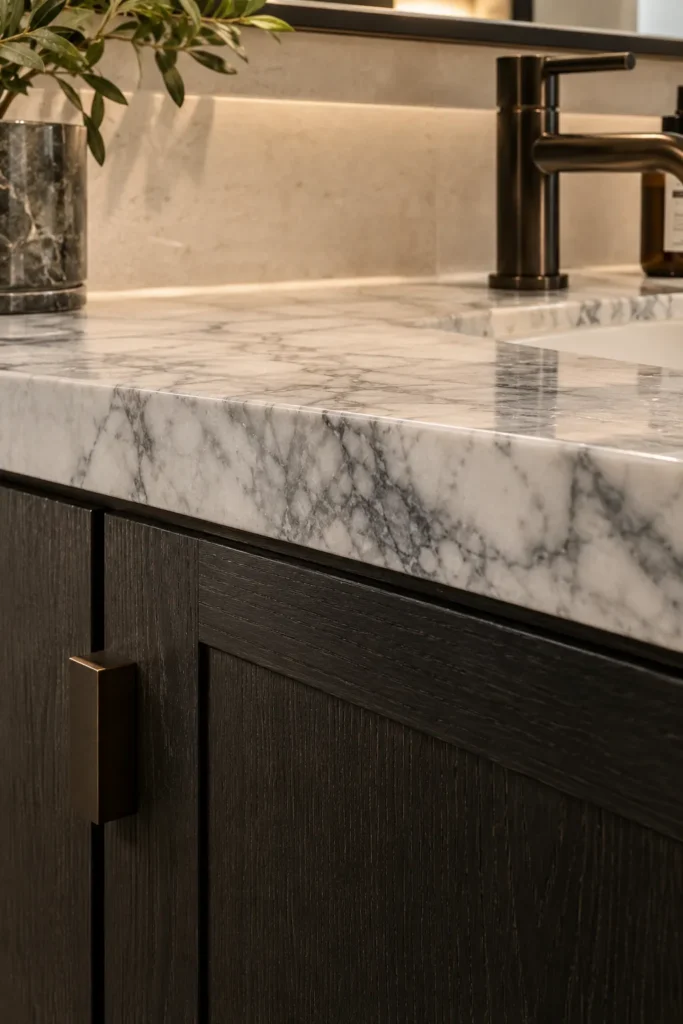
A two-tone room looks incredibly flat without varying physical textures interacting with the light. Specify a heavily veined Carrara or Statuario marble for the 1.5-inch thick vanity countertop. Introduce ribbed black glass for the shower partition to obscure water spots while adding a tactile element. Incorporate brushed black oak for the cabinetry doors to contrast against the smooth porcelain sink basin.
These tactile variations catch the overhead light differently, adding necessary depth to the rigid color palette. Natural stone requires consistent, deliberate maintenance to prevent staining from cosmetics and hard water buildup over time. Protect your expensive marble surfaces by implementing this strict care regimen:
- Clean the stone surface daily with a pH-neutral cleaner and a non-abrasive soft cloth.
- Avoid acidic liquids entirely, including vinegar, bleach, and lemon-based solutions that etch stone upon contact.
- Apply a penetrating liquid stone sealer every 6 months to close the natural microscopic pores.
- Allow the sealer to sit for 15 minutes before buffing off the excess residue to prevent a cloudy finish.
Finalize the Design with Precise Lighting Temperatures
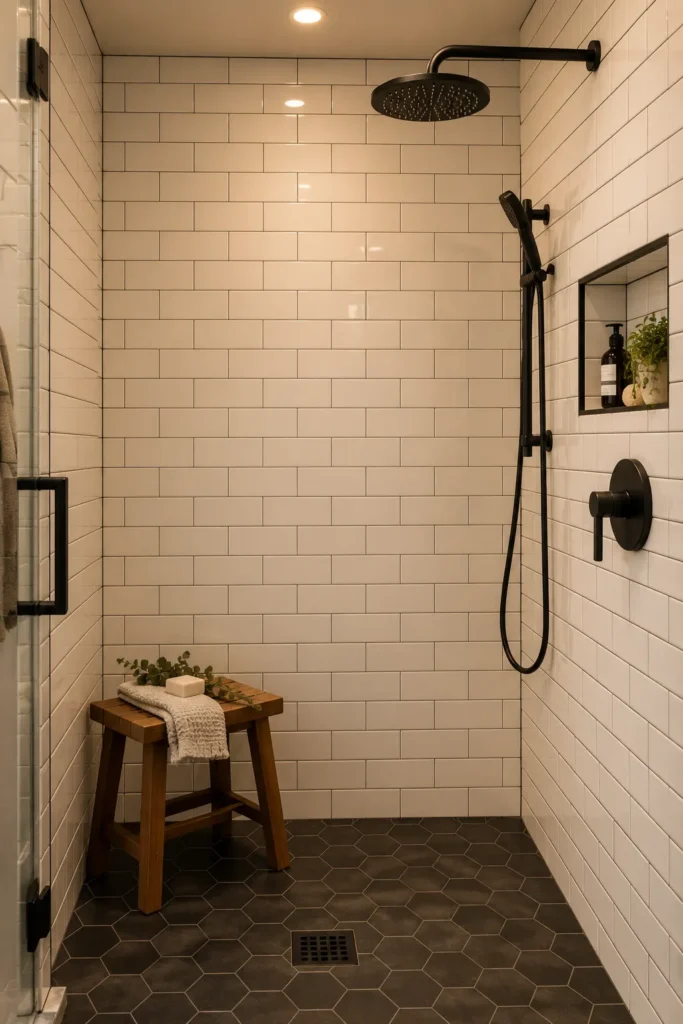
High-contrast spaces require organic natural elements to soften the hard architectural lines. Incorporate a 2-inch thick floating walnut shelf above the toilet to hold rolled towels and decor. Place a solid teak stool inside the walk-in shower to provide seating and visual warmth.
These organic brown tones bridge the gap between the dark and light spectrums. Lighting dictates exactly how your eye perceives the white surfaces in the room. Cool bulbs make white marble look blue, while warm bulbs cast an unwanted yellow hue that ruins the crisp aesthetic.
Install fixtures meeting strict lighting specifications to maintain color accuracy across all materials. Select bulbs with a strict 3000K color temperature for perfect daylight replication. Ensure the bulbs possess a minimum 90 CRI (Color Rendering Index) to show true monochromatic tones accurately.
Layer the lighting plan with 2 overhead ambient recessed fixtures for general illumination. Add 2 task sconces flanking the mirror at eye level to eliminate facial shadows. Install LED-compatible dimmer switches on all circuits to control the light output depending on the time of day.
Conclusion
Executing a flawless two-tone remodel requires strict adherence to texture layering, accurate lighting temperatures, and precise layout principles. You now possess the structural blueprint to build a high-contrast space without the common pitfalls of stark, clinical designs.
Source your 12×12-inch geometric tiles and matte fixtures first to establish the foundational aesthetic of the room. Schedule your contractor early to reinforce the wall studs for that 48-inch floating vanity before the drywall phase begins. Applying these black and white bathroom ideas guarantees a professional-grade finish that adds immediate aesthetic depth and financial equity to your property.
FAQ
What is the best lighting temperature for black and white bathroom ideas?
Install 3000K LED fixtures exclusively. This exact temperature offers a clean, neutral white light. It prevents white subway tiles from looking yellow while keeping matte black accent pieces sharp, defined, and true to their intended color.
How do I keep black matte fixtures from showing hard water spots?
Wipe down all fixtures with a dry microfiber cloth daily after use. Apply a high-quality ceramic wax coating every 3 to 4 months to create a hydrophobic barrier. This effectively repels hard water minerals and prevents calcium buildup.
Are black and white bathroom ideas good for property resale value?
Yes. High-contrast monochromatic designs are universally appealing and age significantly better than trendy seasonal color palettes. Prospective buyers perceive these spaces as premium and updated, adding measurable equity to your property.
Should I use black or white grout on my geometric floor tiles?
Always use charcoal or black grout for floor tiles. White grout inevitably absorbs dirt within 30 days of regular foot traffic. Dark grout conceals grime effortlessly and maintains a crisp, architectural grid line indefinitely.